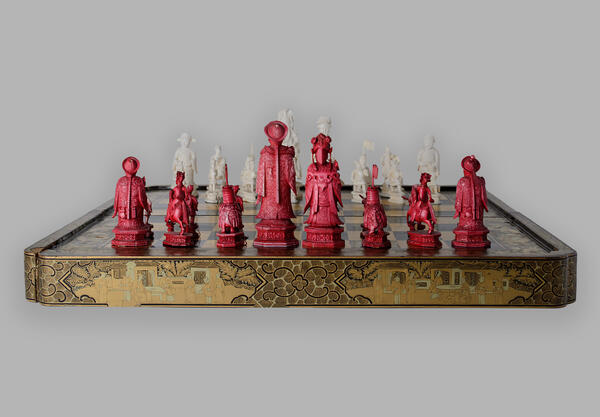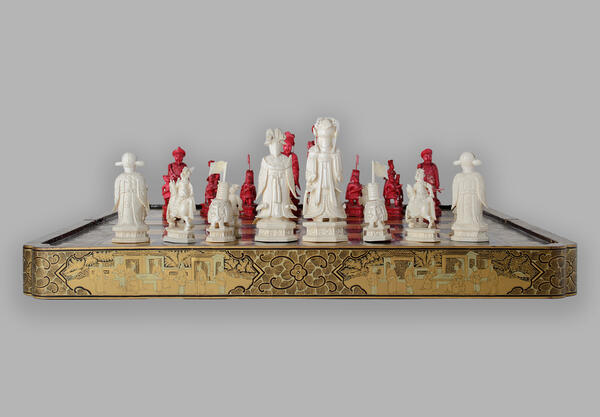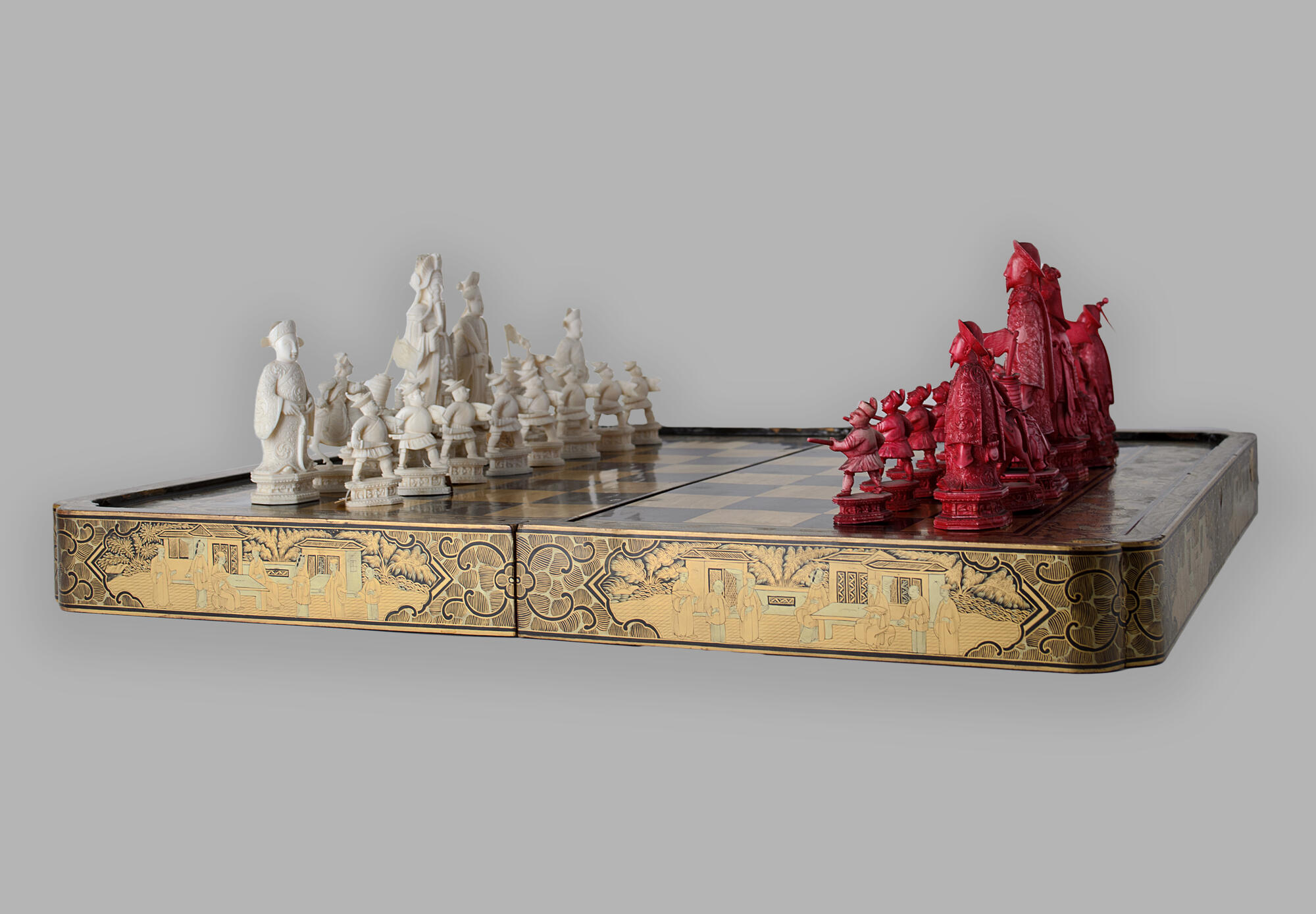


The painted chess pieces from the museum’s collection are made of ivory. Both colored sets — red and white — include the usual pieces: the Chinese emperor and empress (king and queen), two officials (rooks), two horsemen (knights), two elephants with flags (bishops), and eight soldiers (pawns).
The craftsman hand-carved not only the pieces but also the stands. The pieces are almost 12 centimeters high. The statues are incredibly realistic. The craftsman paid great attention to detail and used a variety of techniques to create this chess set.
The folding chessboard is painted on both sides. It is made of wood and coated with lacquer. The outside playing surface features alternating gold and black squares, and a border along the edge with eight cartouches, two on each side. These decorative images depict garden scenes. The inside of the board is painted gold and can be used for playing backgammon.
Chess is considered an ancient game and is believed to have originated in India in the 6th century. Antique collections often feature chess pieces made of malachite, jade, or ivory and inlaid with precious stones. Ivory pieces, decorated with exquisite carving and handmade patterns, have traditionally served as expensive décor at houses of the nobility.
In China, ivory carving is considered one of the oldest arts. Chinese ivory carving is distinguished by exquisite, detailed, and deeply carved images and a wide use of national motifs.
The ivory chess pieces displayed at the Kyakhta Museum of Local Lore are an elegant work of art. Such chess sets were common in wealthy merchant houses in 19th-century Kyakhta.
Usually, such expensive
chess sets were not used for playing but were displayed under special glass
hoods as interior décor. This exhibit belonged to Alexey Lushnikov, a Kyakhta
merchant of the first guild who often hosted Decembrists and was visited by the
famous travelers Nikolay Przhevalsky and Pyotr Kozlov, as well as Grigory
Potanin and his wife Alexandra Potanina.