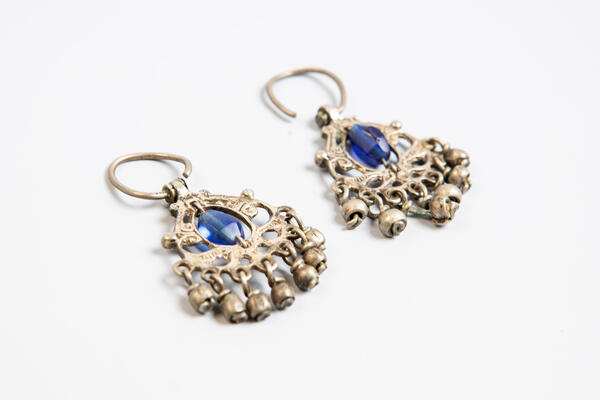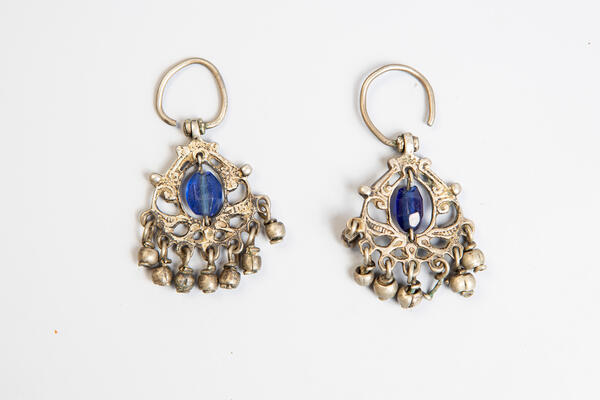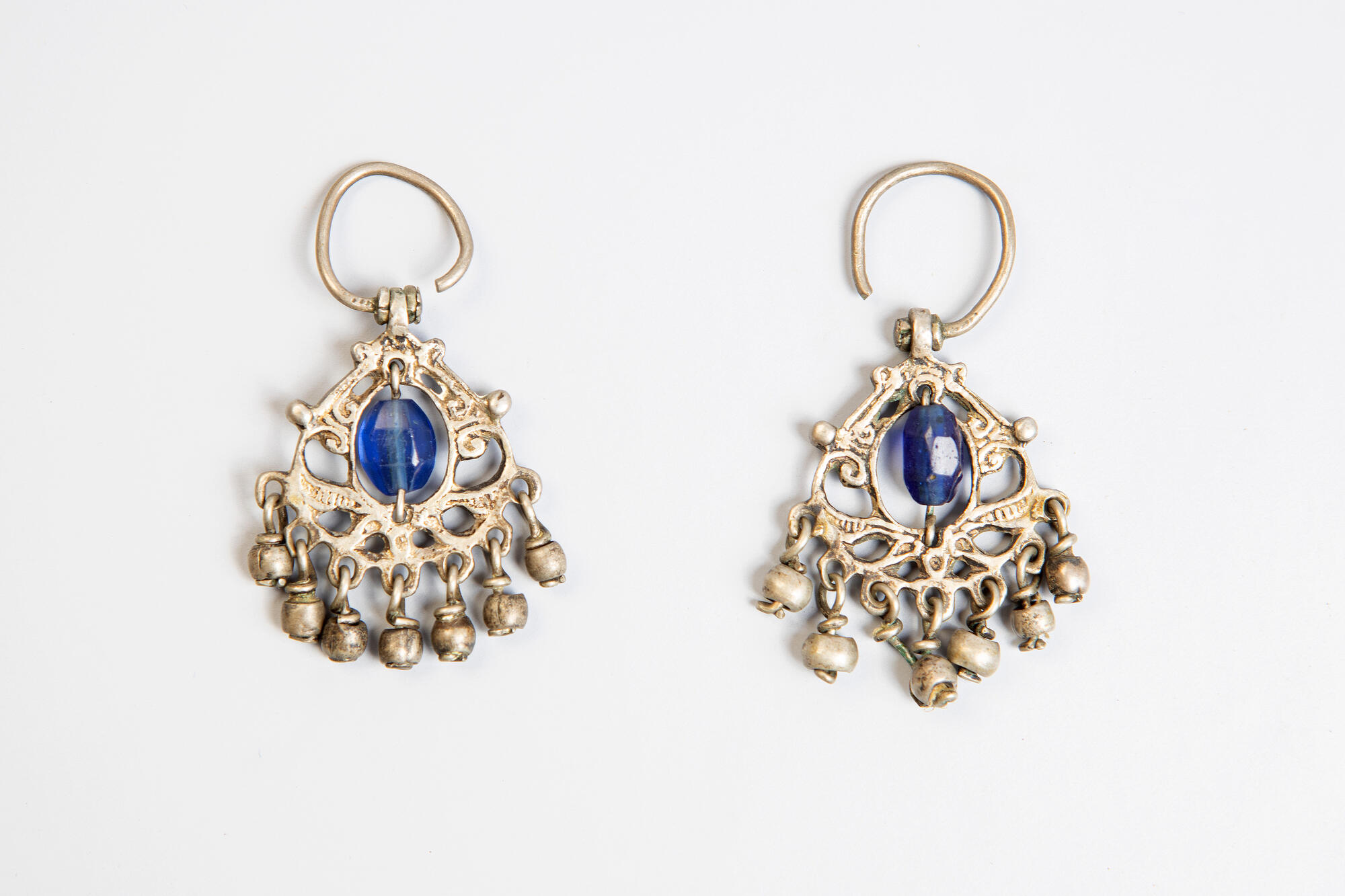


The Museum “The Smolensk Fortress” houses several types of women’s earrings, including the so-called “dove” earrings, which were made in the 17th century from silver.
“Dove” earrings were made in the following way: first, a base plate was formed, and then small pendants were attached — they formed a bird’s silhouette. Some similar earrings from the collections of other museums feature paired silhouettes of birds, which seem to be facing each other.
Researchers emphasize the special three-dimensional structure of “dove” earrings that creates the decorative effect. Many “dove” earrings were quite thick. Often, such earrings had inserts made of stones or colored glasses on both sides.
Jewelers made such pendants from mother-of-pearl, pearls, beads, and metal. The bird motif in women’s jewelry was quite common. In addition to “dove” earrings, there is also such a type of earrings as “eagle” earrings (“orliki” in Russian). They had a pendant in the form of an eagle figurine at the end.
In Rus, the bird could symbolize light and warmth, love and marriage, femininity and motherhood. It was also a solar symbol and frequently became part of Russian embroidery designs. Traditional women’s headdresses were decorated with motifs of birds, and the very image of a girl was likened to a swan or a peacock.
This motif in women’s jewelry was gradually transformed, and the figure increasingly resembled a floral pattern. Researchers believe that the origin of bird-shaped earrings is associated with the transformation of pendants known as “ryasna”.
Richly decorated earrings were a luxury item, and women often passed them down as heirlooms in their wills. Earrings, even if they were damaged, were not thrown away, but carefully dismantled. Then, the stones and pearls were used to trim collars and to decorate clothes. In the 16th and 17th centuries, even men followed the fashion and wore one earring. Earrings could be also fastened to ribbons or headdress fabric.
“Dove” earrings were made in the following way: first, a base plate was formed, and then small pendants were attached — they formed a bird’s silhouette. Some similar earrings from the collections of other museums feature paired silhouettes of birds, which seem to be facing each other.
Researchers emphasize the special three-dimensional structure of “dove” earrings that creates the decorative effect. Many “dove” earrings were quite thick. Often, such earrings had inserts made of stones or colored glasses on both sides.
Jewelers made such pendants from mother-of-pearl, pearls, beads, and metal. The bird motif in women’s jewelry was quite common. In addition to “dove” earrings, there is also such a type of earrings as “eagle” earrings (“orliki” in Russian). They had a pendant in the form of an eagle figurine at the end.
In Rus, the bird could symbolize light and warmth, love and marriage, femininity and motherhood. It was also a solar symbol and frequently became part of Russian embroidery designs. Traditional women’s headdresses were decorated with motifs of birds, and the very image of a girl was likened to a swan or a peacock.
This motif in women’s jewelry was gradually transformed, and the figure increasingly resembled a floral pattern. Researchers believe that the origin of bird-shaped earrings is associated with the transformation of pendants known as “ryasna”.
Richly decorated earrings were a luxury item, and women often passed them down as heirlooms in their wills. Earrings, even if they were damaged, were not thrown away, but carefully dismantled. Then, the stones and pearls were used to trim collars and to decorate clothes. In the 16th and 17th centuries, even men followed the fashion and wore one earring. Earrings could be also fastened to ribbons or headdress fabric.