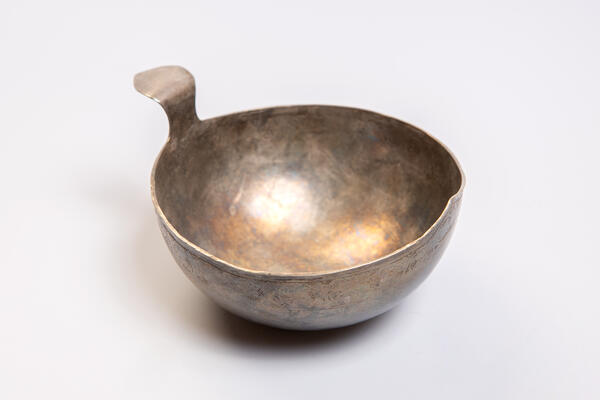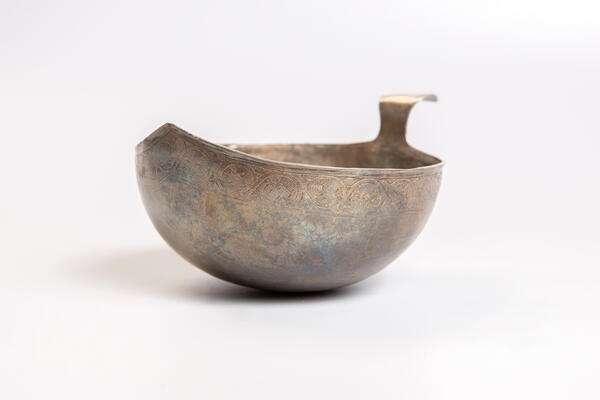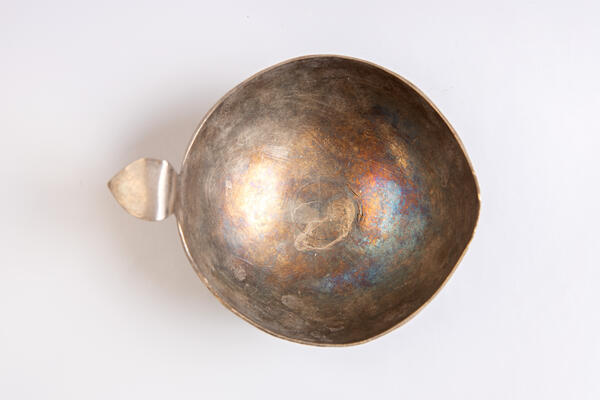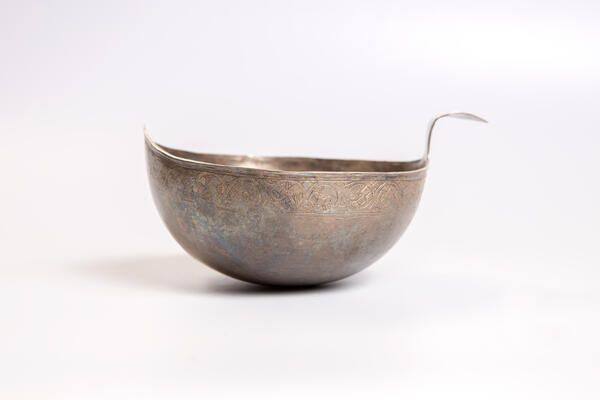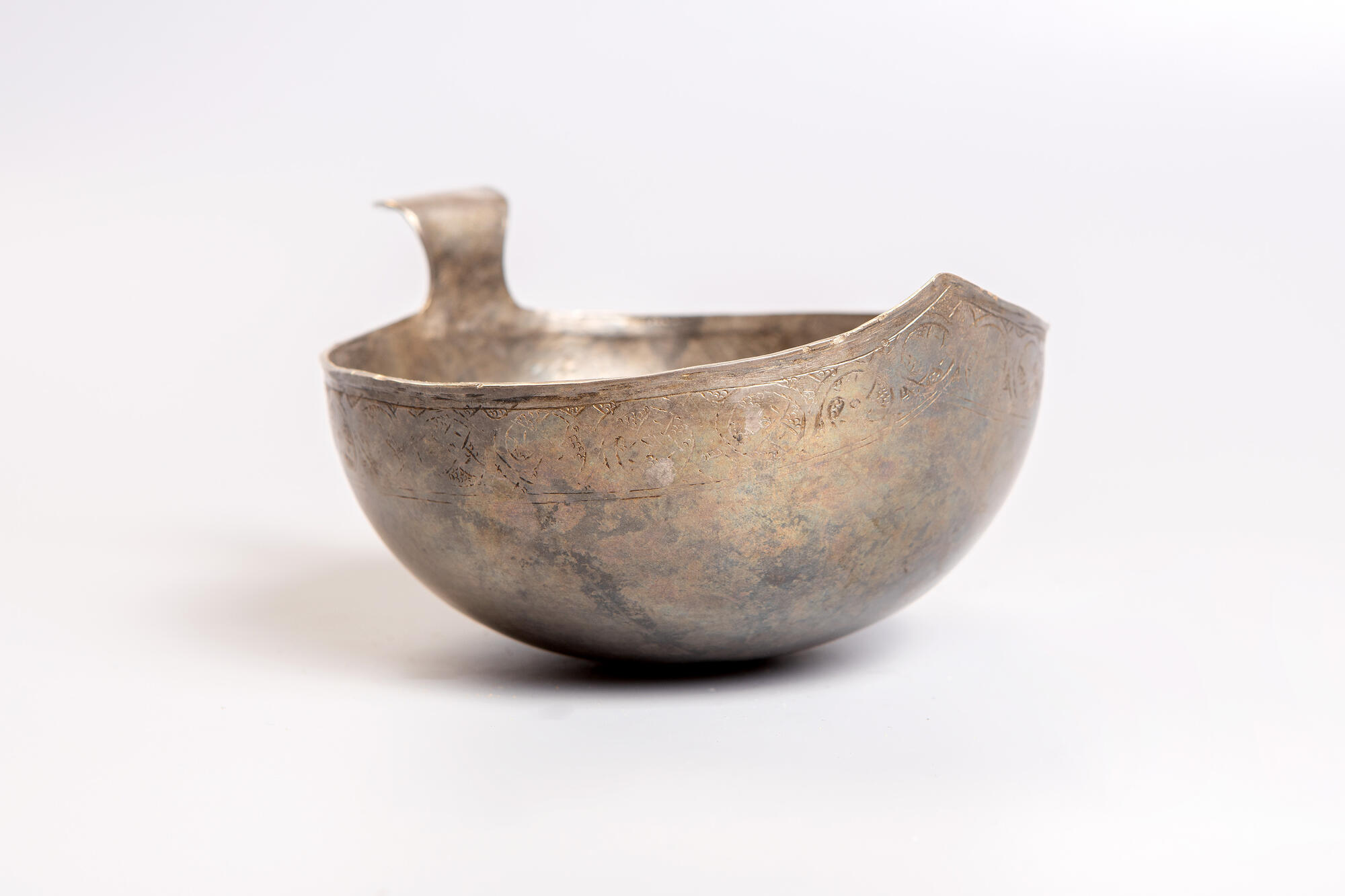


The exhibition includes a traditional Russian drinking vessel — a kovsh. The first known ladles that most likely originated in the Russian North were made of wood. In the 14th century, artisans started to manufacture metal vessels of this kind, and in the 17th century, they began to use gold and silver.
It was then that the kovsh became a ceremonial vessel. It was shaped like a longboat or a water bird, such as a duck, a swan, or a goose. By the late 16th century, a new design had developed — the kovsh had become flat and wide. The vessels became increasingly ornate; they were decorated with embossing, engraving, precious stones, and enamel. Some ladles rested on small feet.
Such vessels differed greatly in size: some were small, and others could hold up to 20 liters. A kovsh was used to serve and pour drinks from larger vessels. These ladles were often given as expensive gifts — sometimes they were presented by the tsars to loyal supporters. Such vessels became family heirlooms. If the person fell from grace, it was not uncommon to confiscate the tsar’s gifts and return them to the treasury.
In the 17th century, many merchant families were awarded a kovsh for their significant contribution to the tax revenue. Silverware was often considered a kind of insurance: in case of emergency tableware made from precious metals could be sold or re-melted.
In the Middle Ages, there were quite a few drinks that were popular in Rus, such as syta, birch sap drink, honey, kvas, hippocras, wine, and other drinks. Syta was a non-alcoholic beverage — a mixture of water and honey. Kvas could be with and without alcohol. Hippocras was a kind of spiced wine similar to honey drinks. The name of this drink proves that it was quite strong — the Russian word sounds like a battle-axe which could cut the head off. Beer was quite common at the time, and vodka was used as medicine.
It was then that the kovsh became a ceremonial vessel. It was shaped like a longboat or a water bird, such as a duck, a swan, or a goose. By the late 16th century, a new design had developed — the kovsh had become flat and wide. The vessels became increasingly ornate; they were decorated with embossing, engraving, precious stones, and enamel. Some ladles rested on small feet.
Such vessels differed greatly in size: some were small, and others could hold up to 20 liters. A kovsh was used to serve and pour drinks from larger vessels. These ladles were often given as expensive gifts — sometimes they were presented by the tsars to loyal supporters. Such vessels became family heirlooms. If the person fell from grace, it was not uncommon to confiscate the tsar’s gifts and return them to the treasury.
In the 17th century, many merchant families were awarded a kovsh for their significant contribution to the tax revenue. Silverware was often considered a kind of insurance: in case of emergency tableware made from precious metals could be sold or re-melted.
In the Middle Ages, there were quite a few drinks that were popular in Rus, such as syta, birch sap drink, honey, kvas, hippocras, wine, and other drinks. Syta was a non-alcoholic beverage — a mixture of water and honey. Kvas could be with and without alcohol. Hippocras was a kind of spiced wine similar to honey drinks. The name of this drink proves that it was quite strong — the Russian word sounds like a battle-axe which could cut the head off. Beer was quite common at the time, and vodka was used as medicine.