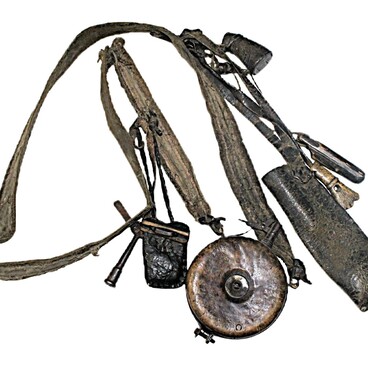
A saddle is a device of horse equipment (saddle gear) for convenient connection of a rider with a horse, part of ammunition for riding and transporting goods on the back of an animal, with a pack method of transporting goods.
Lenchik — (wooden, archak) the base of the saddle consists of three wooden components. The base is made of solid wood. In the lower part there is a hollow for the horse’s spine, the upper part is curved. From above, the rear part is attached to the base with metal brackets — wide, flat, rounded from above and the front part is narrow, with a pointed, raised top. Holes are drilled on the sides of the base, leather rawhide belts with metal stirrups are inserted into the two opposite ones. A canvas belt is attached to the base on one side.
The saddle affects the horse’s movements and the rider’s landing. A poorly fitted saddle can cause physical harm to the horse. Usually the saddle is assembled on a plastic or wooden frame — a belt (archak), although there are also belt-less saddles. Saddles usually have two sizes, indicated in inches: for the horse — wide, medium and narrow, and for the rider (depending on the length of the legs.
The tasks of a riding saddle are to create comfort for the rider and protect the animal’s back. When riding bareback, the main weight of the rider falls on the sciatic bones, and the saddle redistributes the load on the saddle benches, the total area of which is larger than the area of the rider’s sciatic bones in contact with the horse’s back. Thus, despite the increase in the total mass on the horse’s back, the pressure per unit of the surface of its back decreases.A saddle is a device of horse equipment (saddle gear) for convenient connection of a rider with a horse, part of ammunition for riding and transporting goods on the back of an animal, with a pack method of transporting goods.
Lenchik — (wooden, archak) the base of the saddle consists of three wooden components. The base is made of solid wood. In the lower part there is a hollow for the horse’s spine, the upper part is curved. From above, the rear part is attached to the base with metal brackets — wide, flat, rounded from above and the front part is narrow, with a pointed, raised top. Holes are drilled on the sides of the base, leather rawhide belts with metal stirrups are inserted into the two opposite ones. A canvas belt is attached to the base on one side.
The saddle affects the horse’s movements and the rider’s landing. A poorly fitted saddle can cause physical harm to the horse. Usually the saddle is assembled on a plastic or wooden frame — a belt (archak), although there are also belt-less saddles. Saddles usually have two sizes, indicated in inches: for the horse — wide, medium and narrow, and for the rider (depending on the length of the legs.
The tasks of a riding saddle are to create comfort for the rider and protect the animal’s back. When riding bareback, the main weight of the rider falls on the sciatic bones, and the saddle redistributes the load on the saddle benches, the total area of which is larger than the area of the rider’s sciatic bones in contact with the horse’s back. Thus, despite the increase in the total mass on the horse’s back, the pressure per unit of the surface of its back decreases.