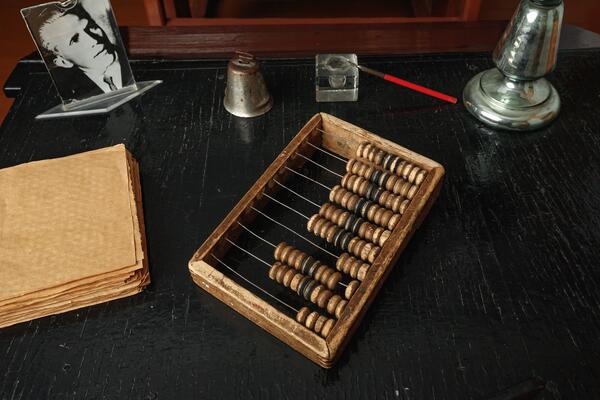
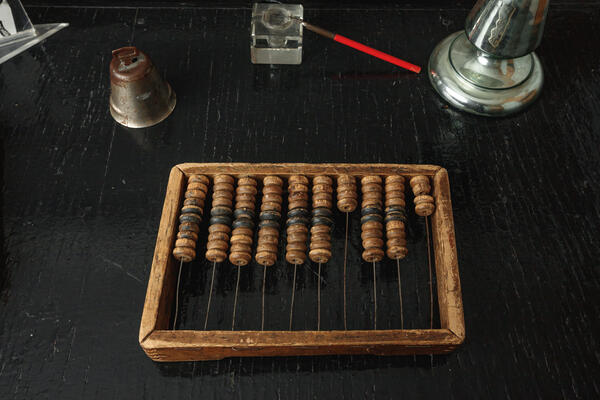
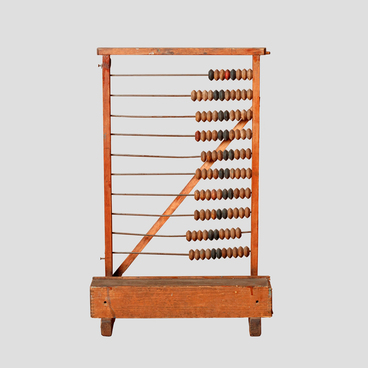
The abacus is one of the oldest and simplest devices for performing arithmetic calculations. Russian abacuses, based on the decimal system, allow operations not only with whole numbers but also with fractions — such as quarters, tenths, and hundredths.
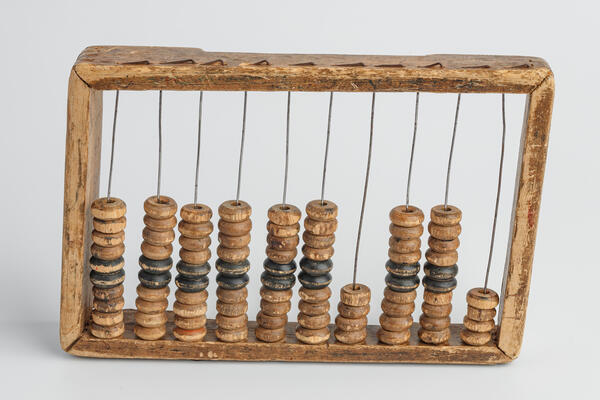
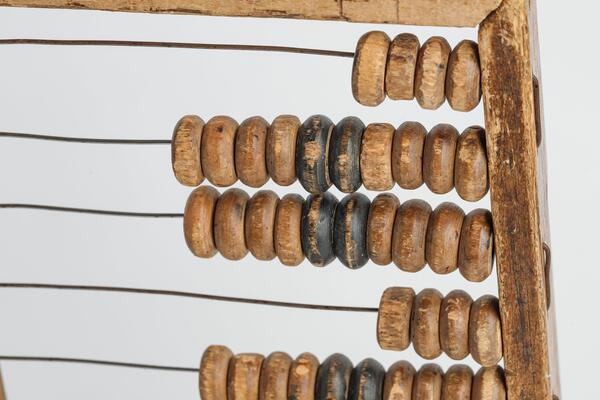
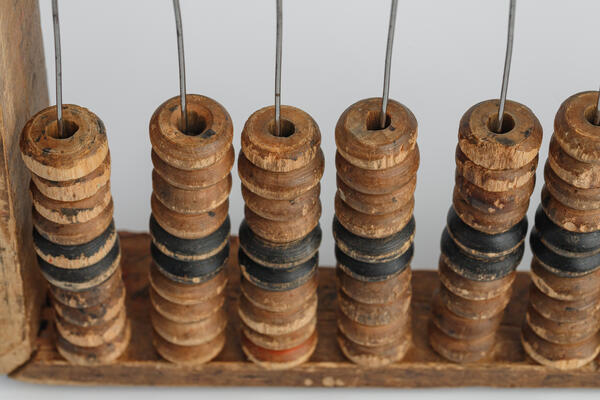
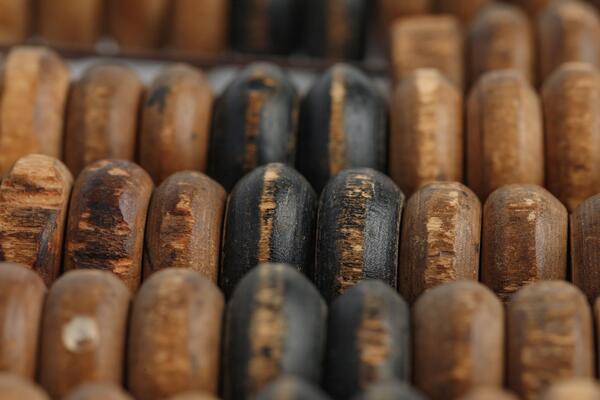
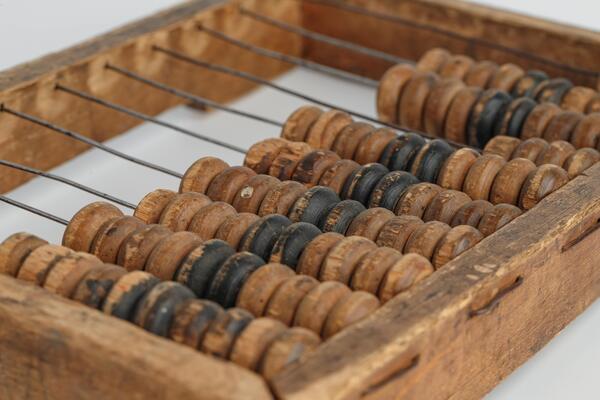
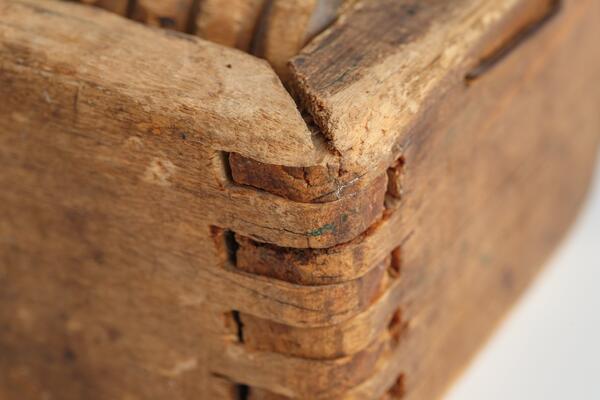
Originally, the device consisted of a wooden frame or board with stretched cords, on which wooden or bone beads — sometimes called “rosaries” — were strung. The upper rows, typically numbering nine or ten, each held nine or ten beads and were used for counting whole numbers. The lower rows — ranging from one to four — were reserved for fractions, a feature of particular importance in trade and financial transactions.
Over time, the design of the abacus evolved. By the early 18th century, the simple box strung with beads on twine had transformed into an elegant, convenient, and precise calculating instrument — visually similar to the abacuses still occasionally used in Russia today.
Interestingly, the abacus saw little use in Western Europe. As a result, the speed and dexterity with which Russian merchants and officials manipulated the device often astonished foreign observers.
Basic arithmetic operations — addition and subtraction — are easily performed with the help of an abacus. Multiplication requires greater skill, while division is a more complex procedure demanding considerable practice.
A distinctive design feature, rooted in the history of Russian monetary circulation, deserves special attention: the fourth row from the bottom traditionally contains only four beads. This was no accident. It reflects the polushka, a currency unit in use from the 14th century, which equaled one-quarter of a kopeck (or half of a denga, another historical coin). Over time, other fractional denominations emerged. To simplify calculations involving halves and quarters of a kopeck, a dedicated row with four beads was incorporated — eliminating the need for cumbersome conversions using smaller fractional units.
Kopecks (and their subdivisions) remained in circulation until 1916, and throughout this period, abacuses with this “quaternary” row were indispensable tools in commerce and public accounting.
Russian abacuses were also widely used in schools as teaching aids, helping students visualize the decimal system, place value, and arithmetic operations. Thus, during his elementary education in the village of Zyryanka, the future legendary spy Nikolai Ivanovich Kuznetsov himself would have learned the fundamentals of arithmetic using such an abacus.