

A sarauts, or saraus, is a traditional headdress of Siberian Tatar women. It resembles a diadem, and it was worn by married women on holidays. In the second half of the 19th century and in the early 20th century, this rather expensive headdress was popular with women from wealthy families.
The base, or the frame, of the sarauts are two parallel thin metal ribbons, which make the headdress look like a diadem. Depending on the wealth of the family, sarautses were made of velvet, silk or cotton fabric, and embroidered with gold embroidery, smooth silk threads, beads, freshwater pearls or pewter details. The blue color of the sarauts denoted the airiness, freedom and purity of the sky, the ornaments of gold or yellow colors symbolized the twinkling of stars. A sarauts made of red fabric was a symbol of femininity.
With the help of color combinations, the craftswomen conveyed traditional ideas about harmony and beauty, in which they reflected the spiritual and moral foundations of the people. For example, it was believed that it was beautiful and worthy for a girl to wear clothes of light shades — pink, light green, and blue. The pink color of the dress for an unmarried girl was a symbol of youth, kindness, friendliness, dreams and hope. Dark saturated colors of the fabric were worn by people of mature age. The festive dresses of older women were burgundy, which symbolized confidence and conservatism.
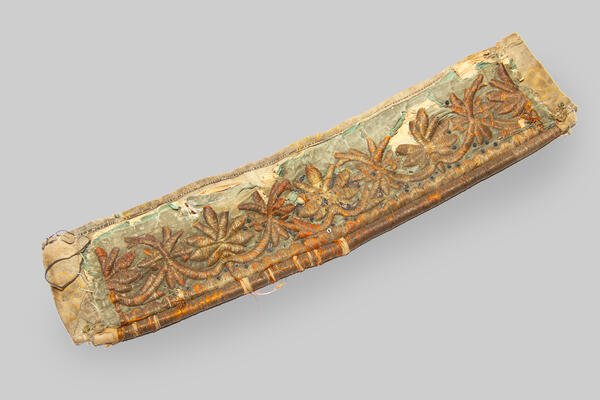
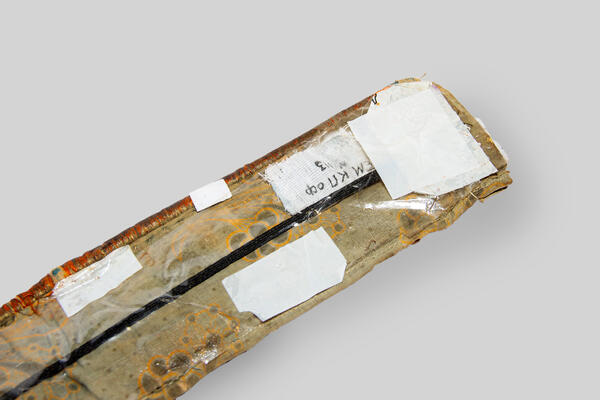
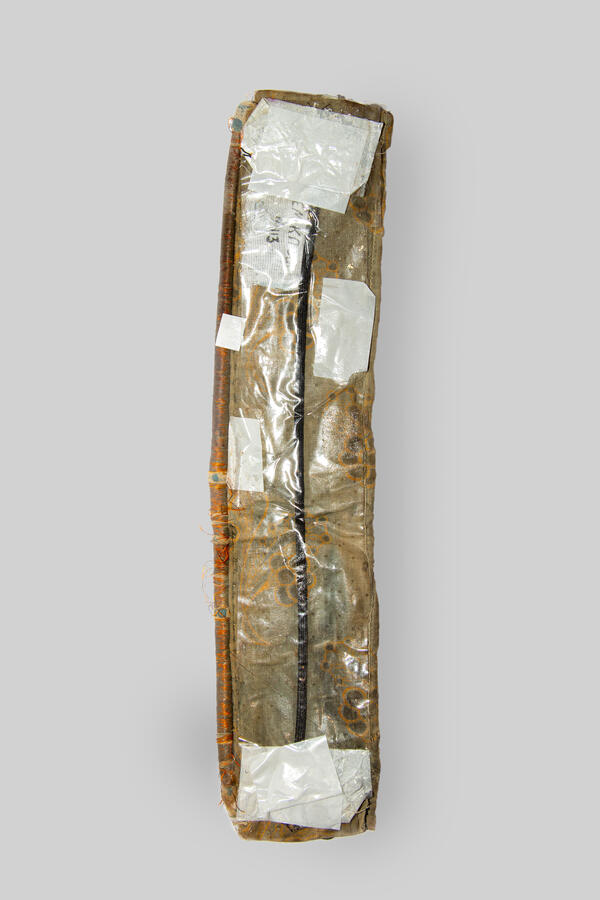
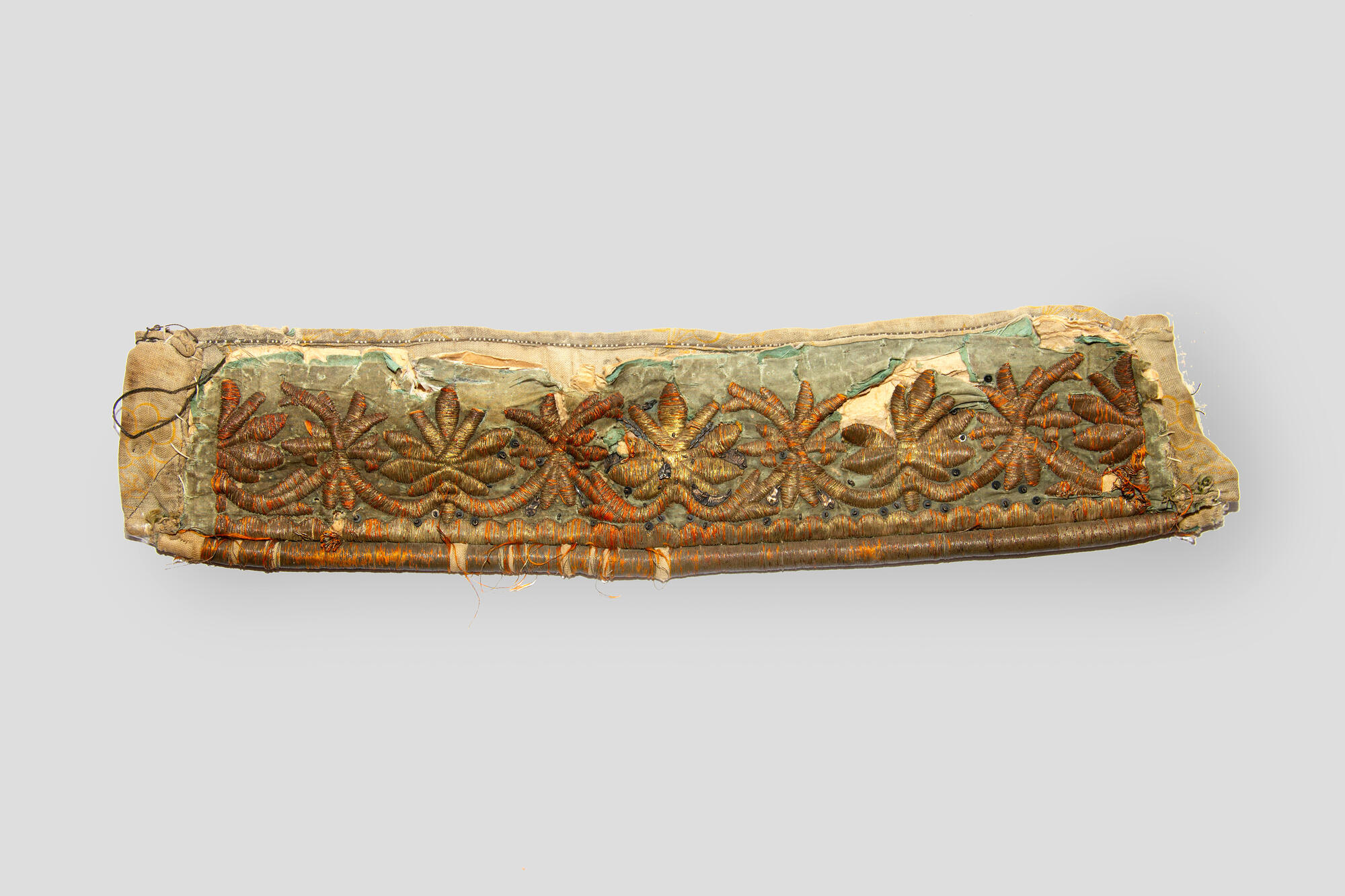
The museum collection contains a headdress made in the technique of gold embroidery. The museum exhibit has the shape of a rectangle. The outer side is made of green fabric. The floral pattern consists of leaves and flowers. A roller, which is round in cross section, is sewn along the lower edge.
This sarauts was donated to the museum in 1996 by Hamdiya Gavrilova, a maths teacher at the Embaevo village school, born in 1950. The headdress belonged to her grandmother, Nasiba Abaidullovna Davletova. She was born in 1884 and lived in the village of Toboltura, Tobolsk region. The sarauts embroidered with real gold threads is more than 100 years old — it is one of the most valuable exhibits of the museum.
The base, or the frame, of the sarauts are two parallel thin metal ribbons, which make the headdress look like a diadem. Depending on the wealth of the family, sarautses were made of velvet, silk or cotton fabric, and embroidered with gold embroidery, smooth silk threads, beads, freshwater pearls or pewter details. The blue color of the sarauts denoted the airiness, freedom and purity of the sky, the ornaments of gold or yellow colors symbolized the twinkling of stars. A sarauts made of red fabric was a symbol of femininity.
With the help of color combinations, the craftswomen conveyed traditional ideas about harmony and beauty, in which they reflected the spiritual and moral foundations of the people. For example, it was believed that it was beautiful and worthy for a girl to wear clothes of light shades — pink, light green, and blue. The pink color of the dress for an unmarried girl was a symbol of youth, kindness, friendliness, dreams and hope. Dark saturated colors of the fabric were worn by people of mature age. The festive dresses of older women were burgundy, which symbolized confidence and conservatism.
The museum collection contains a headdress made in the technique of gold embroidery. The museum exhibit has the shape of a rectangle. The outer side is made of green fabric. The floral pattern consists of leaves and flowers. A roller, which is round in cross section, is sewn along the lower edge.
This sarauts was donated to the museum in 1996 by Hamdiya Gavrilova, a maths teacher at the Embaevo village school, born in 1950. The headdress belonged to her grandmother, Nasiba Abaidullovna Davletova. She was born in 1884 and lived in the village of Toboltura, Tobolsk region. The sarauts embroidered with real gold threads is more than 100 years old — it is one of the most valuable exhibits of the museum.