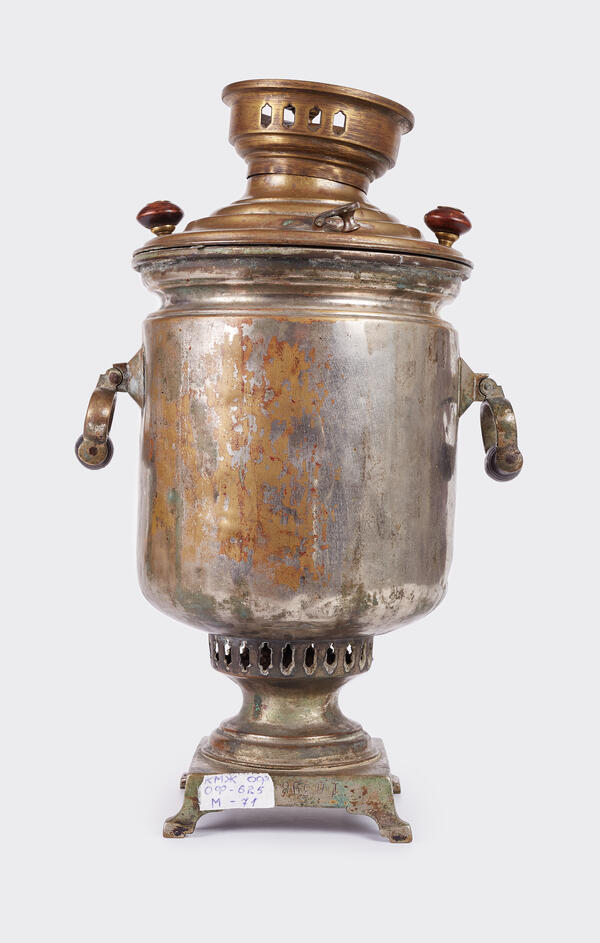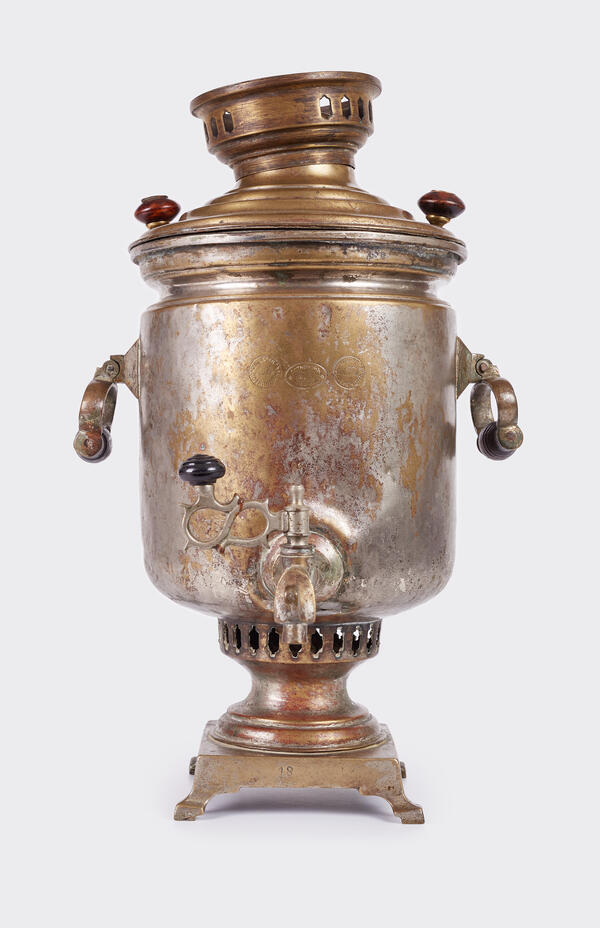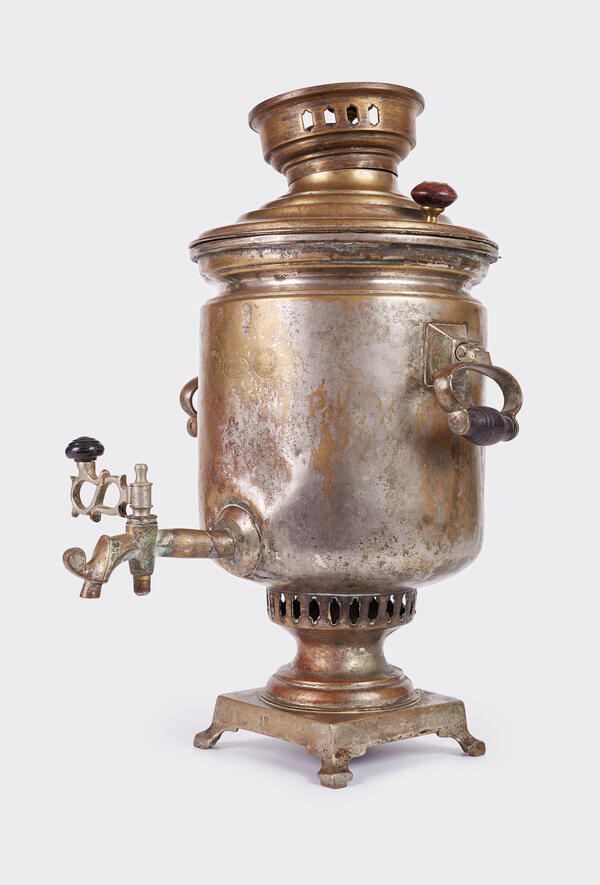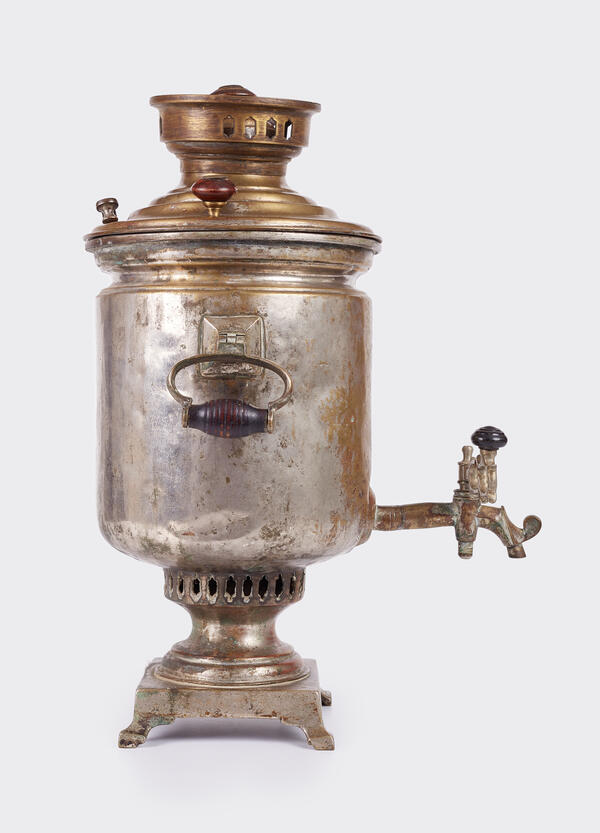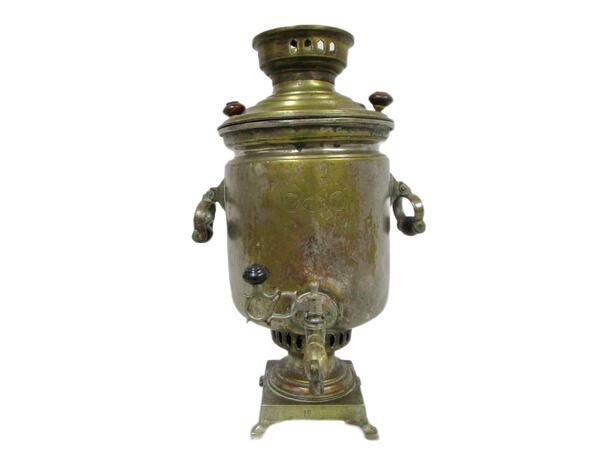
The Zheleznodorozhny Local Lore Museum presents a samovar in the shape of a jar.
The concepts of tea drinking and samovar go hand in hand. The samovar has become synonymous with Russian hospitality and generosity; it is difficult to imagine Russian classical literature, painting, songs, proverbs and sayings without samovars in them.
In 1838, Prince Pyotr Vyazemsky dedicated a large poem to the samovar, which contains the following lines: “Where is our dear samovar, our family’s hearth, / Our family altar, the ark of domestic joys? In it boil, from it flow, the traditions of all our days, / In it live the memories of Russia’s olden days; / It alone survived the devastation of previous years, / And the inextinguishable grandfather was passed on to his grandchildren.”
Tula craftsmen forged weapons and made samovars for centuries. These crafts, as well as the production of accordions, Belev lace and pastila, are traditional for the Tula region. At the end of the 1820s, there were 8 large samovar factories in Tula; later, in the second half of the 19th century, there were already 77. So, Tula quite deserved the title of the “samovar capital”. However, even though Moscow was much inferior to Tula in the number of samovars produced, in terms of quality they were equal, and in terms of aesthetic Moscow samovars often even surpassed their counterparts.
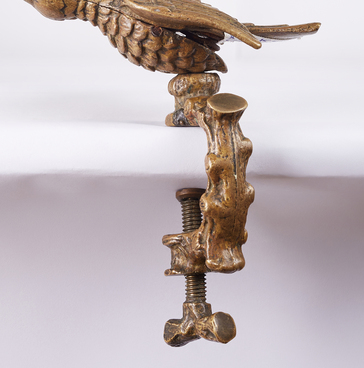
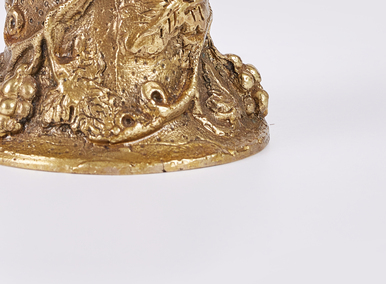
Samovars of the second half of the 19th — early 20th centuries had a variety of names, depending on the shape: “jar”, “snifter”, “vase”, “egg”, “acorn”, “dulya” (pear), “turnip”, “Easter egg”, “flame” and others. The samovar presented in the exhibition was produced at the Sotnikov factory, as evidenced by a round stamp with a clearly visible inscription “Sotnikov. Established in 1879”. It is of the most common, “jar” shape. The body is cylindrical, smooth, tapering at the top. The hanging handles are ring-shaped, attached to the body using a rectangular overlay. The faucet, through which boiling water is poured, has a protrusion in the form of a hook at the spout. The faucet handle resembles a branch. The base is square, and the protruding legs are rectangular.
Samovars produced at the Sotnikov factory enjoyed
wide popularity and even today are of considerable interest to collectors.