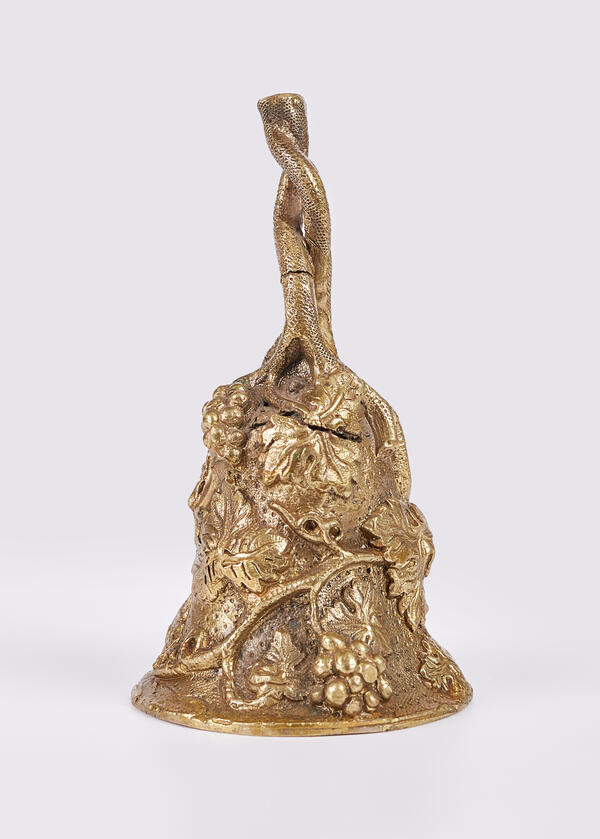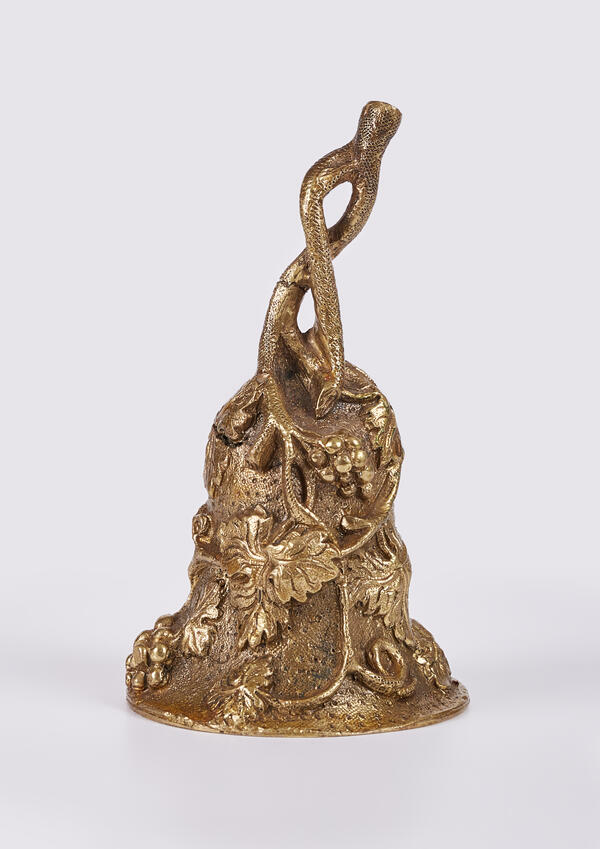
The permanent exhibition of the Zheleznodorozhny Local Lore Museum presents a desk bell from the late 19th — early 20th centuries. It is made of an alloy of bronze and brass and is decorated with an elegant bunch of grapes.
The desk bell remained an integral element of decor in Russian interiors throughout the 19th century, until the advent of the electric bell. The bell was used not only for calling servants. It also adorned desks in offices or vanity tables of high-society ladies and seemed like something that decorated the owner’s everyday life. It often matched the style of the surrounding objects: bronze office décor, writing sets, candelabra or furniture. The designs of bells were truly innumerable. Artists and craftsmen turned to the art of the past, reviving long-forgotten forms and patterns. A desk bell could also have an ideological function, which usually reflected the owner’s personality.
The history of bells goes back several thousand years. The art of making and using them was once considered complex and sacred. It is believed that the first bell rattles were made from wood and dried fruits as early as the Neolithic era. Bells and jingle bells can be found in the everyday life of many peoples. However, the oldest cast bell that has survived to this day comes from China. According to one version, the first bells appeared in China, from where they traveled along the Great Silk Road to other countries in Asia and the Middle East, and then to Europe. Another version says that bells appeared in several cultures at the same time. The territory of the Armenian Highlands in the 9th–5th centuries BC was occupied by the kingdom of Urartu with the highly developed art of bronze and iron casting. Perhaps it was the people of Urartu who “exported” their foundry products: items from Urartu were discovered in the Caucasus and other lands to the west — right up to modern Italy.
Thankfully, bell enthusiasts, that is, bell
specialists, bell ringers and foundry workers, archive and library staff,
musicians, psychologists, medical workers and, of course, cultural studies
scholars and art historians, are currently reviving the interest in the craft.
They are all interested in bells as historical and cultural artifacts.