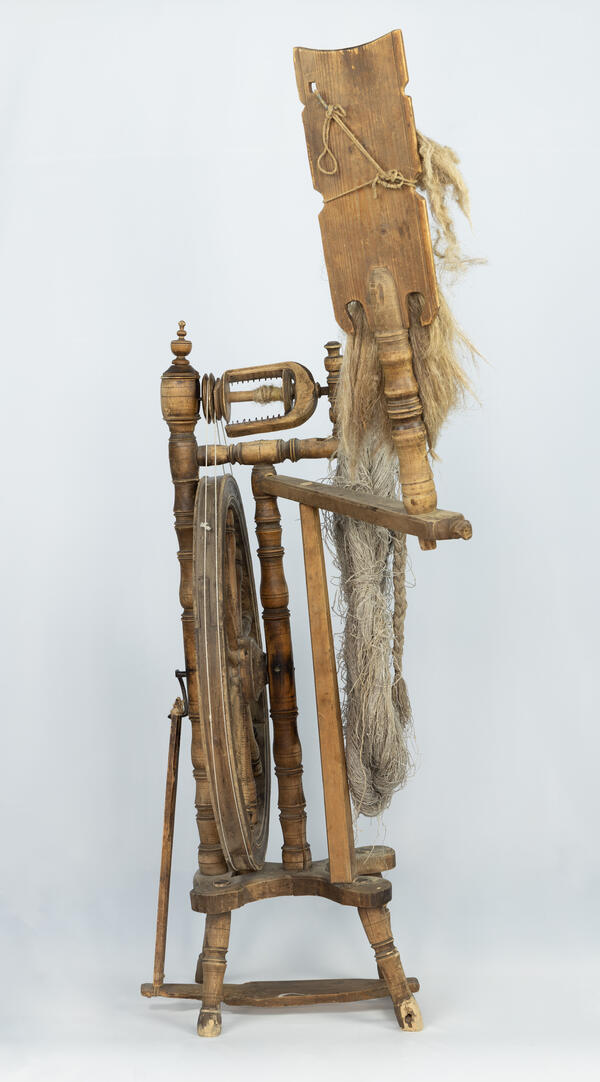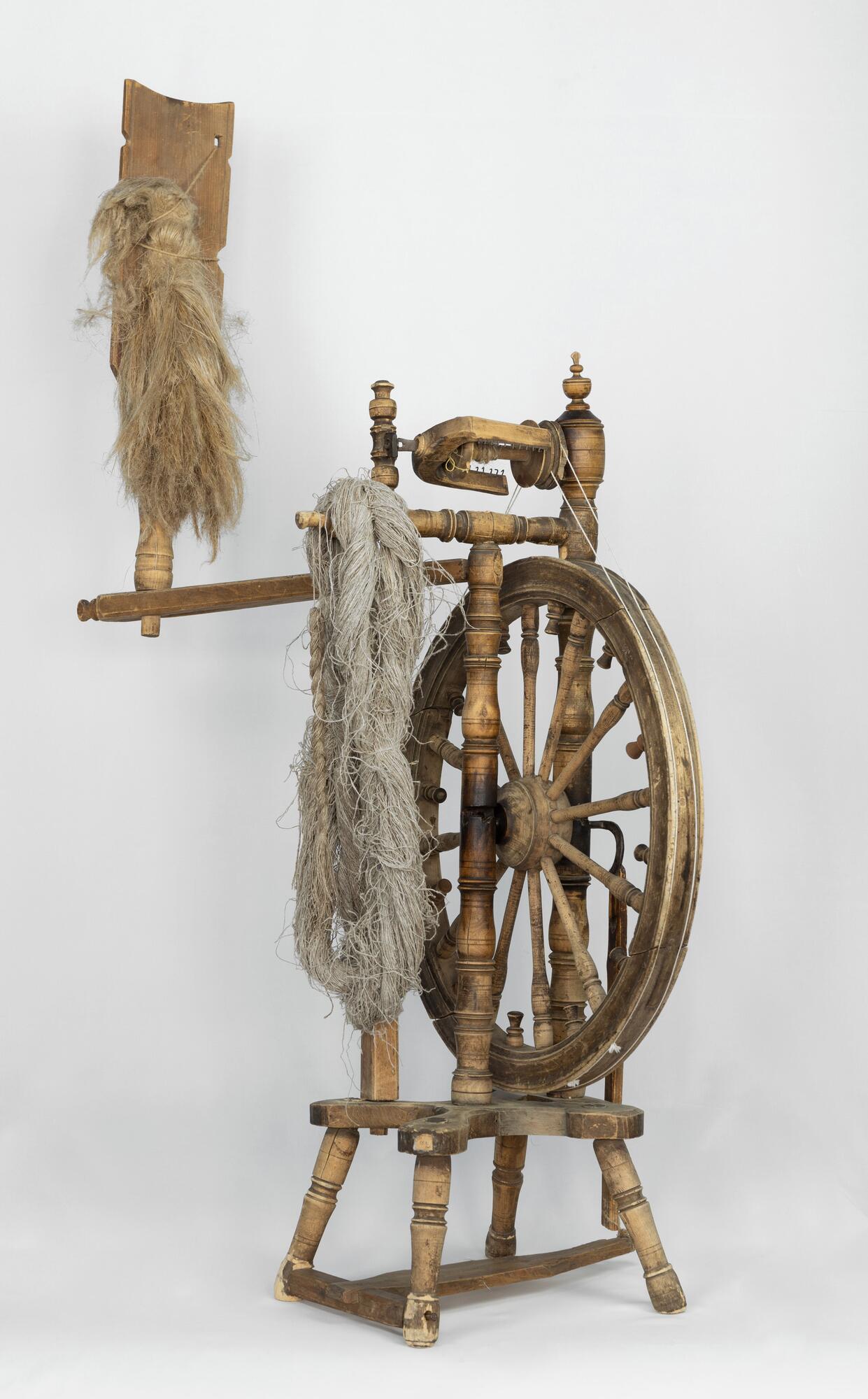


A treadle wheel is a device for mechanical spinning, that is, making threads from flax, wool or down feathers. A treadle wheel consists of a stand, a wheel, a spinning device under the wheel and a pedal, or a treadle. At the front end of the wheel of a treadle wheel there is an interesting device — a flyer. It allowed to twist and wind up the yarn without stopping the wheel. By rotating, the flyer itself twisted the sliver into a thread before it was wound onto the bobbin. Hence, it was called a “self-spinning wheel” in Russian.
In the past, a treadle wheel was a welcome and very expensive gift, a must-have item in any home. Working on a treadle wheel was not easy and required experience and skill from the spinner. The flywheel and the flyer were firmly connected to each other and driven by the lower, larger wheel. Due to the difference in diameters, they rotated slower than the bobbin. The wheel was powered by the spinner’s foot pressing the treadle. With one hand, a craftswoman would draft fiber and twist it a little with her fingers. After passing the flyer, the thread changed its direction and wound onto the bobbin. Unlike the great wheel, a type of wheel when fiber is held in one hand and the wheel is slowly turned with another, the treadle wheel with a flyer allowed performing all three basic actions simultaneously: drawing, twisting and winding the thread.
A treadle wheel spun significantly faster than the great wheel. However, even the most skilled spinner, working without rest, could spin no more than 300 meters of thread per day. Often the thread was repeatedly passed through the spinning wheel to make it more even and smooth. 20,000 meters of yarn were required for 15 meters of fabric. The spinning season lasted five months up until Maslenitsa (an Eastern Slavic religious and folk holiday, celebrating the end of winter). Girls began to prepare their dowry from the age of 7.
Treadle wheels appeared in Russia in the 18th century. In peasant culture, spinning wheels were actively used since the middle of the 19th century, especially in areas where a lot of flax was grown. These included the Vyatka Governorate, from where spinning wheels spread throughout the Urals. Their manufacture continued until the end of the 1930s, when factory-made yarn became common.
In the past, a treadle wheel was a welcome and very expensive gift, a must-have item in any home. Working on a treadle wheel was not easy and required experience and skill from the spinner. The flywheel and the flyer were firmly connected to each other and driven by the lower, larger wheel. Due to the difference in diameters, they rotated slower than the bobbin. The wheel was powered by the spinner’s foot pressing the treadle. With one hand, a craftswoman would draft fiber and twist it a little with her fingers. After passing the flyer, the thread changed its direction and wound onto the bobbin. Unlike the great wheel, a type of wheel when fiber is held in one hand and the wheel is slowly turned with another, the treadle wheel with a flyer allowed performing all three basic actions simultaneously: drawing, twisting and winding the thread.
A treadle wheel spun significantly faster than the great wheel. However, even the most skilled spinner, working without rest, could spin no more than 300 meters of thread per day. Often the thread was repeatedly passed through the spinning wheel to make it more even and smooth. 20,000 meters of yarn were required for 15 meters of fabric. The spinning season lasted five months up until Maslenitsa (an Eastern Slavic religious and folk holiday, celebrating the end of winter). Girls began to prepare their dowry from the age of 7.
Treadle wheels appeared in Russia in the 18th century. In peasant culture, spinning wheels were actively used since the middle of the 19th century, especially in areas where a lot of flax was grown. These included the Vyatka Governorate, from where spinning wheels spread throughout the Urals. Their manufacture continued until the end of the 1930s, when factory-made yarn became common.