In the old days, people used a special set of vessels for washing. It consisted of a container for clean water and a basin. A water jug in Russia was firstly called “rukomyia” (consonant with Russian “wash hands”) or “umyvalnitsa” (consonant with Russian “washbasin”). Since 1499, written sources demonstrated a masculine word — “umyvalnik” (consonant with Russian “wash-basin”). Later, it entered into the Russian formal language. However, the word “rukomyia” has survived only in religious texts. The term “hand washing pot” replaced it. However, different regions had their names. In the north, people used the word “rukomoi”, on the territory of modern Belarus — “rukomytnik”, and in the vicinity of Kostroma and Vladimir, a clay vessel, similar to a sheep’s head with curled horns and used for washing, was called “baranets” (consonant with Russian “sheep”).
The noble citizens usually had silver hand washing pots in their homes. They were called “serebryaniki” (consonant with Russian “silver”) basing on the material of production. Such vessels were decorated with chasing, engraving, and they had an elegant shape. As for the peasants, they used to use simpler vessels made of clay, copper, or cast iron. In the northern governorates, the hand washing pots were sometimes made of a piece of wood with the hollowed middle part.
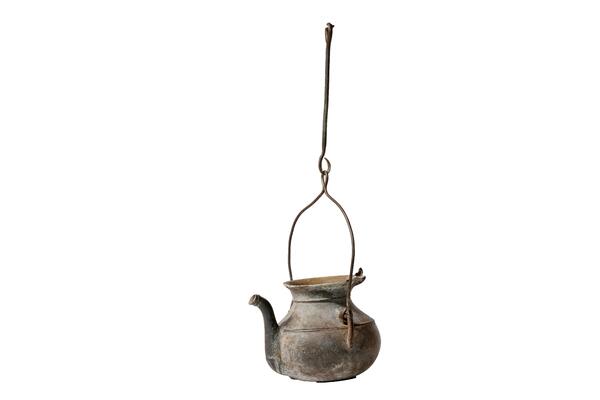
The Nizhnevatrovsk Museum of Local History displays a cast-iron hand washing pot, which was made at the end of the 19th century or the early 20th century. It was made in a shape of a rounded jug with a long spout, like a teapot. Water poured out of it when a person washed his hands. Two prominent horizontal stripes are made on the neck and shoulders of the pot. A jug neck is wide; its edges are slightly bent outward. A spout is attached to the bottom of the jug. Triangular bows are placed on the sides of a hand washing pot. A handle is attached to them. In its upper part, there is a loop for hanging a pot.
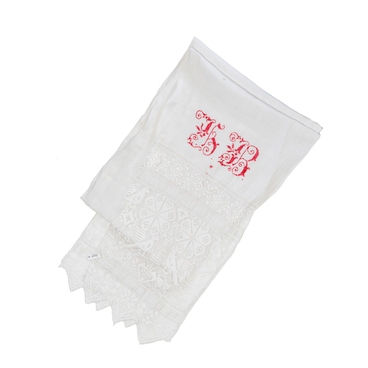
In winter, a hand washing pot was placed in a hut, most often in the corner behind a woodstove. A metal bowl or a wooden tub was placed under it for catching dirty water. A piece of clean white cloth was usually put next to a washing pot. It was used to wipe face and hands after washing. In summer, a pot was placed in the street, as a rule, on the wall of the house or a pole. In this case, the water drained on the ground.
The noble citizens usually had silver hand washing pots in their homes. They were called “serebryaniki” (consonant with Russian “silver”) basing on the material of production. Such vessels were decorated with chasing, engraving, and they had an elegant shape. As for the peasants, they used to use simpler vessels made of clay, copper, or cast iron. In the northern governorates, the hand washing pots were sometimes made of a piece of wood with the hollowed middle part.
The Nizhnevatrovsk Museum of Local History displays a cast-iron hand washing pot, which was made at the end of the 19th century or the early 20th century. It was made in a shape of a rounded jug with a long spout, like a teapot. Water poured out of it when a person washed his hands. Two prominent horizontal stripes are made on the neck and shoulders of the pot. A jug neck is wide; its edges are slightly bent outward. A spout is attached to the bottom of the jug. Triangular bows are placed on the sides of a hand washing pot. A handle is attached to them. In its upper part, there is a loop for hanging a pot.
In winter, a hand washing pot was placed in a hut, most often in the corner behind a woodstove. A metal bowl or a wooden tub was placed under it for catching dirty water. A piece of clean white cloth was usually put next to a washing pot. It was used to wipe face and hands after washing. In summer, a pot was placed in the street, as a rule, on the wall of the house or a pole. In this case, the water drained on the ground.