

A sledge is one of the most ancient means of transportation. They were used not only in winter but also in summer, especially in swampy areas, where the wheels could get stuck in unstable soil. A sledge drag was a prototype of all modern sledges. It consisted of two bars connected by transverse beams and used for goods transportation.
The archeologists found the first similar sledge, which belonged to about the 2nd century BC. Over time, sledge design has changed. More and more varieties appeared. There were even women’s sledges, covered with a cloth on all sides, and ritual sledges with special decorations. They were used in funeral and wedding ceremonies.
Russian peasants used simple wooden sledges without any special decorations. Carriages for noble people and clergymen were richly decorated. There were special patterns on the sides of sledges. Such means of transportation were also painted with colored ornaments and supplemented with ribbons and bells. The inside part was covered with satin or velvet. Sometimes sable or weasel fur were put in sledges to warm the passengers. As a rule, only one or at least two people could ride in a sledge simultaneously.
In the Northern governorates, there often were the so-called “koshevs”, or “koshevki” — high carts with a reinforced body and iron-lined sledge runners. They were designated for ceremonial trips and festive visits. Betweenwhiles the local authorities used such carts for official travelings. Small and lightweight koshevki were used for mail delivery.
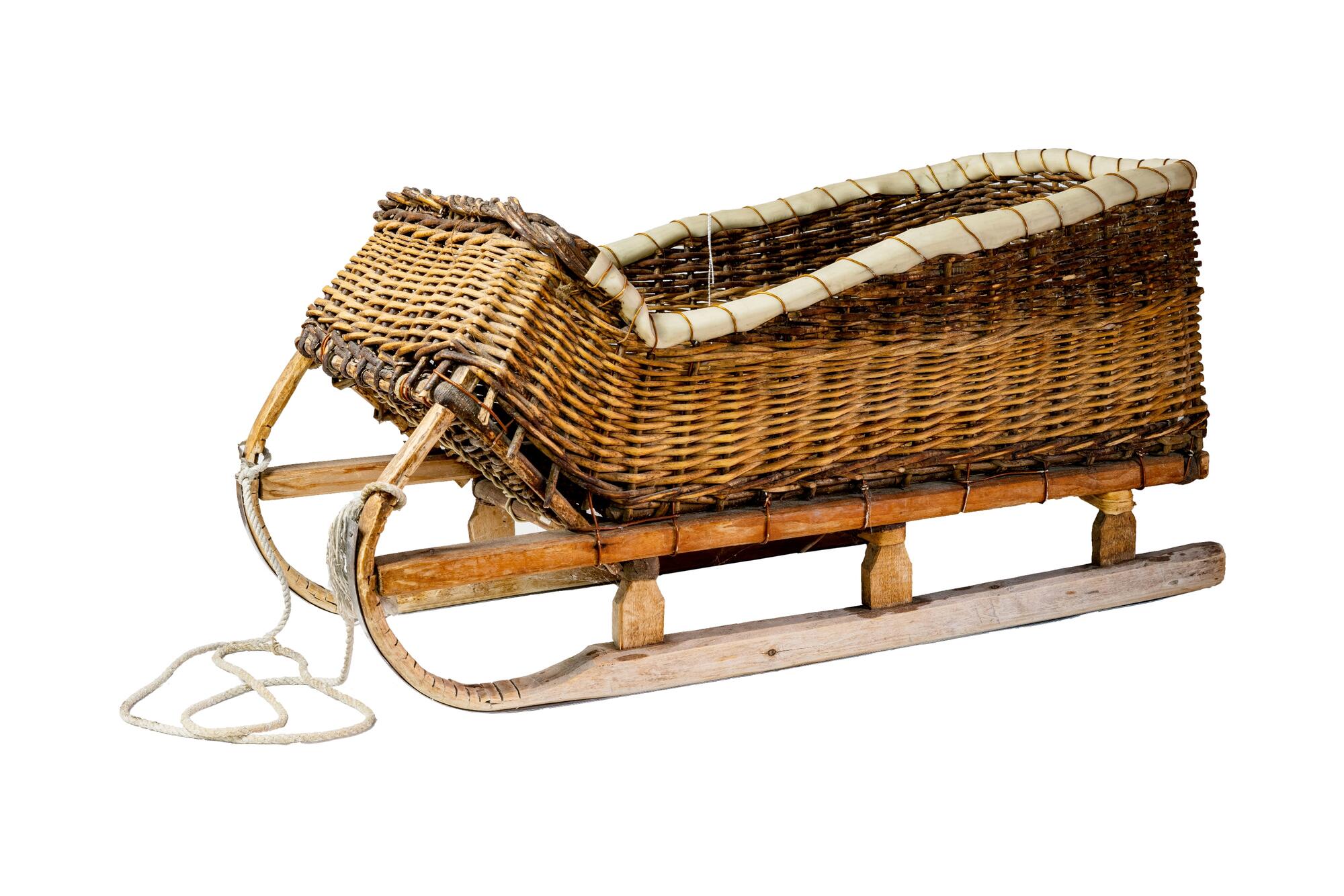
Similar miniature sledges were made for children. Their sides and back were usually woven of willow twigs. Kids used to slide down ice hills in such small single sledges during winter holidays, especially during the Maslenitsa week (this holiday is also known as Butter week. It has been celebrated during the last week before Great Lent since the old times and to date).
The sledge from the museum collection has high sides. It was necessary to make them in such a way as to prevent the kids from falling out. Rugs or folded soft blankets could be put inside.
Willow twigs for future sledges were stored after all the leaves fell from the trees. That period continued from the end of October until April. During that time, wood became strong but still resilient and flexible. The men boiled twigs in hot water to remove the bark from them.
The archeologists found the first similar sledge, which belonged to about the 2nd century BC. Over time, sledge design has changed. More and more varieties appeared. There were even women’s sledges, covered with a cloth on all sides, and ritual sledges with special decorations. They were used in funeral and wedding ceremonies.
Russian peasants used simple wooden sledges without any special decorations. Carriages for noble people and clergymen were richly decorated. There were special patterns on the sides of sledges. Such means of transportation were also painted with colored ornaments and supplemented with ribbons and bells. The inside part was covered with satin or velvet. Sometimes sable or weasel fur were put in sledges to warm the passengers. As a rule, only one or at least two people could ride in a sledge simultaneously.
In the Northern governorates, there often were the so-called “koshevs”, or “koshevki” — high carts with a reinforced body and iron-lined sledge runners. They were designated for ceremonial trips and festive visits. Betweenwhiles the local authorities used such carts for official travelings. Small and lightweight koshevki were used for mail delivery.
Similar miniature sledges were made for children. Their sides and back were usually woven of willow twigs. Kids used to slide down ice hills in such small single sledges during winter holidays, especially during the Maslenitsa week (this holiday is also known as Butter week. It has been celebrated during the last week before Great Lent since the old times and to date).
The sledge from the museum collection has high sides. It was necessary to make them in such a way as to prevent the kids from falling out. Rugs or folded soft blankets could be put inside.
Willow twigs for future sledges were stored after all the leaves fell from the trees. That period continued from the end of October until April. During that time, wood became strong but still resilient and flexible. The men boiled twigs in hot water to remove the bark from them.