

Rushnyk (Russian ritual cloth embroidered with symbols and cryptograms of the ancient world) is a long towel made of a homespun canvas. Its width traditionally was about 40 cm, its length reached 3 meters, and even more. As a rule, it was decorated with embroidery and ribbons. Such towels were used in many rituals at weddings, funerals, baptismal ceremonies, and during calendar sacramentals related to fertility. Rushnyks were hung in the God’s corner near icons to decorate the room. They were also used to greet honored guests. According to the tradition, rushnyks were used when presenting bread and salt.
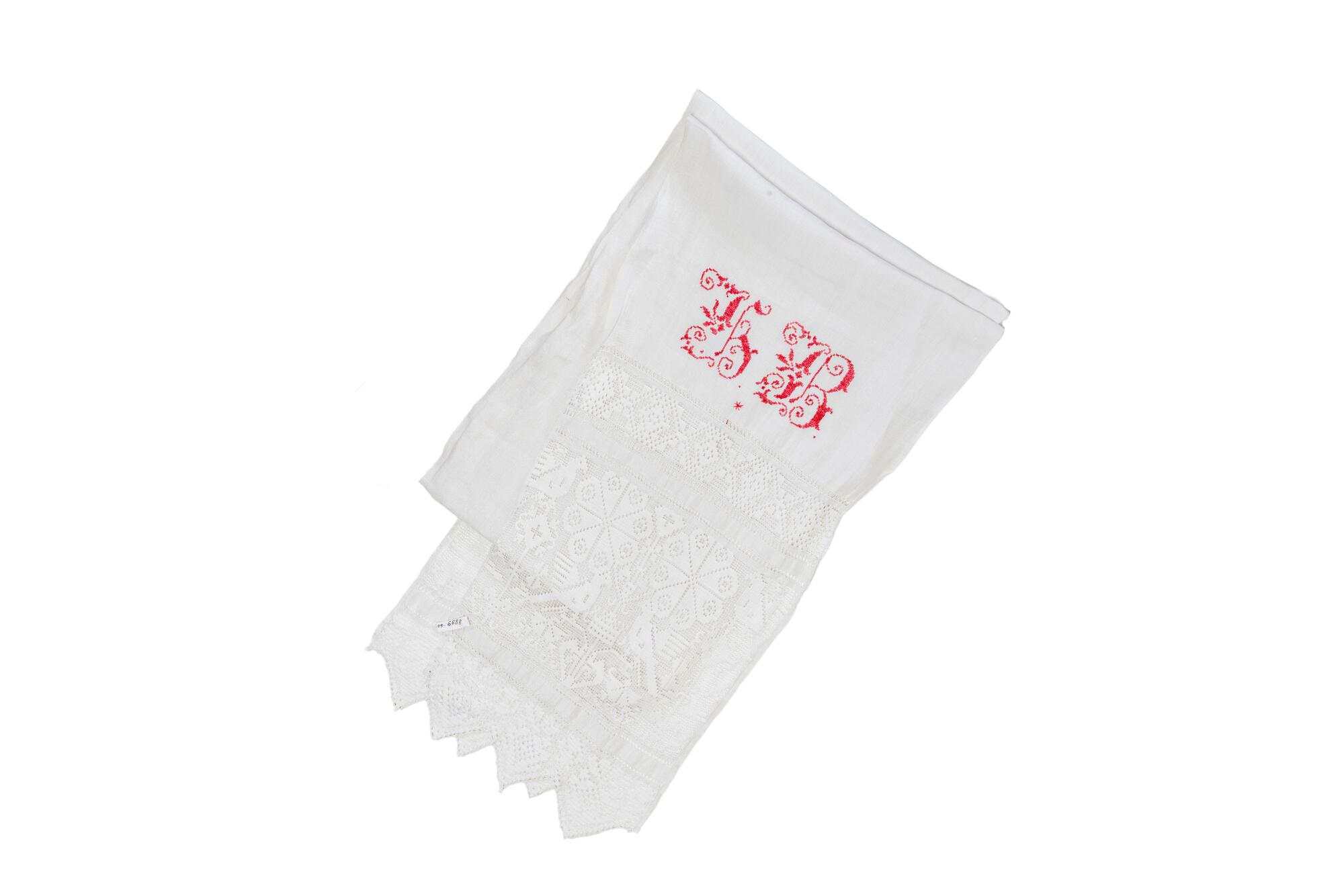
A towel from the collection of Nizhnevartovsk Museum of Local History belongs to wedding towels. It was woven of thin light-colored linen threads. The edges of a rushnyk are figured. They are shaped in the form of three large sharp teeth. The initials “B. V.” are embroidered on one edge with red threads. The teeth are decorated with monochromatic white embroidery. Its main element showed two birds surrounded by flowers. Such a pattern was used to symbolize newly married, their love, and strong family ties.
In Russian villages, rushnyks were used during all stages of the wedding. The girl, who was preparing for the celebration, had to embroider at least 40 towels with different ritual patterns, which were passed down from generation to generation. About a quarter of the towel length had to be covered with embroidery, but the center had to be blank. People believed that it was a place for God’s blessing.
A bride was covered with a rushnyk during a bachelorette party, when, according to tradition, she began to mourn her maiden life. Embroidered towels were also used to cover horses in a wedding train, a groom, guests of honor, and friends. People thought that the patterns served as amulets and could protect the newly married from the evil eye.
A special rushnyk was put under the newly married’s feet during a wedding. It was very important to note who would step on it first because this was a way for a couple to denote the head of the family. The hands of the newly married were tied with another towel. It symbolized their family ties. Another type of a wedding towel was called “khlebosolniy” (consonant with Russian “bread and salt”). The parents greeted the newly married after the wedding with rushnyk and a loaf of bread.
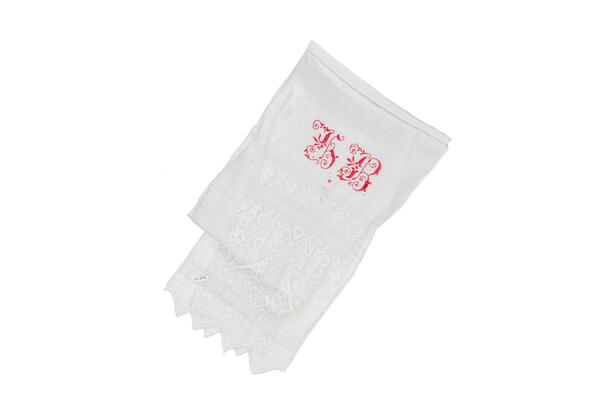
A towel from the collection of Nizhnevartovsk Museum of Local History belongs to wedding towels. It was woven of thin light-colored linen threads. The edges of a rushnyk are figured. They are shaped in the form of three large sharp teeth. The initials “B. V.” are embroidered on one edge with red threads. The teeth are decorated with monochromatic white embroidery. Its main element showed two birds surrounded by flowers. Such a pattern was used to symbolize newly married, their love, and strong family ties.
In Russian villages, rushnyks were used during all stages of the wedding. The girl, who was preparing for the celebration, had to embroider at least 40 towels with different ritual patterns, which were passed down from generation to generation. About a quarter of the towel length had to be covered with embroidery, but the center had to be blank. People believed that it was a place for God’s blessing.
A bride was covered with a rushnyk during a bachelorette party, when, according to tradition, she began to mourn her maiden life. Embroidered towels were also used to cover horses in a wedding train, a groom, guests of honor, and friends. People thought that the patterns served as amulets and could protect the newly married from the evil eye.
A special rushnyk was put under the newly married’s feet during a wedding. It was very important to note who would step on it first because this was a way for a couple to denote the head of the family. The hands of the newly married were tied with another towel. It symbolized their family ties. Another type of a wedding towel was called “khlebosolniy” (consonant with Russian “bread and salt”). The parents greeted the newly married after the wedding with rushnyk and a loaf of bread.