


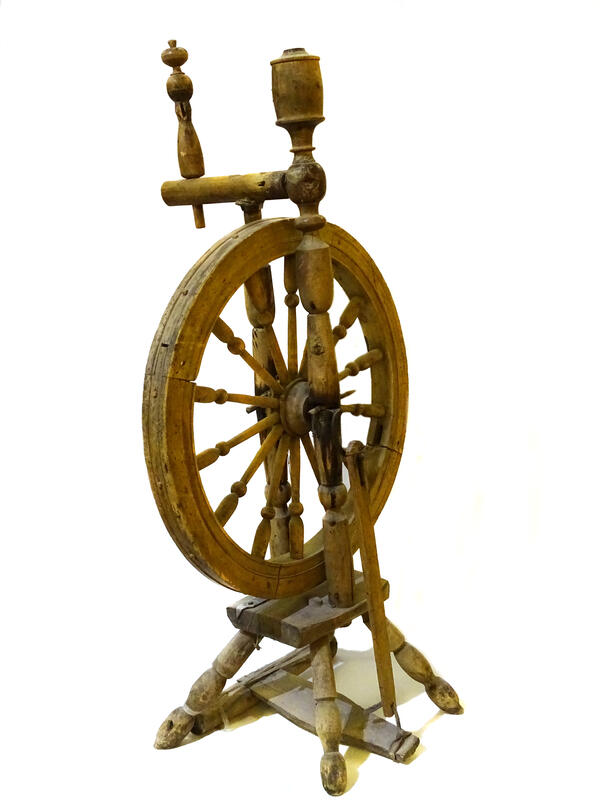
Spinning wheels are from ancient times. Yarn spinning was primordial women’s work. The name of the spinning wheel in Old Rus was “pryaslitse”. From autumn to Lent spinners worked in small attic rooms until midnight under the splinter light while humming quiet songs. No spinning wheel that came to us from the distant past is the same as another. Each one has its own peculiarity. Apparently, each mistress of a spinning wheel, and the master, most likely, invested their efforts, creativity and imagination to decorate their tool and ease the work. In Russia, spinning wheels were made of maple, aspen, birch and linden.
At first there was manual twisting of yarn and then the spindle and distaff were invented. The distaff was originally invented in ancient Rome. The yarn from the first ancient distaves varied in quality and thickness. It depended on the breed of sheep, what time of year the sheep was sheared and many other factors. How was the whole spinning process carried out? A large wheel was driven with the right hand and a strand was pulled out with the left hand and brought to the spindle. Depending on the angle of the strand to the spindle, the strand was spun or wound.


