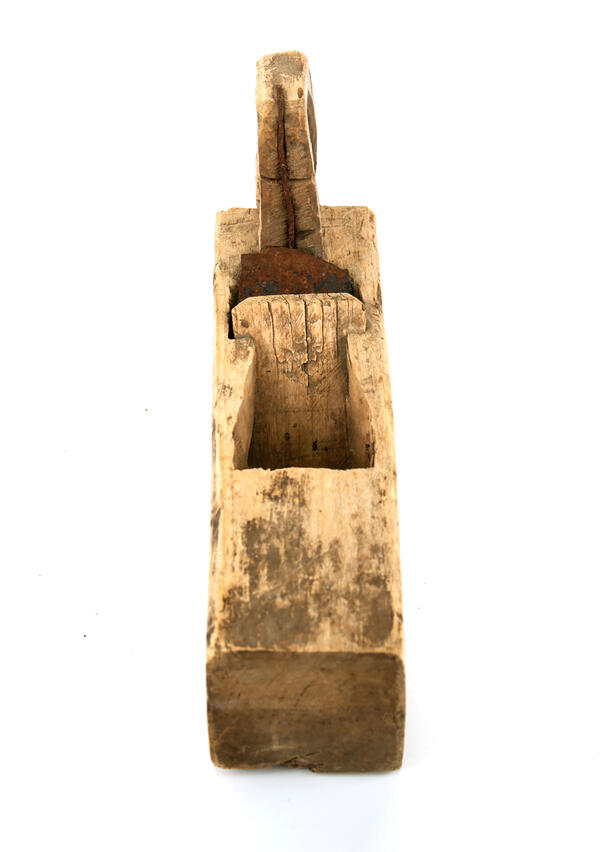
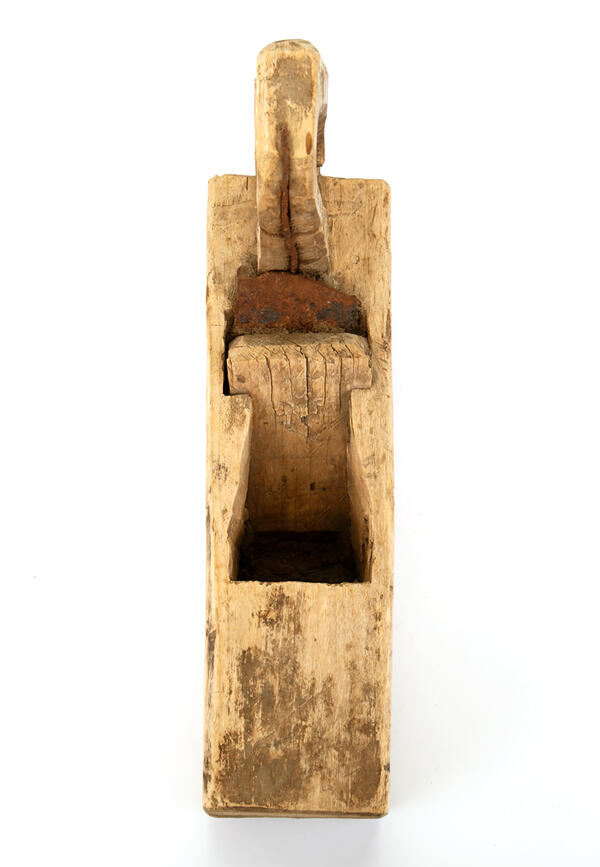
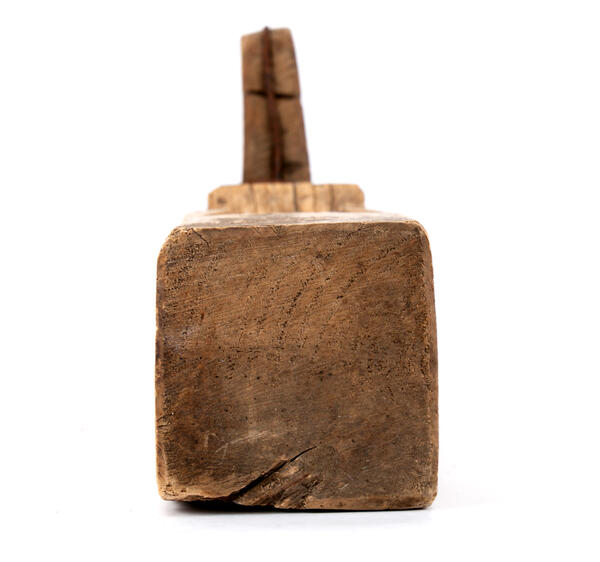
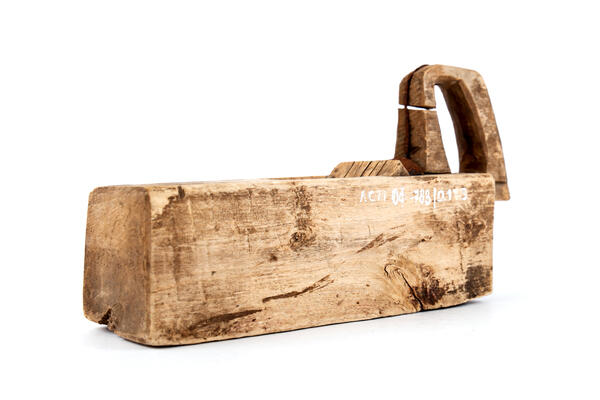
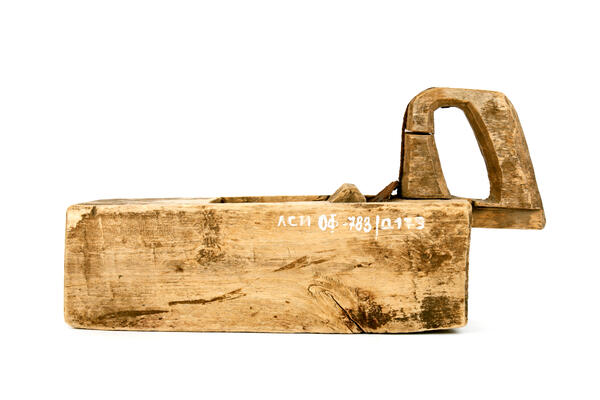
A hand plane is a tool for shaping wooden surfaces by smoothing, flattening, and adjusting the size of the workpiece. It consists of a stock, a blade and a wedge. According to archaeologists, such devices appeared no later, and maybe even earlier than the 4th–3rd centuries BC. The oldest plane made of iron was found in Pompeii and attributed to the I century AD.
The instrument was widely used in the 15th–16th centuries, and in the 18th century it was at the height of its popularity. Historians attribute this fact to the cultural context of the time — rapid development in various areas of life, including construction and furniture-making, required improved carpentry tools.
Although the principle of the plane remains unchanged, the design of this tool varies greatly: in England, the plane was made of beech and its shape resembled a coffin — hence the name “coffin plane”; the Dutch, also made planes of beech, but given a shoe-like shape; French planes were rectangular and made of apple and pear wood. The Austro-German version was made of hornbeam and featured distinct horn-shaped handles. It was this model that Peter I brought to Russia.
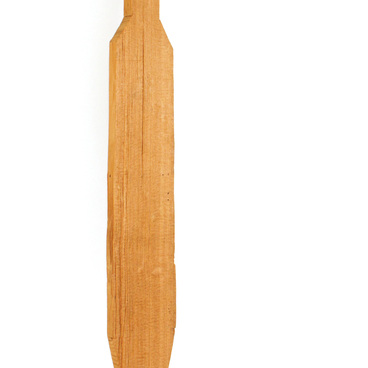
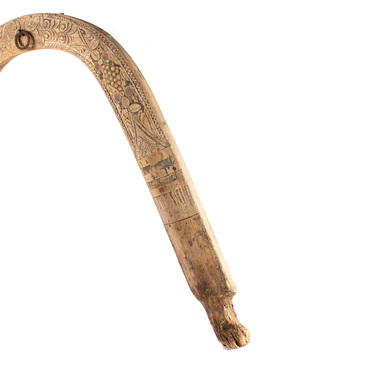
There is little doubt that an original Russian tool for removing bark and shavings from wood existed before Peter’s time. It was called a “strug” (drawknife) — a knife with a handle for each hand. The plane was not so much a novelty for Russian craftsmen, but more like a variation of the “strug”.
The Explanatory Dictionary of Vladimir Ivanovich Dal defines the word “plow” as the generic name of a “carpenter’s tool for shaving wood”, and describes it as “a piece of iron installed in the block at an angle and pressed by a wedge”. According to Dal, variations of the plow include the two-handed “medvedka”, the “sherkhebell” or the scrub plane, the regular plane, the jointer plane, the bead plane, and the shoulder plane (for trimming the edges of a workpiece). The two-handed “tanner’s drawknife” is mentioned separately.
It is noteworthy that foreign visitors were attracted not by the variety of instruments Russian masters had at their disposal, but rather by the ability of Russian carpenters to make do with little. In the mid-19th-century French newspaper “Le Nord”, a journalist claimed that the “Russian man” is a “good carpenter” with an ax at hand at all times, which equally well performs the role of a saw, a plane and a chisel.