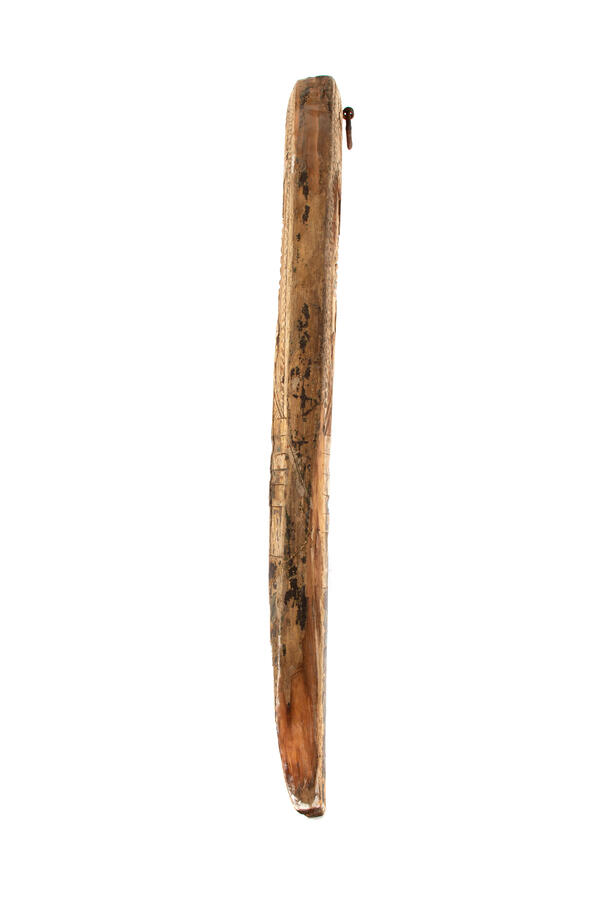
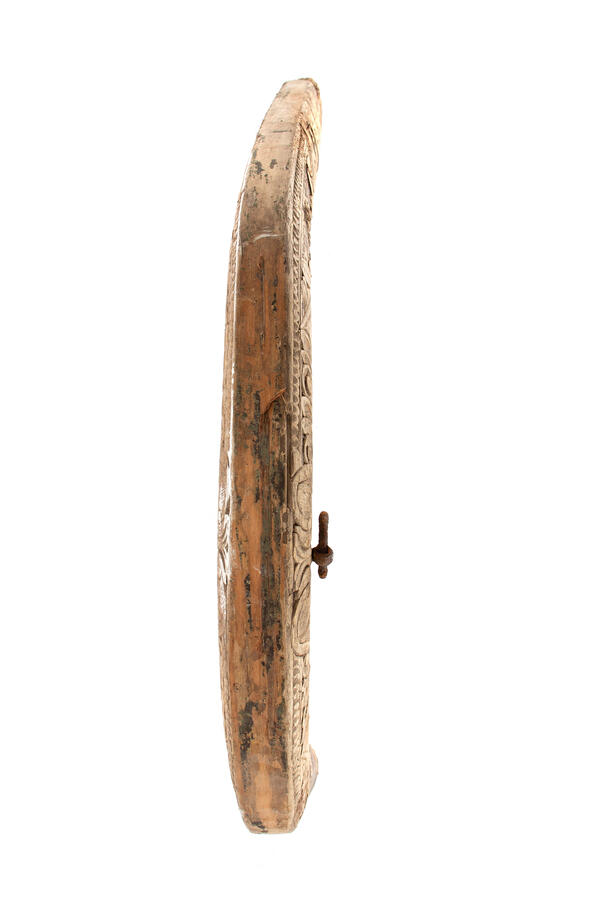
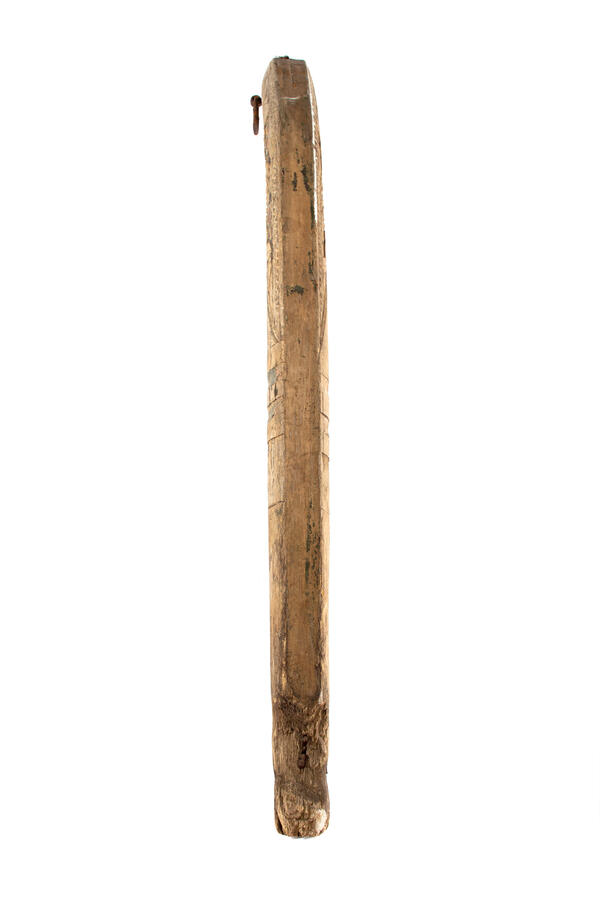
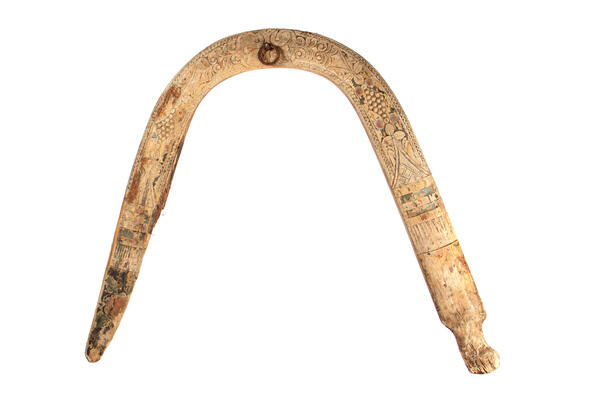
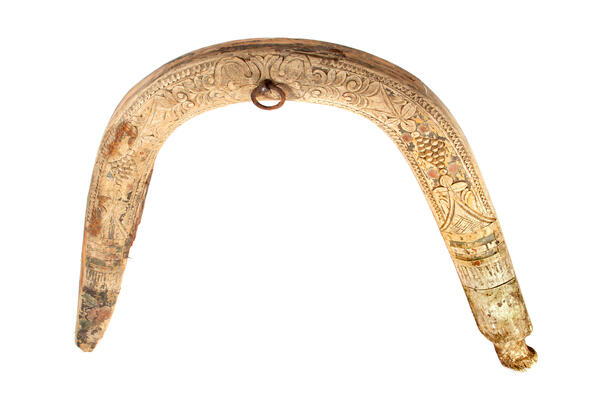
A wooden shaft bow is one of the main elements of a horse’s harness that is attached to a cart or a sleigh. Its main purpose is to absorb the jolts of the cart during movement and evenly distribute the load on the animal (a single horse or, in the case of a troika, the middle one). Tugs were used to fasten the bow to the shafts with horse collars.
Researchers disagree on when exactly shaft bows appeared in Russia. One version states that they were borrowed from the Karelians and Finns in the 12th–13th centuries; excavations in Novgorod unveiled shaft bows from the 14th century.
Strong elm and soft, elastic, but no less resistant willow were considered optimal materials for creating a shaft bow for daily use.
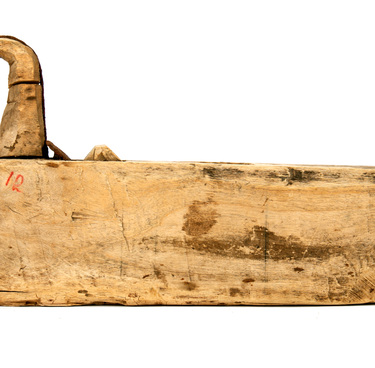
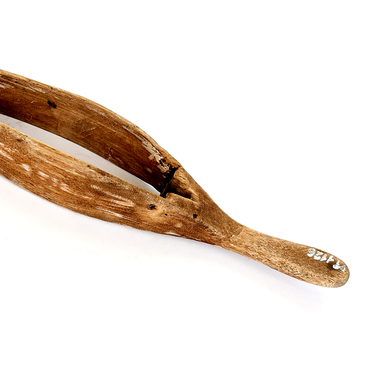
The work of the bow-maker included several stages. Seasoned wood was sawn into logs (180–280 cm long and 30–50 cm thick), which were then cut into workpieces. The workpiece was cut at the ends, giving it the rough shape of the end-product. Next, it was steamed in a stove or a bath on specially arranged poles and bent on a special machine.
Several people took part in this process. One end of the stake was firmly attached to the arc-shaped form, and the other was slowly and carefully bent over it with a pulley system (sometimes driven by horse). One of the masters supervised the process: directed the movement of the arc, made sure that the wood fibers ran parallel to each other and did not twist. The ends of the bent lumber were tied together with a rope or twine. The product was then left to dry for three to four days, after which it was planed.
For festive harnesses, used only on special occasions, shaft bows were made from black poplar or willow — for carving (usually geometric or floral patterns) or from elm — for painting. Before painting, the wood was polished, and after painting it was varnished. The first painted shaft bows were gilded, then they began to feature blue bunches of grapes and red roses, and finally they were covered in realistic floral motifs against a backdrop of silver or black.