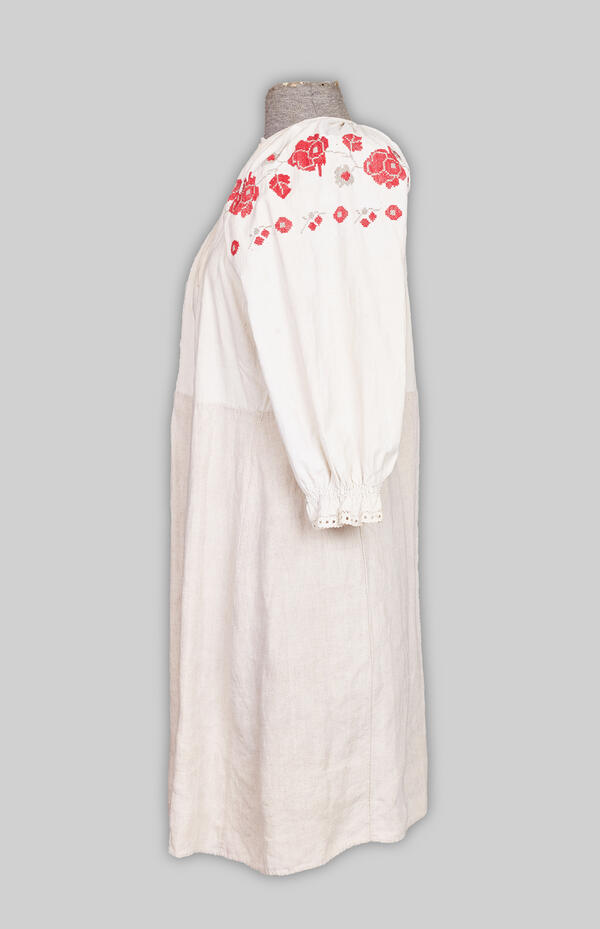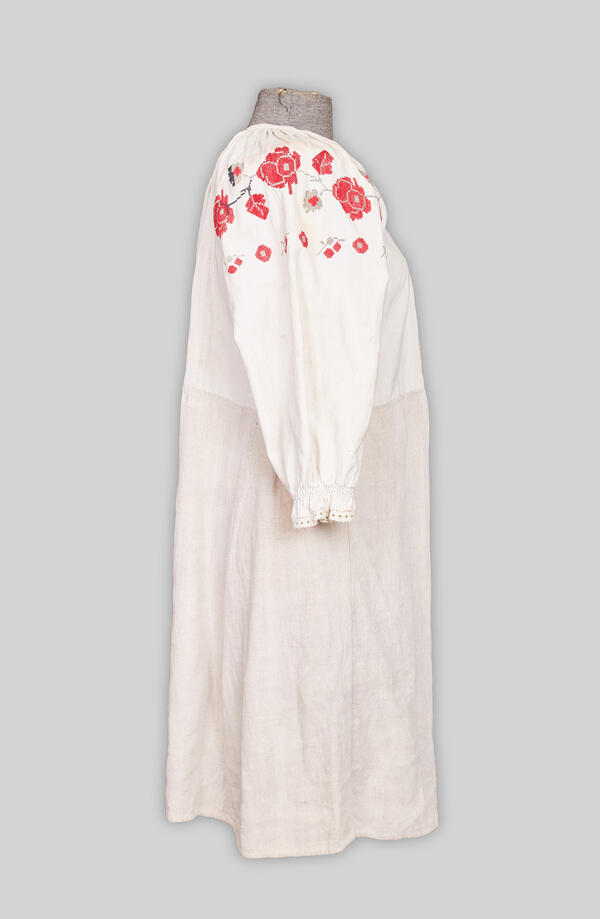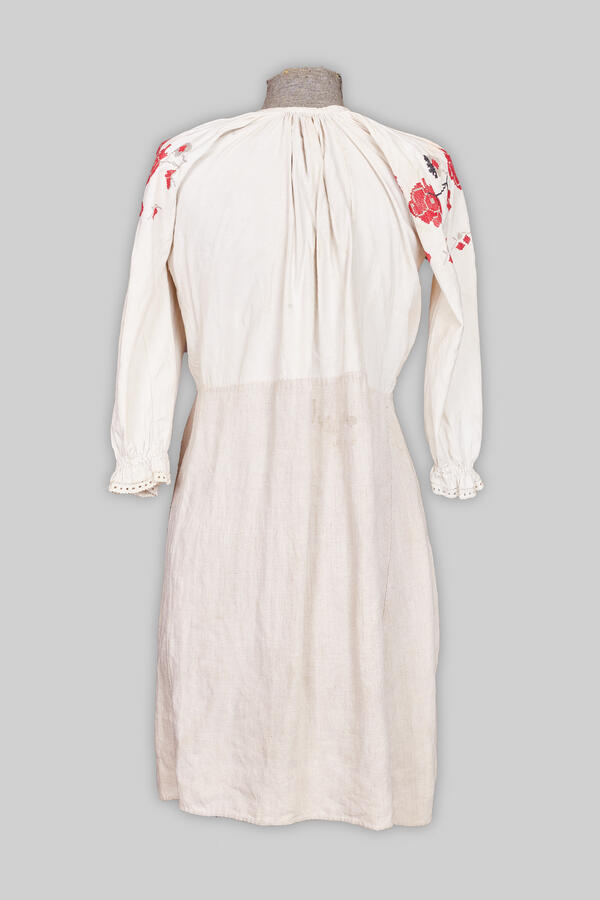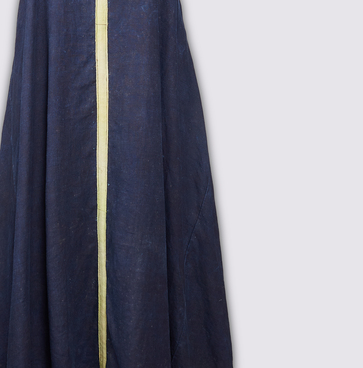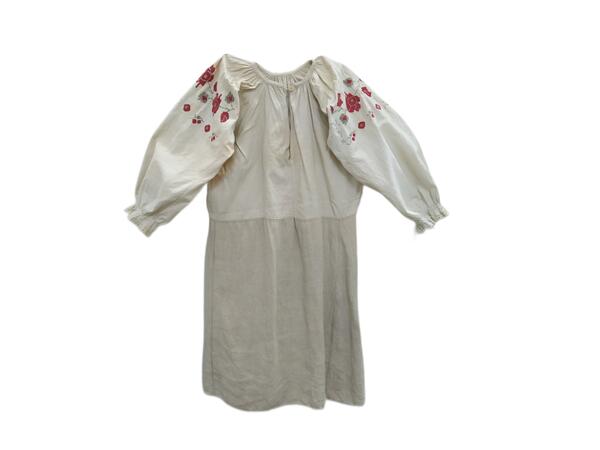
A women’s shirt worn under a sarafan from the collection of the Zheleznodorozhny Local Lore Museum is part of the traditional costume of the Vladimir Governorate of the early 20th century.
The shirt is white, which is a common Slavic tradition dating back to old times. The color of bleached thin linen is a kind of aesthetic standard for shirts. The first shirts were considered underwear and were worn under dresses and sarafans. They were loose-fitting; such clothes were called “stan” in Russian. The shirts usually stretched below the knees and were made with and without a collar. The ones without a collar are considered the earliest.
The collar of the exhibited shirt is arranged in small folds and trimmed on top with a smooth strip. The shirt has a slit in the middle of the chest and is fastened with a thread loop with one button. It consists of two parts: the upper one — “vorotukha” and “rukova” (the collar and the sleeves) and the lower one — “stanushka”. The distinction can be explained by the fact that the shirt was worn under a sarafan. The upper part of the shirt is made of fine cotton, and the lower — of coarser homespun cloth. It is interesting that every peasant woman had a lot of “upper shirts” and they could be easily changed as needed. And in some governorates — in Nizhny Novgorod, for example — the shirt consisted of only one upper part, while the lower part was not sewn on at all. Instead, peasant women in that region wore petticoats.
It has long been believed that national clothes are more than just pleasing to the eye — they can also act as an amulet. In Rus, embroidery was of special importance. Embroidery threads were mainly of red color or its shades: scarlet, lingonberry, cherry, brick and currant. The sleeves of the shirt were decorated in the cross-stitch technique. Geometric and floral patterns are the most common in popular embroidery. There are numerous and varied floral motifs. The upper part of the shirt sleeve is decorated with embroidered roses. Rose is a symbol of love and mercy. The rose ornament was reminiscent of reincarnation and the never-ending flow of life.
Embroidered shirts were an indispensable part of
every woman’s dowry. Brides kept up to six shirts in their dowry chests, and
those that were rich — a whole dozen of them.