

A mandyas, or phelonion, is a traditional outer garment of the Orthodox priests, which they put on before divine service. It is a bell-shaped sleeveless cape. In the Russian Orthodox Church, a mandyas should have a high standing collar. The item is long at the back and goes down below the knees. The front part is waist-long. There is also a so-called small phelonion, short on all sides: it is worn only during consecration.
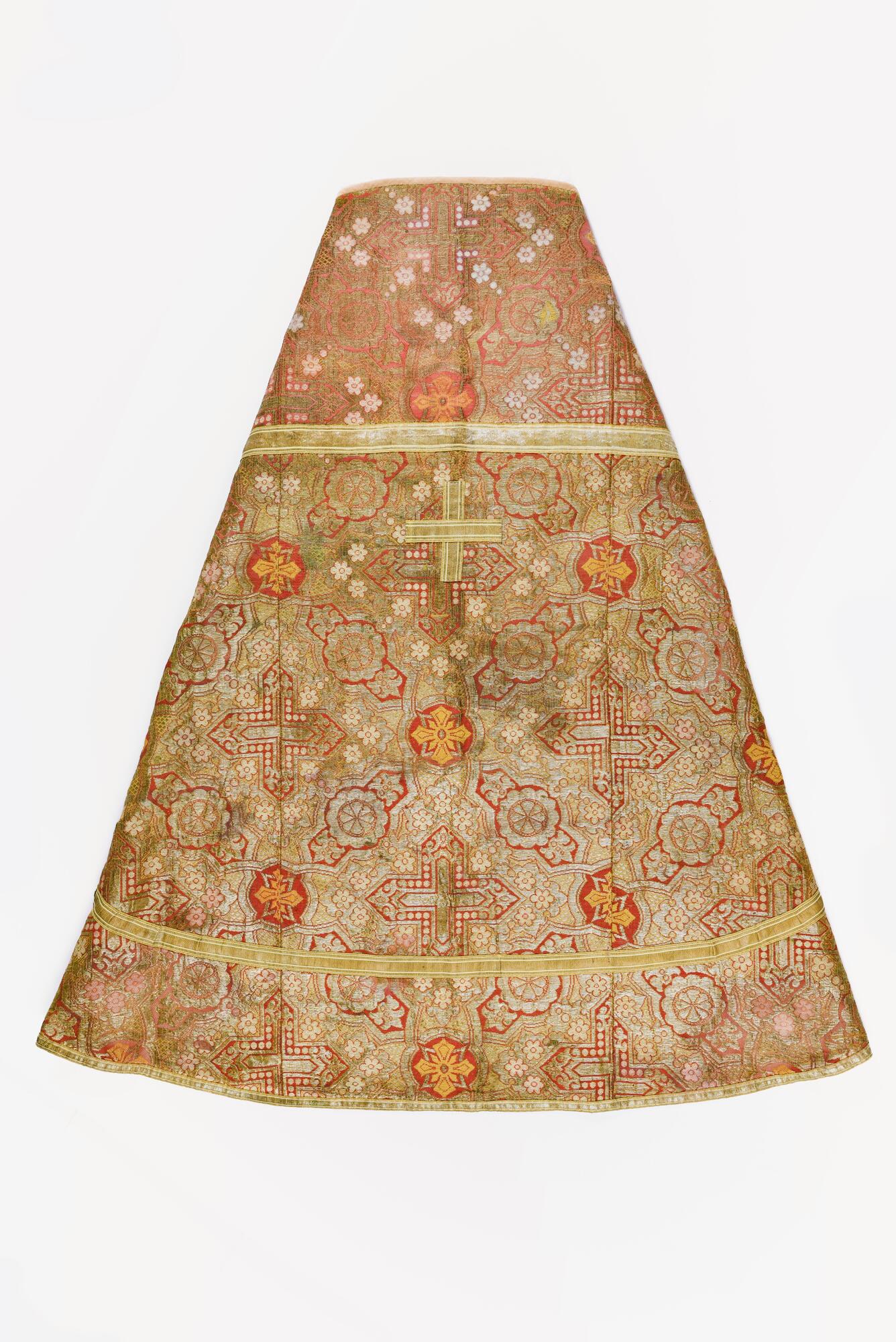
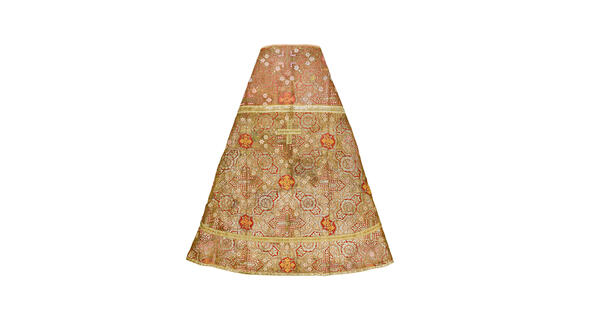
The mandyas from the Bishop’s House collection was sewn from brocade based on red silk. This material did not crumple, did not wear out for a long time, and looked solemn. The surface of the mandyas is woven with gold and silver threads, which form a complex ornament: floral patterns, four-pointed crosses, and rhombuses. There is an equilateral cross with four arms on the back of the cape. The bottom of the robe is sewn with a gold band.
The cape is worn over an inner cassock — a long, spacious robe, most often white. The vestments are complemented by epimanikia — a kind of cuffs. Priests also wear an epitrachelion around their neck (a long wide ribbon), a belt made of the same fabric as the mandyas, and a pectoral cross. The attire is also supplemented with church awards — an epigonation, a kamelaukion, or a miter. The priests' vestments are usually kept in the altar; sometimes a separate room is set aside for them in the temple and called the sacristy.
The mandyas from the Bishop’s House collection was sewn from brocade based on red silk. This material did not crumple, did not wear out for a long time, and looked solemn. The surface of the mandyas is woven with gold and silver threads, which form a complex ornament: floral patterns, four-pointed crosses, and rhombuses. There is an equilateral cross with four arms on the back of the cape. The bottom of the robe is sewn with a gold band.
In Orthodoxy, the phaelonion symbolizes an armor of faith, love, and righteousness, which every true Christian is believed to have. The color of the vestment varies depending on the occasion on which the service was performed. On Christmas, Epiphany, Transfiguration, and Ascension, priests wear white vestments. During the Great Lent, which lasts from Maslenitsa to Easter, a black robe is usually worn. During the services in honor of the Virgin, the clergy wear blue mandyases: this color is traditionally associated with the Mother of God, since it embodies her purity and innocence. The main festive color in Orthodoxy is red. It symbolizes life, so clothes of this shade are worn during Easter services.
The cape is worn over an inner cassock — a long, spacious robe, most often white. The vestments are complemented by epimanikia — a kind of cuffs. Priests also wear an epitrachelion around their neck (a long wide ribbon), a belt made of the same fabric as the mandyas, and a pectoral cross. The attire is also supplemented with church awards — an epigonation, a kamelaukion, or a miter. The priests' vestments are usually kept in the altar; sometimes a separate room is set aside for them in the temple and called the sacristy.