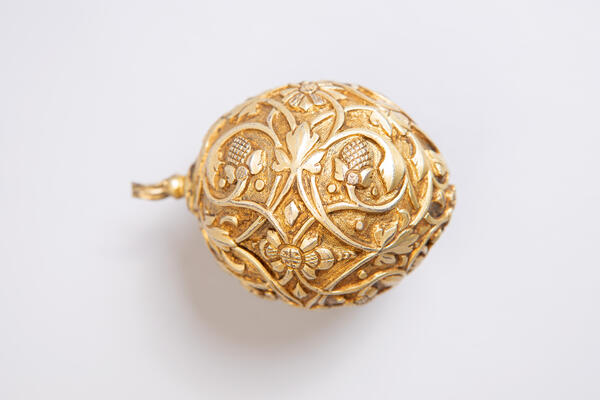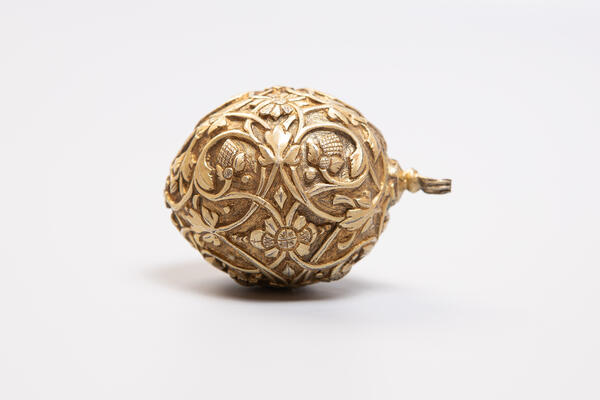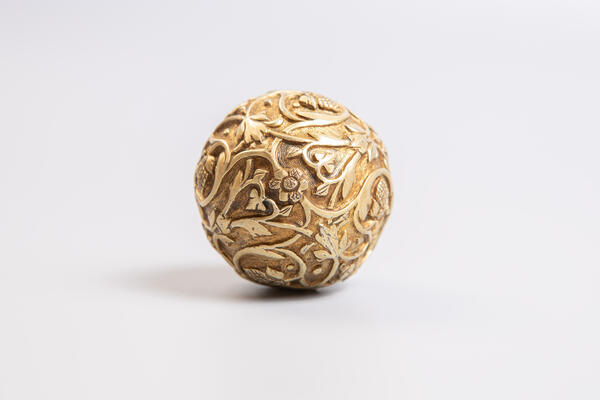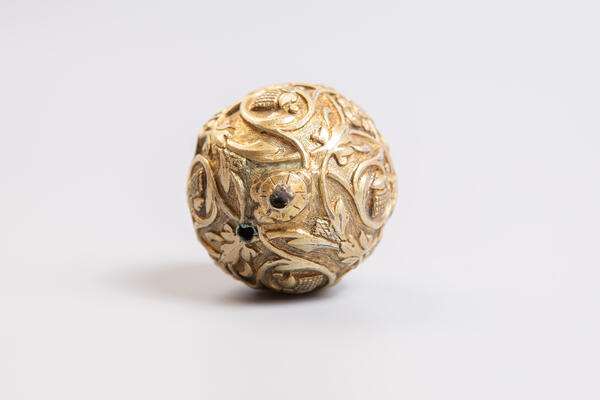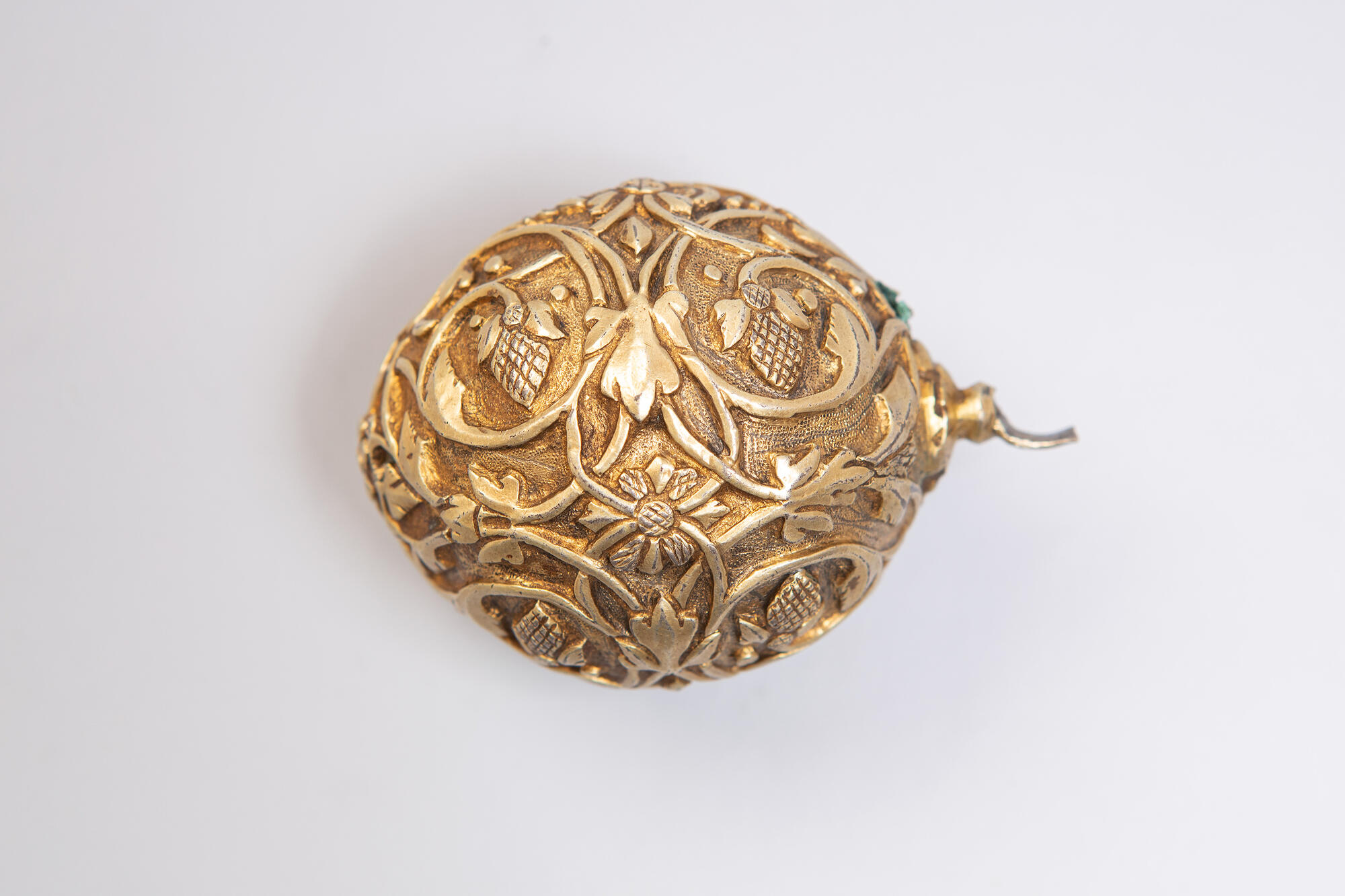


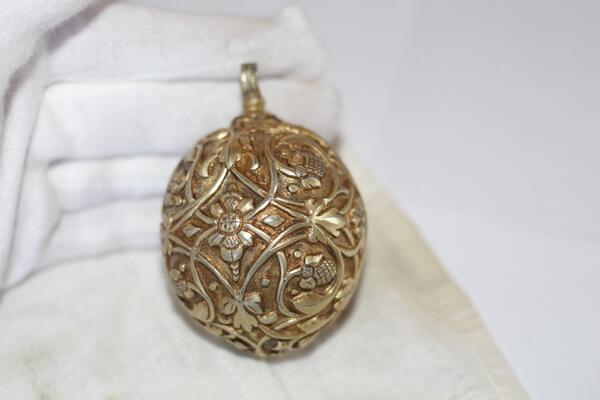
The exhibition “The World of the Streltsy” includes an unusual exhibit — a large button that was sewn on a coat in the 17th century. Researchers claim it was part of the rich boyar or princely vestments.
These buttons served as a symbol of luxury and high status. Similar products could well have been an adornment of the costumes of high officials who participated in the construction of the Smolensk fortress wall.
This embossed button was decorated with a floral pattern that resembles a vine. When creating this object, the artisan used two sheets of precious metal and created a symmetrical pattern. During that process the metal received a three-dimensional shape and became thinner, so the craftsman had to use sheets that were thick enough.
After that, the two halves were soldered together. The button turned out to be hollow and light enough, and at the same time it was durable. Relief elements — stems, leaves and fruits — looked more shiny and visually came to the fore. At the end of the work, the master soldered a loop for attaching buttons to clothes.
The size of this item is comparable to a chicken egg. At the same time, there could be up to 19 such buttons in a rich boyar or princely attire. Similar elements of clothing were made in the largest craft centers, with the Armory workshops occupying the most prominent place. The brightest and most precious objects were created there.
It is hard to imagine that such a costume decoration was widespread in the 17th century. The fashion and art of this time period would have been too ostentatious and pompous by today’s standards. Priority was given to bright colors, contrasting combinations, and vivid baroque forms.
It was during this era that the French palace complex in Versailles and the Russian palace in Kolomenskoye were created. Splendor, unimaginable nowadays, was at that time not so much an expression of one’s own exclusive status, but rather a familiar background, against which, in turn, masterpieces of art arose, such as this button from the collection of the Museum “The Smolensk Fortress”.
These buttons served as a symbol of luxury and high status. Similar products could well have been an adornment of the costumes of high officials who participated in the construction of the Smolensk fortress wall.
This embossed button was decorated with a floral pattern that resembles a vine. When creating this object, the artisan used two sheets of precious metal and created a symmetrical pattern. During that process the metal received a three-dimensional shape and became thinner, so the craftsman had to use sheets that were thick enough.
After that, the two halves were soldered together. The button turned out to be hollow and light enough, and at the same time it was durable. Relief elements — stems, leaves and fruits — looked more shiny and visually came to the fore. At the end of the work, the master soldered a loop for attaching buttons to clothes.
The size of this item is comparable to a chicken egg. At the same time, there could be up to 19 such buttons in a rich boyar or princely attire. Similar elements of clothing were made in the largest craft centers, with the Armory workshops occupying the most prominent place. The brightest and most precious objects were created there.
It is hard to imagine that such a costume decoration was widespread in the 17th century. The fashion and art of this time period would have been too ostentatious and pompous by today’s standards. Priority was given to bright colors, contrasting combinations, and vivid baroque forms.
It was during this era that the French palace complex in Versailles and the Russian palace in Kolomenskoye were created. Splendor, unimaginable nowadays, was at that time not so much an expression of one’s own exclusive status, but rather a familiar background, against which, in turn, masterpieces of art arose, such as this button from the collection of the Museum “The Smolensk Fortress”.