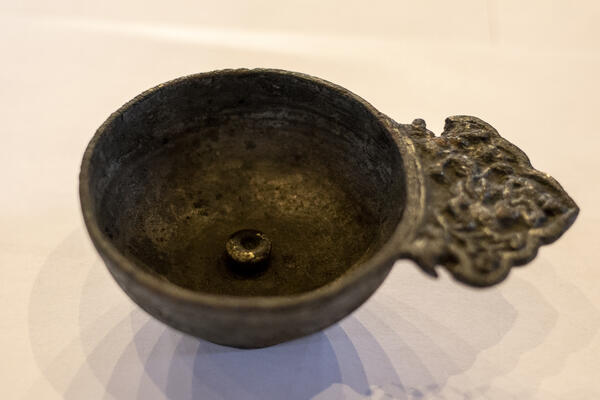
A charka (or, as it was also called, a chara) is a metal vessel for drinking wine, beer, honey, and mead. Most often, strong alcoholic drinks were served in such vessels — people used to refer to such beverages as “the sovereign’s wine.”
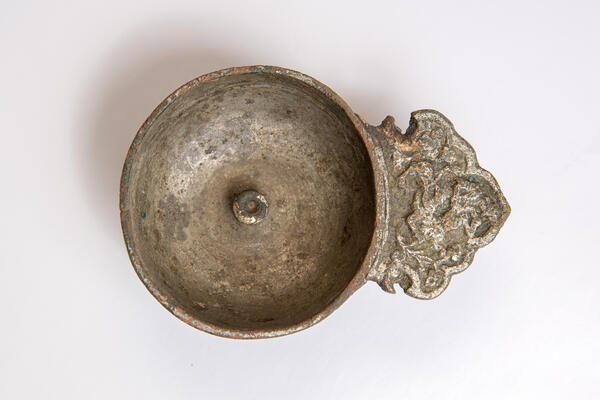
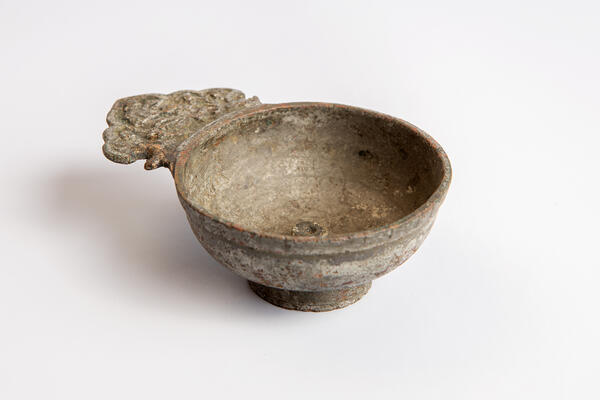
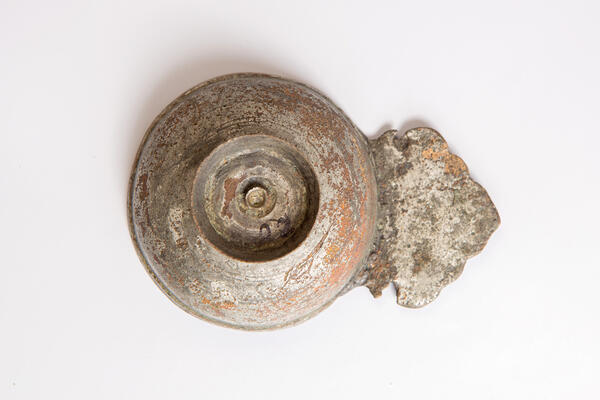
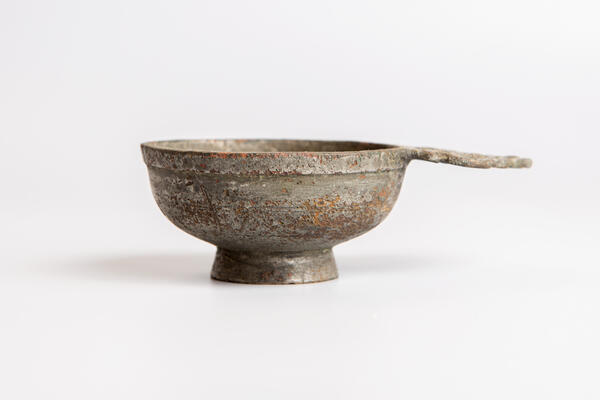
A charka was first mentioned on the territory of the Russian state back in the 12th century. In everyday life, this word could be used to refer to small and large cups and glasses. However, a charka was a low round vessel with a flat bottom on a small foot, and also with a short handle, which was soldered to the body.
Such cups were usually made of red tinned copper, pewter and silver. They were decorated with embossed floral patterns, images of birds and sea animals. Often the pattern adorned not only the vessel, but also the bottom of the charka.
These objects were considered individual drinking vessels and they were not passed around in a circle, like bratinas. There were many proverbs associated with the charka that illustrated the dining culture in Rus. For example, “Drink one chara and be healthy; drink the second one and be drunk; drink the third one and go mad.”
Artisans sometimes decorated the bottom of sides of such cups with moral instructions or gift addresses. They could also indicate the owner’s name. The handle had a decorative design — it could be adorned with engraving or niello. It was called a “stem”.
The charka from the museum’s collection has a cast handle that features the figure of Samson tearing the lion’s mouth. This is one of the most well-known Christian subjects that can be found in book miniatures, fine and decorative arts.
In the 17th century, cups made of mother-of-pearl and various types of gems — carnelian, jasper, rock crystal, often in silver frames with precious stones —became widespread. Such vessels were highly valued. They were given as presents, bequeathed to family members and donated to monasteries.
A charka, like a bratina and a kovsh (types of ladles), is a symbol of the Russian feast. It became part of the national culture as a Russian attribute of the banquet table.
A charka was first mentioned on the territory of the Russian state back in the 12th century. In everyday life, this word could be used to refer to small and large cups and glasses. However, a charka was a low round vessel with a flat bottom on a small foot, and also with a short handle, which was soldered to the body.
Such cups were usually made of red tinned copper, pewter and silver. They were decorated with embossed floral patterns, images of birds and sea animals. Often the pattern adorned not only the vessel, but also the bottom of the charka.
These objects were considered individual drinking vessels and they were not passed around in a circle, like bratinas. There were many proverbs associated with the charka that illustrated the dining culture in Rus. For example, “Drink one chara and be healthy; drink the second one and be drunk; drink the third one and go mad.”
Artisans sometimes decorated the bottom of sides of such cups with moral instructions or gift addresses. They could also indicate the owner’s name. The handle had a decorative design — it could be adorned with engraving or niello. It was called a “stem”.
The charka from the museum’s collection has a cast handle that features the figure of Samson tearing the lion’s mouth. This is one of the most well-known Christian subjects that can be found in book miniatures, fine and decorative arts.
In the 17th century, cups made of mother-of-pearl and various types of gems — carnelian, jasper, rock crystal, often in silver frames with precious stones —became widespread. Such vessels were highly valued. They were given as presents, bequeathed to family members and donated to monasteries.
A charka, like a bratina and a kovsh (types of ladles), is a symbol of the Russian feast. It became part of the national culture as a Russian attribute of the banquet table.