In Russia, buttons were used not only for practical purposes but they also had ritual significance. This item can be considered the most common amulet. A pebble or a pearl could be placed in a hollow button: people believed that such a makeshift bell was able to scare away evil spirits. Some researchers believe that the item got its name precisely because of this “frightening” role.
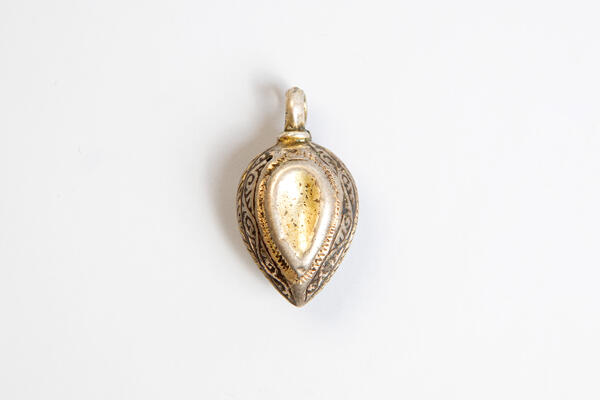
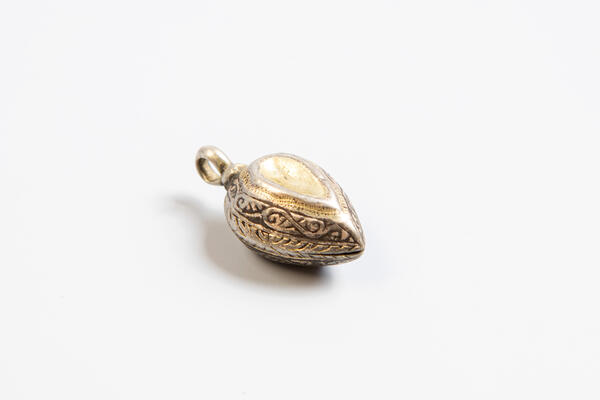
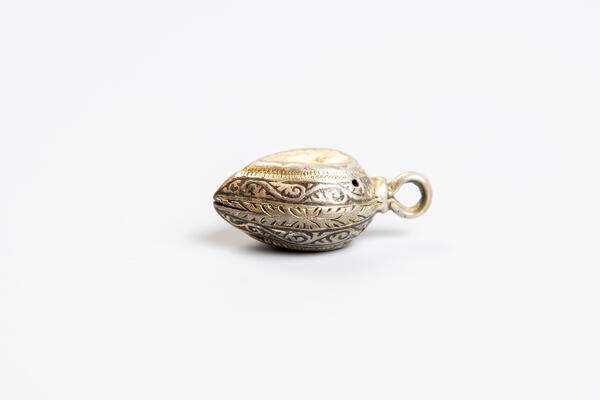
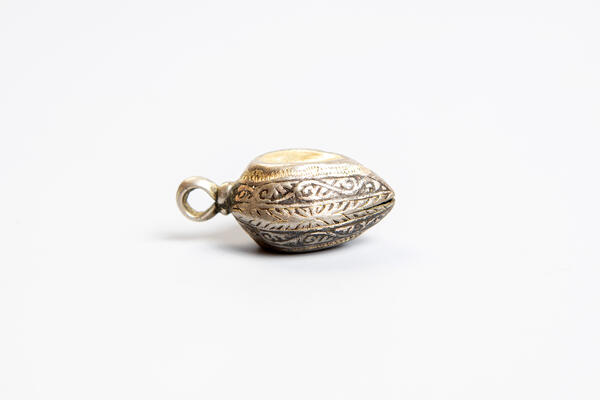
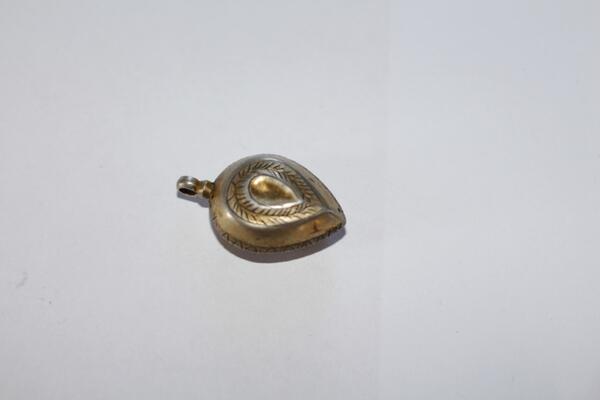
The collection of the Museum “The Smolensk Fortress” contains several old Russian buttons, and some of them are displayed at the exhibition “The World of the Streltsy”. This button was “on almond-shaped body”, that is, one that resembled an almond in its shape. Jewelers in the 16th–18th centuries also made buttons “on pear body”, “on acorn body”, “on cedar body” and “on tent body”.
The two halves of this “almond” button were soldered together. Then the artisan engraved the pattern, thus simultaneously making the lightweight hollow construction stronger. The craftsman also applied a floral ornament to the front of the button, and attached a loop to its upper edge. This particular item of clothing was made from imported materials: neither silver nor gold was mined in Russia in the 17th century. These metals were imported from Western Europe.
At the same time, a noticeable shortage of imported materials could not keep Russian craftsmen and their direct customers from using their favorite gilded silver. Men’s costume in the 17th century was not inferior in brightness and splendor to women’s attire, which would look unusual in our time.
There are records mentioning that in the 14th century, masters could sew up to 500 buttons on the costume of Bohemian aristocrats. From 3 to 19 such elements were supposed to be sewn onto a Russian coat. At the same time, the number of buttons needed to fasten a fur coat would range from 8 to 15 pieces.
The largest number of buttons was used for the royal attire. It is known that 68 gold buttons shone on one of Ivan the Terrible’s coats. This was the way to emphasize his high royal status.
The collection of the Museum “The Smolensk Fortress” contains several old Russian buttons, and some of them are displayed at the exhibition “The World of the Streltsy”. This button was “on almond-shaped body”, that is, one that resembled an almond in its shape. Jewelers in the 16th–18th centuries also made buttons “on pear body”, “on acorn body”, “on cedar body” and “on tent body”.
The two halves of this “almond” button were soldered together. Then the artisan engraved the pattern, thus simultaneously making the lightweight hollow construction stronger. The craftsman also applied a floral ornament to the front of the button, and attached a loop to its upper edge. This particular item of clothing was made from imported materials: neither silver nor gold was mined in Russia in the 17th century. These metals were imported from Western Europe.
At the same time, a noticeable shortage of imported materials could not keep Russian craftsmen and their direct customers from using their favorite gilded silver. Men’s costume in the 17th century was not inferior in brightness and splendor to women’s attire, which would look unusual in our time.
There are records mentioning that in the 14th century, masters could sew up to 500 buttons on the costume of Bohemian aristocrats. From 3 to 19 such elements were supposed to be sewn onto a Russian coat. At the same time, the number of buttons needed to fasten a fur coat would range from 8 to 15 pieces.
The largest number of buttons was used for the royal attire. It is known that 68 gold buttons shone on one of Ivan the Terrible’s coats. This was the way to emphasize his high royal status.