The exhibition includes a map of Smolensk as it was 400 years ago. A signature ring is used as a map sign that symbolizes the territory of the city, which was occupied mainly by rich princely and boyar estates. The surroundings of Blonje — an ancient territory that has retained its Slavic name to the present day — had siege yards. These yards gave the owners an opportunity to relatively comfortably survive the hardships of hostilities. As a rule, the owners of such estates wore bright rings.
The ring from the exhibition “The World of the Streltsy” is an artifact of everyday culture of the 17th century. Such an adornment could be either commissioned or purchased in the shop. Although the object from the museum collection was not made in Smolensk, it symbolizes a large number of craftsmen who were engaged in artistic metal processing in this region in the 17th century.
Various documents mentioned pin-makers, button-makers, earrings makers, silversmiths (jewelers) and other Smolensk artisans. Active trade relations allowed the city to have expensive imported materials galore — precious metals and stones. At the same time, competition among the artisans was the basis for the constant improvement of skills and increasing the level of training.
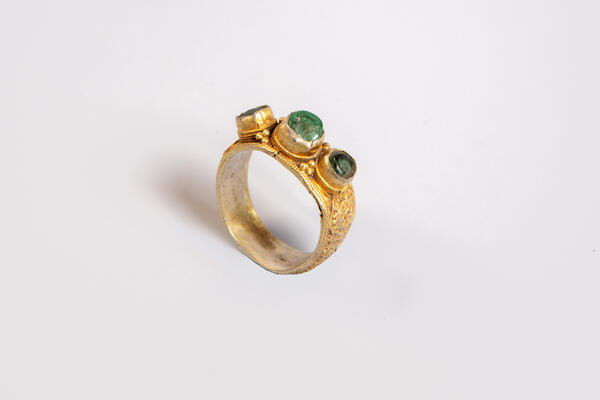
The ring from the museum’s collection is decorated with three precious stones — emeralds. Most rings from the same time period had only one jewelry insert or did not have them at all. The artisan had to make an effort to create a piece of jewelry art for his customer.
The contrasting color combination of stones and metal is typical of the 17th century, which was bright in every aspect and sometimes referred to as the era of “outstanding patterning”. The good condition of the ring can be explained by its high value. Such an artifact, of course, was passed down from generation to generation until it entered the museum.
The ring from the exhibition “The World of the Streltsy” is an artifact of everyday culture of the 17th century. Such an adornment could be either commissioned or purchased in the shop. Although the object from the museum collection was not made in Smolensk, it symbolizes a large number of craftsmen who were engaged in artistic metal processing in this region in the 17th century.
Various documents mentioned pin-makers, button-makers, earrings makers, silversmiths (jewelers) and other Smolensk artisans. Active trade relations allowed the city to have expensive imported materials galore — precious metals and stones. At the same time, competition among the artisans was the basis for the constant improvement of skills and increasing the level of training.
The ring from the museum’s collection is decorated with three precious stones — emeralds. Most rings from the same time period had only one jewelry insert or did not have them at all. The artisan had to make an effort to create a piece of jewelry art for his customer.
The contrasting color combination of stones and metal is typical of the 17th century, which was bright in every aspect and sometimes referred to as the era of “outstanding patterning”. The good condition of the ring can be explained by its high value. Such an artifact, of course, was passed down from generation to generation until it entered the museum.