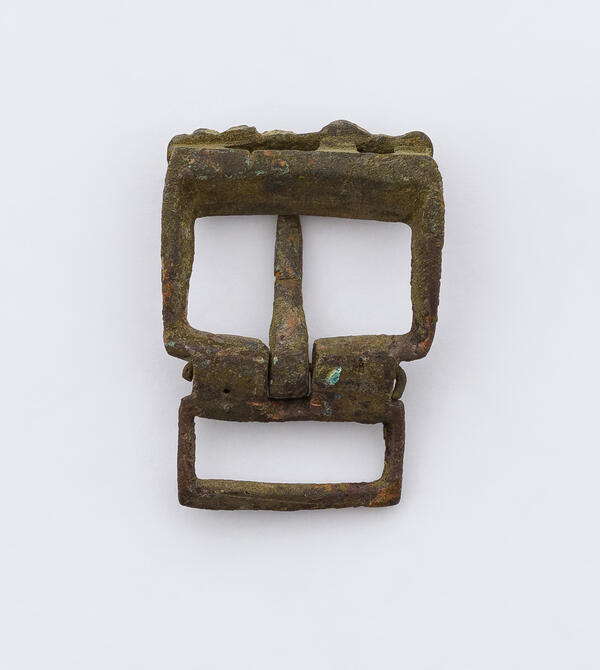
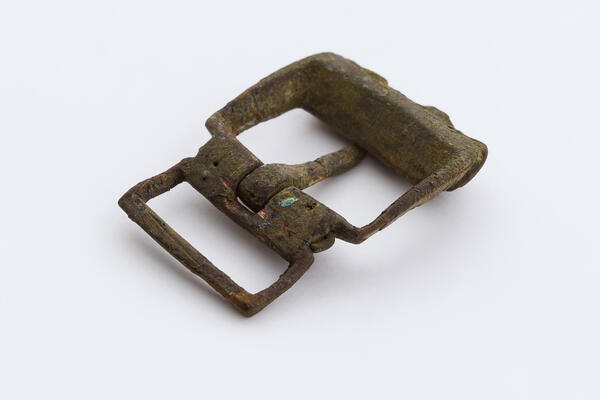
The belt buckle with a ferrule on display in the museum’s exhibition in the hall “Rus and Horde: 14th Century Warfare” is an apparel detail. Specifically, this is a part of a waist belt of the 14th century. The rectangular base of the buckle, the auxiliary frame and the tongue were cast from copper alloys and joined with a pin.
Decorated belts were belts that had a set composed of various types of plaques, typically made from precious or non-ferrous metals, which were intended to emphasize the nobility and status of their owners. This tradition dates back to the end of the first millennium BCE and began to spread across Eurasia in the first millennium CE.
In the first half of the second millennium, in some regions, decorated belts received the status of rank belts. That is, a specific shape of the plaques and their alternation, as well as the ornamental pattern on the plaques were to indicate the rank of the wearer in the government. The famous knight’s belt, which is familiar from historical literature and movies, was one such type of rank belt. It was worn by those newly promoted to a position.