

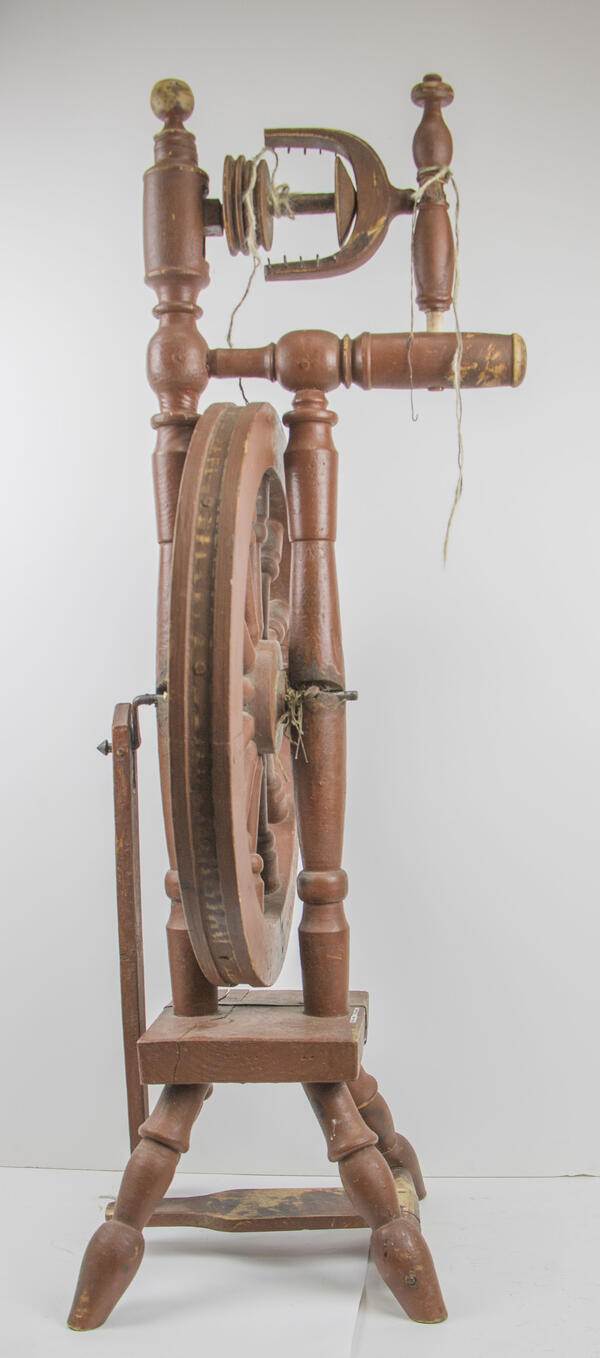
The first spinning wheels appeared in India and later spread around the world. In Europe they began to be used in the early 14th century. Opinions differ as to when the spinning wheel first emerged in Russia. Some researchers connect its advent with the time, “when Peter the Great, introducing various crafts in Russia, showed interest in the development of weaving” and, thus, date it back to the first quarter of the 18th century. But judging by archaeological finds, the spinning wheel was known in Russia, as well as in Europe, back in the 14th century. Some parts of it were found during excavations in Novgorod.
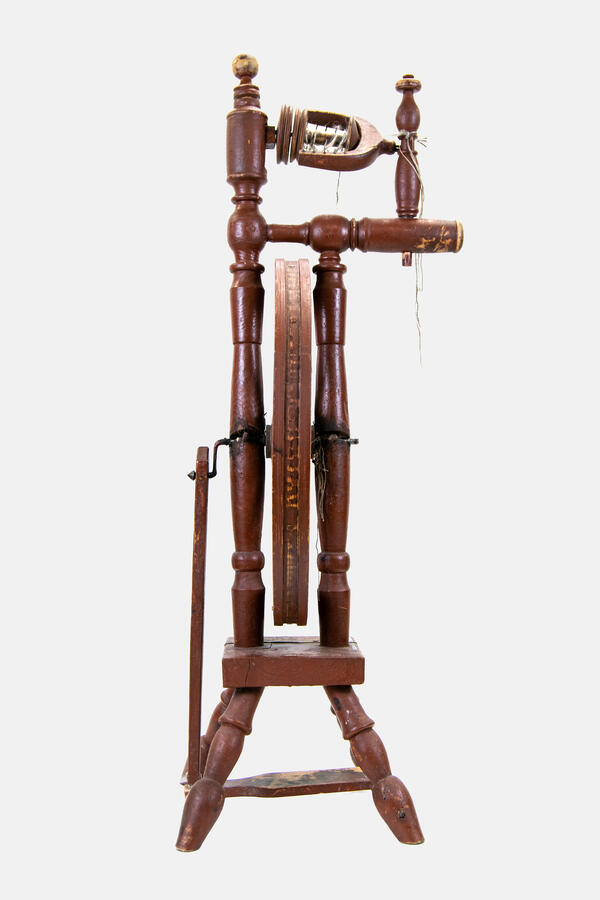
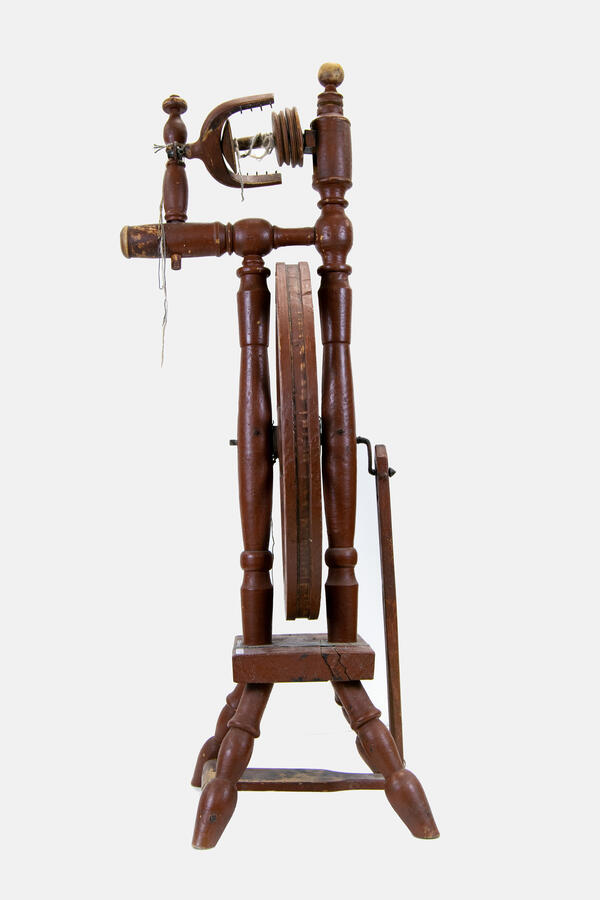
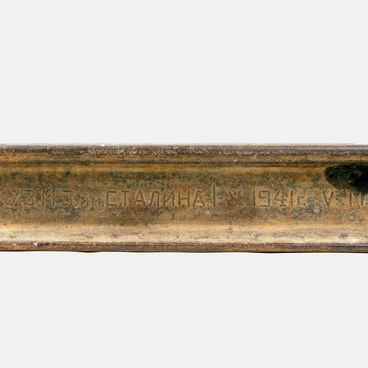
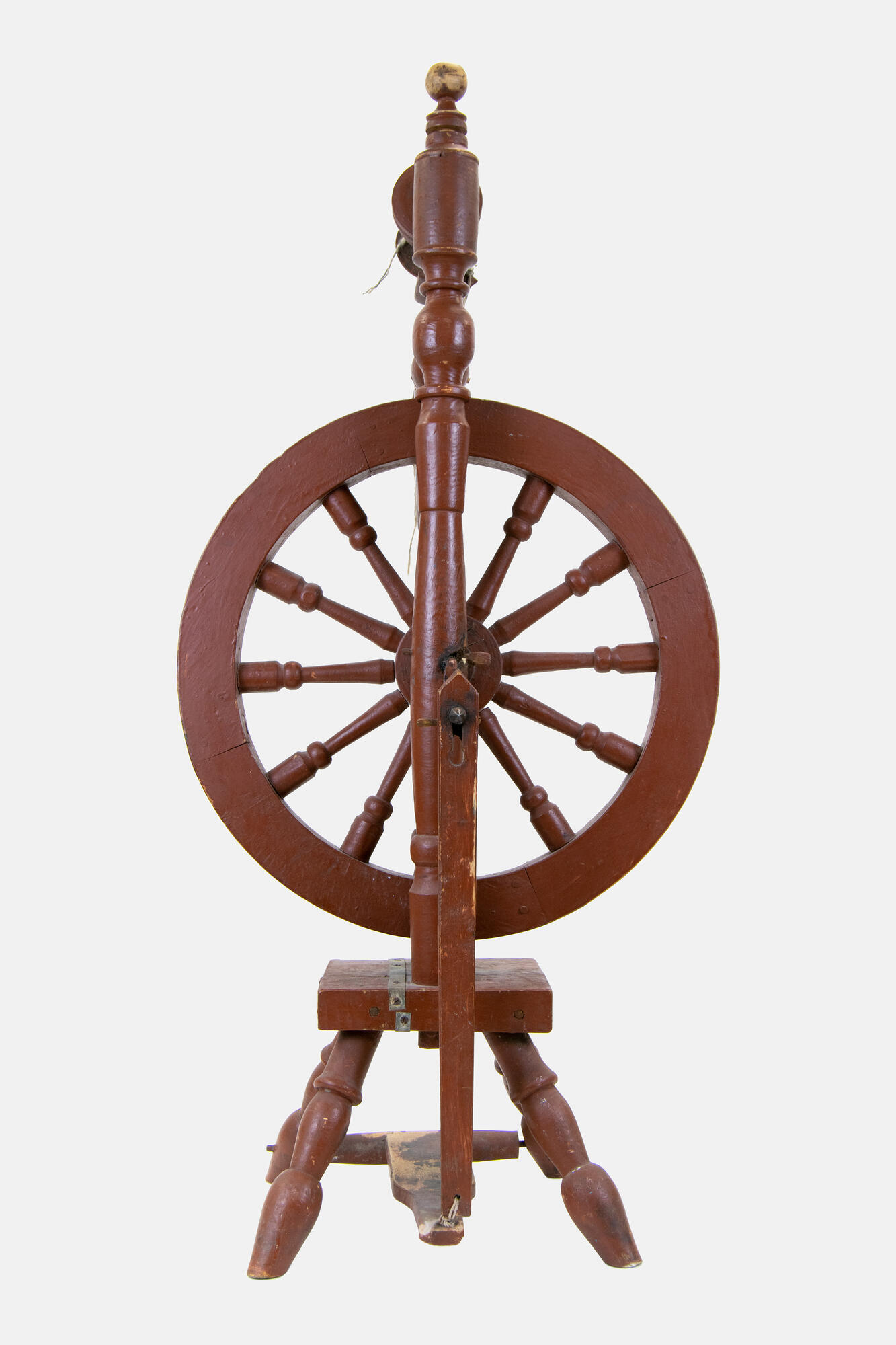
This spinning wheel consists of a base, a stand, a shuttle, a wheel with a crank pedal drive. The legs and uprights are lathed in the form of balusters. The item is painted with brown and red enamel. It was donated to the museum by Elena Petrovna Kriventsova in 2011, the spinning wheel belonged to her family.
A spinning wheel consists of a board with a cylinder and a horizontally attached spindle mounted on it. The wheel is turned by hand and the rotation is transmitted to the spindle through the belt. The left hand feeds the fibers to the sharp end of the spindle, the right hand turns the wheel. When the thread grows to the length of the hand, it is reeled onto the spindle rod and spinning goes on. The speed of spinning on a spinning wheel is higher than on a distaff. In Old Russia there were russkie (standing) and chukhonki (lying) spinning wheels. The first ones had the wheel perpendicular to the floor, the latter had it placed at an angle.
The distaff followed the girl from birth to her marriage. Eastern Slavs cut the umbilical cord of a newborn girl with a distaff or a spindle, the newborn girl was handed to her godmother over the distaff. This tool was placed in the girl’s cradle. The personal distaff which was signed by the owner was never lent, otherwise, it was believed, there would be a fire or the bees would perish. In the Russian North a boy who wrote his name on a girl’s distaff was obliged to marry her. The groom usually gave the girl a new distaff made and decorated with his own hands.
Spinning continued throughout the fall and winter
seasons, interrupted only for the Christmas holidays. On the last day of the
Maslenitsa week, to celebrate the end of spinning, women slid down the ice
slopes on the bottoms of their distaffs, and it was believed that the farther
they went, the better the flax would grow, and the one that fell off the
distaff would not live to see the fall.