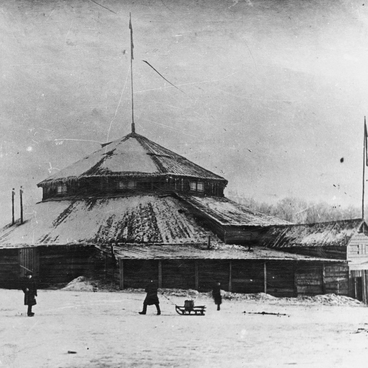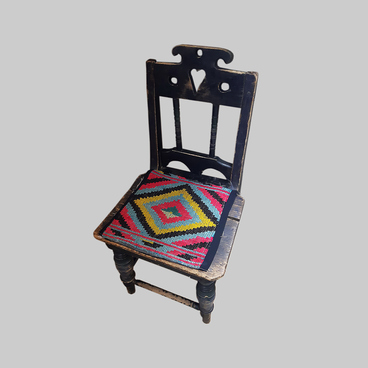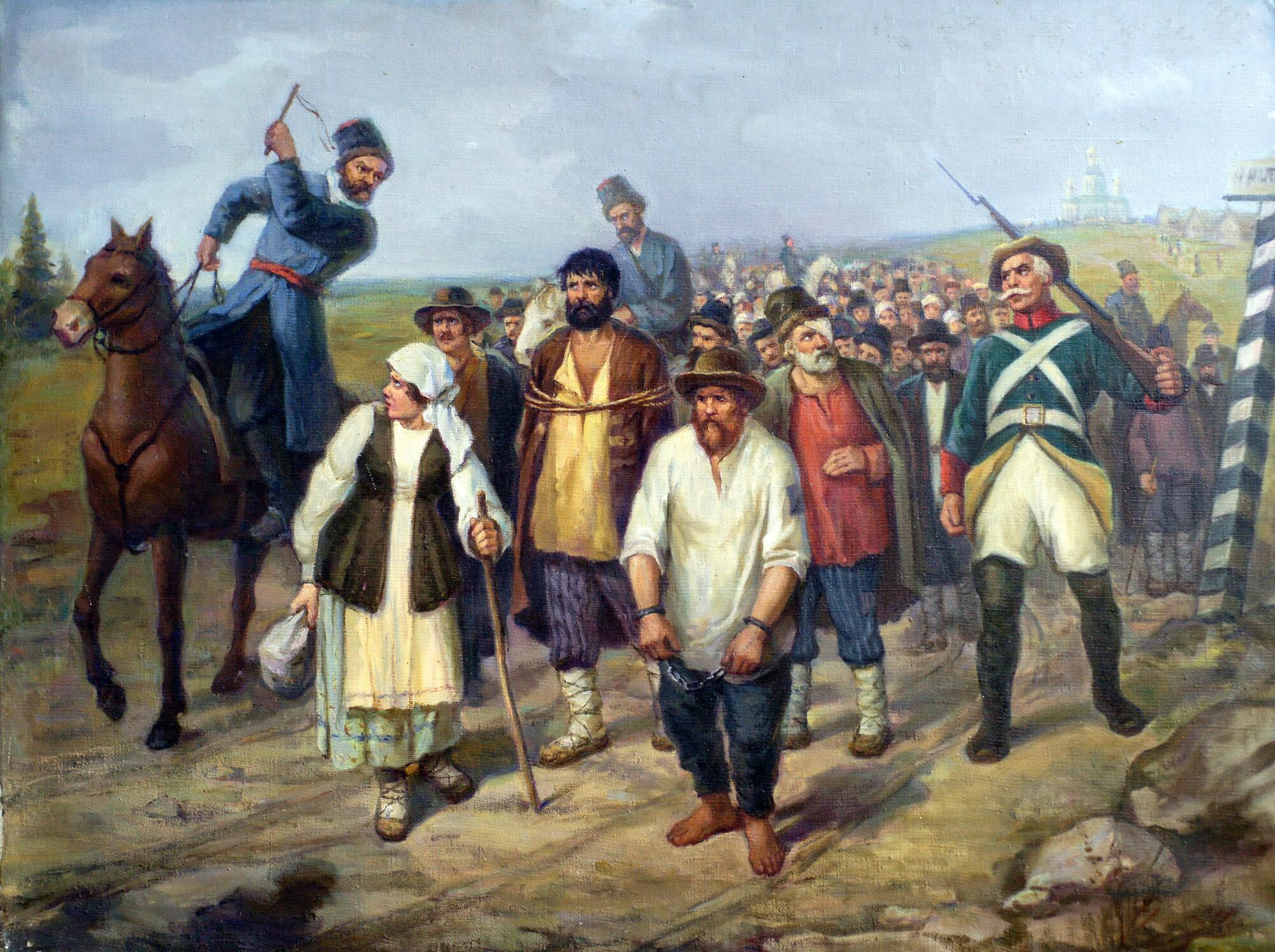


A reproduction of the artwork by P. K. Savitsky was painted by the artist Mikhail Balagushin, who created artworks of the historical and everyday genre. The birth of portraiture in the visual arts of the Udmurt ASSR is closely tied to Balagushin’s work. This artwork vividly captures the labour of the peasants within the walls of an Ural factory.
In 1757, the Senate issued a decree that allowed 4,160 state peasants to be assigned to the KAma factories. The peasants of the Sivinskaya District, the closest region to the Votka plant founded in 1758, were the first to be assigned. Later on, more peasants were assigned to the plant from the villages within 200 verstas [132,6 miles]. A squad of armed soldiers from Kazan was deployed to facilitate the process.
Three times a year, about a month at a time, the peasants worked on the factory floor. They dedicated the rest of their year to tending to their farmland and livestock. Only ethnic Russian males aged 15 through 60 were assigned to work at the factories. People were forced to work at the factories, and the assignment was enforced by soldiers, which resulted in a growing unrest among the peasants.
Peasant uprisings in the Izh region started happening a year after the Izhevsk plant was constructed. The chancellery of the Kazan Governorate reported to the Senate in the summer of 1761: ‘Those assigned to the factories of Count Shuvalov grew disobedient, they forcefully resisted the deployed military escort and spilled blood.’ Next spring, there were more peasant uprisings.
Initially, 1920 state-owned serfs were assigned to the Izhevsk plant. Soon, there were several times more. Instead of paying tithes to the state, they had to do factory work. Some of the newcomers have settled near Izh — these people went on to become craftsmen, apprentices and factory workers. There were 311 of these settlers.
State-owned peasants were first assigned to government factories under Peter the Great. He assigned 25,000 peasants to work at the Ural factories. Craftsmen and masters received pay for their work, as opposed to assigned peasants, who were working off their tithes to the state. Workdays were 14 hours long in the summer and 10 hours long in the winter. Both craftsmen and assigned peasants considered working in these factories a multi-day corvee. Some of these people couldn’t handle the conditions they were forced to work in and attempted to escape from the factory. These people were captured, returned to the plant, and chained down. Our national industry was developed on the backs of the exploited serfs.
In 1757, the Senate issued a decree that allowed 4,160 state peasants to be assigned to the KAma factories. The peasants of the Sivinskaya District, the closest region to the Votka plant founded in 1758, were the first to be assigned. Later on, more peasants were assigned to the plant from the villages within 200 verstas [132,6 miles]. A squad of armed soldiers from Kazan was deployed to facilitate the process.
Three times a year, about a month at a time, the peasants worked on the factory floor. They dedicated the rest of their year to tending to their farmland and livestock. Only ethnic Russian males aged 15 through 60 were assigned to work at the factories. People were forced to work at the factories, and the assignment was enforced by soldiers, which resulted in a growing unrest among the peasants.
Peasant uprisings in the Izh region started happening a year after the Izhevsk plant was constructed. The chancellery of the Kazan Governorate reported to the Senate in the summer of 1761: ‘Those assigned to the factories of Count Shuvalov grew disobedient, they forcefully resisted the deployed military escort and spilled blood.’ Next spring, there were more peasant uprisings.
Initially, 1920 state-owned serfs were assigned to the Izhevsk plant. Soon, there were several times more. Instead of paying tithes to the state, they had to do factory work. Some of the newcomers have settled near Izh — these people went on to become craftsmen, apprentices and factory workers. There were 311 of these settlers.
State-owned peasants were first assigned to government factories under Peter the Great. He assigned 25,000 peasants to work at the Ural factories. Craftsmen and masters received pay for their work, as opposed to assigned peasants, who were working off their tithes to the state. Workdays were 14 hours long in the summer and 10 hours long in the winter. Both craftsmen and assigned peasants considered working in these factories a multi-day corvee. Some of these people couldn’t handle the conditions they were forced to work in and attempted to escape from the factory. These people were captured, returned to the plant, and chained down. Our national industry was developed on the backs of the exploited serfs.