

“Kubelyok is the main part of women’s dress of the Cossacks of the Middle and Lower Don”, wrote the historian of the Don Cossacks Vasily Dmitrievich Sukhorukov back in the middle of the 19th century.
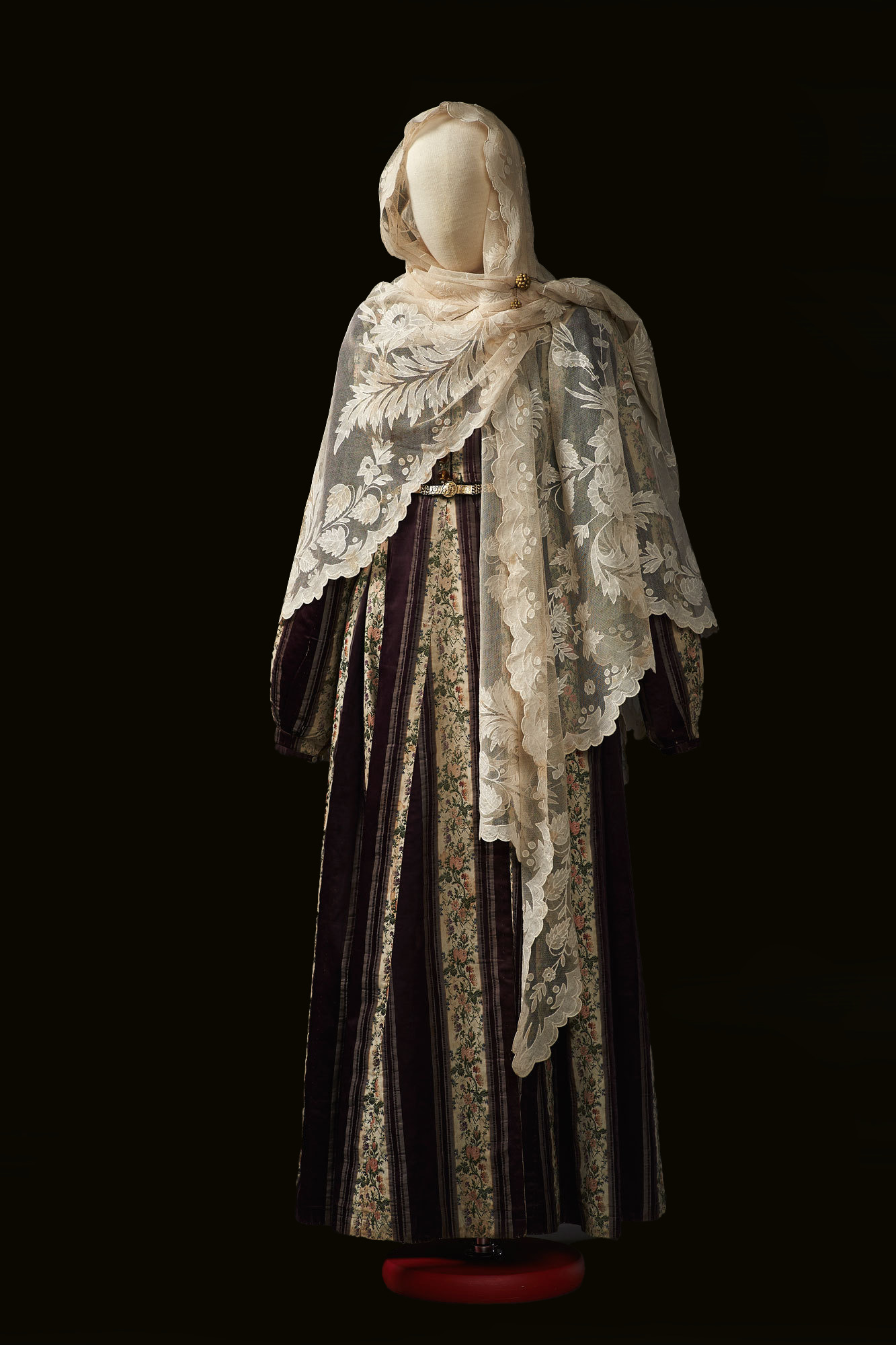
The traditional sets of Russian women’s clothing include a costume with kubelyok, typical for Cossack women from the Don and the North Caucasus. This costume reflects the influence of the traditions of the neighboring peoples who inhabited the steppe and mountainous regions of the North Caucasus.
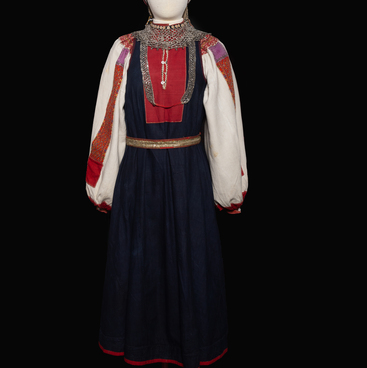
The main part of such a costume was a long shirt made of thin canvas, cotton or silk fabric with sleeves widening to the wrists. The shirt was covered with a dress-like garment, The traditional costume of the Don Cossack women was a long shirt with sleeves wide at the wrists, made of light-colored canvas, silk or cotton fabric. On top of the shirt, women wore a kubelyok — a fitted at the waist dress with a cut-off bodice tightening the upper part of the body and a wide open skirt. The dress was fastened on the chest up to the waist with small round or drop-shaped buttons (kubelechny, pendant) and loops of cord with silver or gilded thread sewn close to each other.
Cotton, silk and cashmere fabrics were bought to sew a kubelyok. The dress was girded with a belt around the length of the waist. These were narrow belts made of metal, leather or fabric sewn on a thick base, fastened with a shaped buckle or hooks. Metal belts, often of silver like those worn by people from the North Caucasus, consisted of separate links joined together and decorated with a filigree or engraved pattern that included colored glass and pearls; the buckle often bore the initials of the owner. Leather and cloth belts were embroidered with beads, pearls and gold threads.
According to historical data, another specific detail of the costume of the Don Cossack woman were baggy pants made of thin fabric, which went out of use by the end of the 19th century.
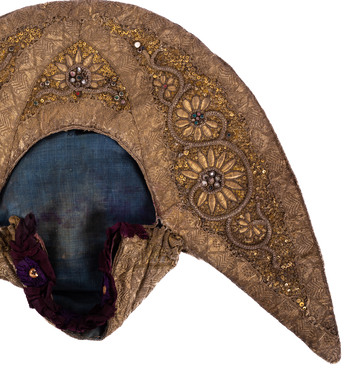
The traditional headdress of the Don Cossack women during the 19th century was a cap knitted from multicolored silk and cotton threads or sewn from knitted fabric. On top of it, women wore scarves and shawls, woven and embroidered with colorful silk, beads, sequins, headscarves made of factory or bobbin lace. Girls wore kerchiefs or scarves made of light muslin or tulle cloth without a cap — they were called kubelechny. To fasten caps, kerchiefs and scarves they used a metal pin, one end of which was decorated with ball bearing pendants. The most popular among the Cossacks was a black silk falshonka made of lace.
Cossack women wore only leather shoes, which also distinguished them from Russian women in other territories of European Russia.