

The southern mammoth was the first animal to lack a thick woolly coat. In fact, it was almost entirely hairless. Scientists believe that this species emerged during the Pliocene, approximately 5 million years ago.
The southern mammoths migrated from Africa to what is now Europe, and over the three million years that followed, their appearance changed dramatically: their tusks became more massive, and they grew a thicker coat.
Many animal species grew in size during the Last Glacial Period, commonly known as the Ice Age; but all the same, mammoths still remained the largest animals on Earth. The strongest male mammoths could be 3.5 meters tall and weighed up to 100 kilos. Mammoths had a massive body and short legs. They were coated in dense fur that was at least one meter long and provided excellent protection from the cold.
The mammoth habitat was quite vast. It spanned North America, Japan, China, Europe, and ChukOtka. Mammoths were migratory animals, preferring to travel through river valleys in small, compact herds.
They ate shrubs, tree branches, and grass. Their strong molars helped them chew their rough fodder. Whereas the four-meter tusks helped them forage for food under the snow.
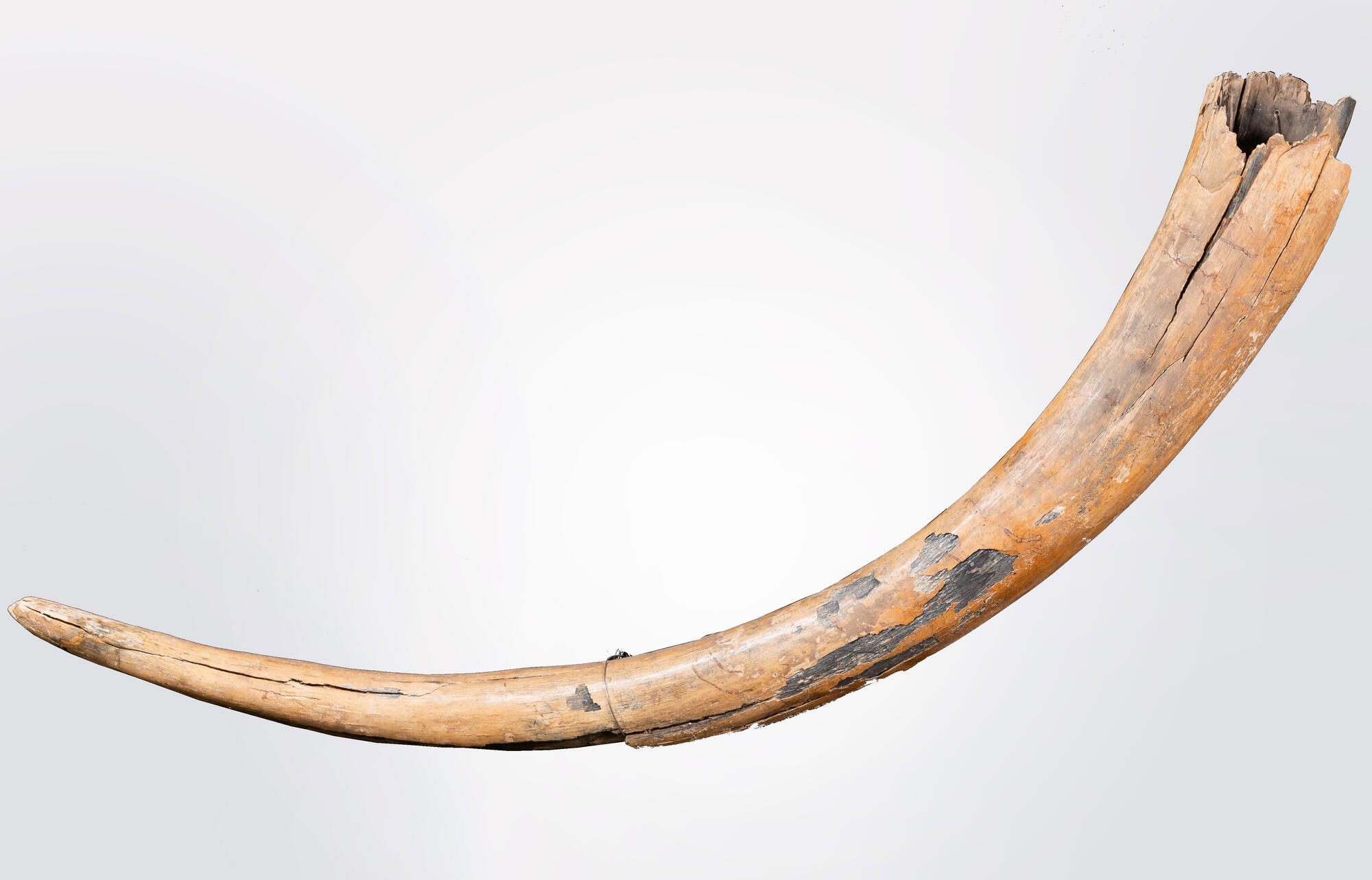
The tusks were actually upper incisors, which had grown long and massive during the evolution process. That was why mammoth calves first got baby tusks—like baby teeth—which then fell out and were replaced by permanent tusks. A mammoth’s tusks would keep growing throughout its life. To keep these enormous teeth in place, mammoth skulls had special tube-like protrusions, known as alveoli. All mammoth tusks always curved in the same direction: upwards and sideways. Notably, the right tusk curved a little bit to the left, while the left tusk curved to the right.
Scientists believe that mammoths died out approximately 10,000 years ago. They were a very popular quarry for human hunters, which largely contributed to their extinction. The gradual climate shift towards warmer temperatures also had a part to play. But the actual date when the very last mammoths disappeared is a very rough approximation, as the extinction was spread unevenly across different continents.
The southern mammoths migrated from Africa to what is now Europe, and over the three million years that followed, their appearance changed dramatically: their tusks became more massive, and they grew a thicker coat.
Many animal species grew in size during the Last Glacial Period, commonly known as the Ice Age; but all the same, mammoths still remained the largest animals on Earth. The strongest male mammoths could be 3.5 meters tall and weighed up to 100 kilos. Mammoths had a massive body and short legs. They were coated in dense fur that was at least one meter long and provided excellent protection from the cold.
The mammoth habitat was quite vast. It spanned North America, Japan, China, Europe, and ChukOtka. Mammoths were migratory animals, preferring to travel through river valleys in small, compact herds.
They ate shrubs, tree branches, and grass. Their strong molars helped them chew their rough fodder. Whereas the four-meter tusks helped them forage for food under the snow.
The tusks were actually upper incisors, which had grown long and massive during the evolution process. That was why mammoth calves first got baby tusks—like baby teeth—which then fell out and were replaced by permanent tusks. A mammoth’s tusks would keep growing throughout its life. To keep these enormous teeth in place, mammoth skulls had special tube-like protrusions, known as alveoli. All mammoth tusks always curved in the same direction: upwards and sideways. Notably, the right tusk curved a little bit to the left, while the left tusk curved to the right.
Scientists believe that mammoths died out approximately 10,000 years ago. They were a very popular quarry for human hunters, which largely contributed to their extinction. The gradual climate shift towards warmer temperatures also had a part to play. But the actual date when the very last mammoths disappeared is a very rough approximation, as the extinction was spread unevenly across different continents.