In eighteen sixty-one, Erhard Junghans, a renowned watch-maker from Germany, founded his own enterprise, Gebrueder Junghans (the Junghans Brothers). The first watch by Gebrueder Junghans, bearing the company brand, was released five years later and instantly earned the love of the public.
In 1875, the company passed on to Arthur Junghans, Erhard’s son. Under his leadership, Gebrueder Junghans quickly claimed the top position in the watch market. The company’s plant, while modest in size, was the first enterprise to produce a quartz watch, a wrist watch, and even a chronograph watch.
The Junghan brand was officially registered in 1877. Its mascot was an eagle holding a banner. A bit later, in 1890, a trademark was designed as well. The new symbol, a star with eight points, was added to the eagle image.
At the turning of the century, Junghans became the first company to produce a million watches. By that time, it had grown into a major international business with numerous branches around the globe, becoming the world’s biggest watch-making corporation in 1903.
The Junghans watches had become firmly associated with the genuine German quality. The technology designed by Arthur Junghans ensured the watches' remarkable reliability. Arthur Junghans obtained patents for more than three hundred useful inventions, which he would later use in the production process. That was why his watch-making business remained unrivaled throughout Germany.
The Junghans watches had reached Russia by the end of the nineteenth century. Since there were no notable domestic watch-making companies in Russia at the time, the local market was rapidly flooded with innovative foreign inventions. Most of them were affordable high-quality watches with the Junghans trademark. Middle-class Russians could easily afford to buy a watch like this. The Junghans product range in Russia also included higher-grade watches, which were used even by members of the royal family.
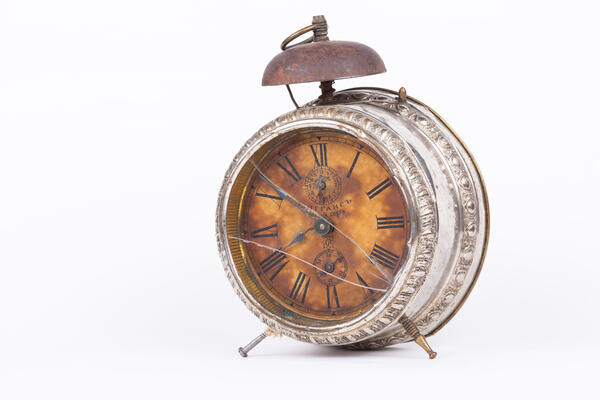
The Junghans alarm clocks were particularly popular. The alarm clock family included approximately fifteen mechanical clock models and over fifty encased models. The alarm clocks were pieced together on an assembly line: an invention borrowed from America.
Only after the revolution of 1917 did the Junghans company lose its grip on the Russian watch market. The famous Junghans alarm clock would go on to inspire the design of their popular Soviet counterparts.
In 1875, the company passed on to Arthur Junghans, Erhard’s son. Under his leadership, Gebrueder Junghans quickly claimed the top position in the watch market. The company’s plant, while modest in size, was the first enterprise to produce a quartz watch, a wrist watch, and even a chronograph watch.
The Junghan brand was officially registered in 1877. Its mascot was an eagle holding a banner. A bit later, in 1890, a trademark was designed as well. The new symbol, a star with eight points, was added to the eagle image.
At the turning of the century, Junghans became the first company to produce a million watches. By that time, it had grown into a major international business with numerous branches around the globe, becoming the world’s biggest watch-making corporation in 1903.
The Junghans watches had become firmly associated with the genuine German quality. The technology designed by Arthur Junghans ensured the watches' remarkable reliability. Arthur Junghans obtained patents for more than three hundred useful inventions, which he would later use in the production process. That was why his watch-making business remained unrivaled throughout Germany.
The Junghans watches had reached Russia by the end of the nineteenth century. Since there were no notable domestic watch-making companies in Russia at the time, the local market was rapidly flooded with innovative foreign inventions. Most of them were affordable high-quality watches with the Junghans trademark. Middle-class Russians could easily afford to buy a watch like this. The Junghans product range in Russia also included higher-grade watches, which were used even by members of the royal family.
The Junghans alarm clocks were particularly popular. The alarm clock family included approximately fifteen mechanical clock models and over fifty encased models. The alarm clocks were pieced together on an assembly line: an invention borrowed from America.
Only after the revolution of 1917 did the Junghans company lose its grip on the Russian watch market. The famous Junghans alarm clock would go on to inspire the design of their popular Soviet counterparts.