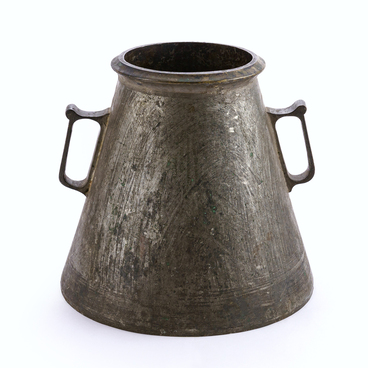
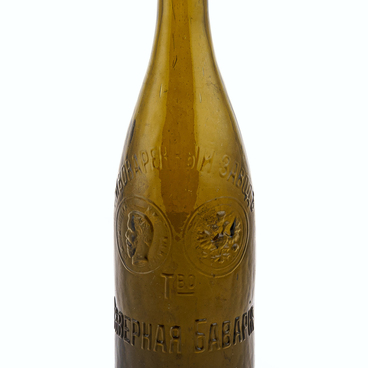
The Sytovs became a prominent merchant dynasty in Moscow in the mid-19th century. Its members owned a brocade factory and also traded in silver church items. Beginning in the 1860s, the Sytov family started acquiring apartment buildings on Myasnitskaya Street, with one of their flagship stores later located near Red Square.
The Sytov family had ties to a merchant family from Rybinsk — the Durdins. Ivan Ivanovich Durdin, owner of the “Bohemia” brewery, was married to Anna Vasilyevna Sytova. In total, three members of the Sytov family married three representatives of the Durdin family. It is likely that portraits of their Moscow relatives were kept in their Rybinsk house.
The portrait on display at the Rybinsk Museum shows a young woman, depicted in a three-quarters turn to the left. Her facial features are attractive and delicate. She is dressed in a light blue dress, with her head covered by a small pink headband adorned with a bow. She is wearing a multi-strand pearl necklace and earrings. In ceremonial portraits of this period, women presented themselves in their finest attire and jewelry. Naturally, these garments were not typically worn in daily life.
Her main accessory is a patterned woolen shawl draped over the shoulders. A shawl is a symbol of status and prosperity. Shawls were worn by people from all walks of life, including peasants, middle-class women, nobility, and merchants. Merchants purchased shawls for their wives at fairs, as they were both an expensive and common gift. Women could own multiple shawls. Around that time, famous Kashmir shawls were brought to Europe from British colonies. A second wave of interest in this accessory swept across Europe after Napoleon’s expedition to Egypt. From the first half of the 19th century onward, factories began producing high-quality shawls in Russia.
A headscarf, or a small kerchief, was an essential part of the festive attire for Russian women. These were typically made from lightweight cotton fabric and adorned with woven patterns, embroidery, or tassels. The creation of a kerchief provided women with an opportunity to exhibit their skills in needlework, and as such, the renowned Russian historian Ivan Zabelin referred to it as a “boastful item”.