An unknown artist created a portrait of Yermak in the 18th century. During the life of the famous Cossack ataman, the portrait genre did not exist in Russia. All known depictions of Yermak came much later and were more a fantasy of the painters than an authentic depiction of his appearance. The artists painted a collective image of the hero, which entered the folk tales and songs. The historian Nikolay Karamzin described the ataman’s appearance based on these portraits,
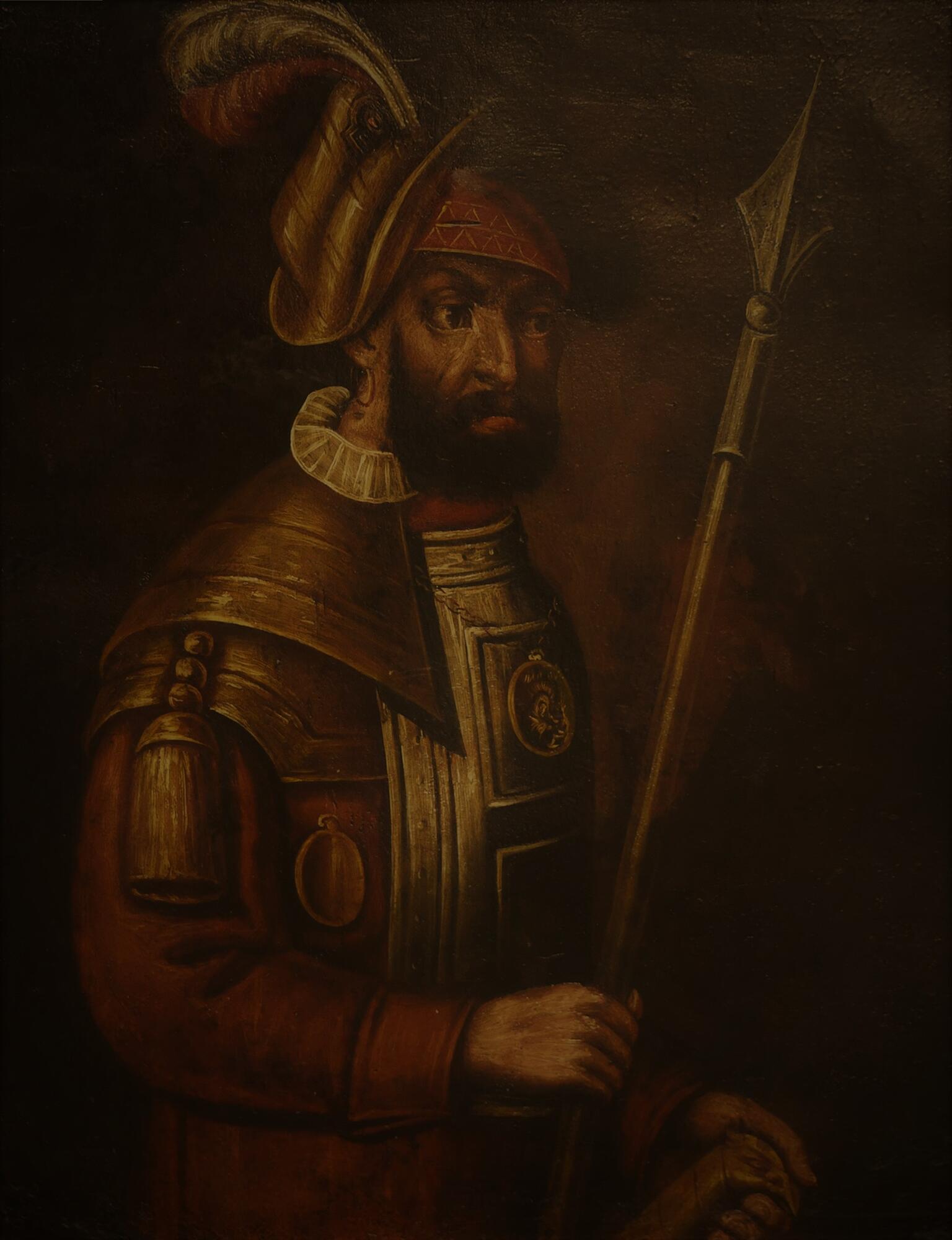


Portrait of Yermak
Creation period
the 18th century
Dimensions
33,3x25,5 cm
Technique
oil
Collection
1
Open in app#1
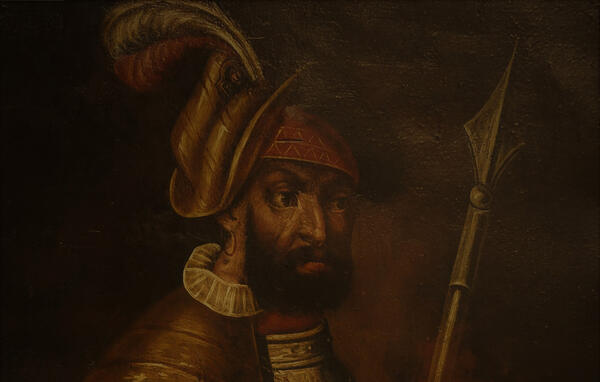
Portrait of Yermak
#2
#5
The appearance is noble, sleek, of medium height, strong, with broad shoulders, a flat but pleasant face, curly dark hair, and bright eyes.
#4
The painting from the collection of the Bishop’s House depicts Yermak against a dark background. He holds a spear in his right hand and his left hand rests on the hilt of a saber in the shape of a bird’s head. His clothing, headdress, and armor are more European than Russian. According to one version, the artists copied the image from European engravings depicting knights. According to another version, the conqueror of Siberia was depicted in the same way as the Spanish conquistadors who conquered South America.
The exact origin of ataman Yermak Timofeevich is unknown. Some researchers believe that he was born in the Urals, on the banks of the Chusovaya River. Others suggest that his ancestors were the Don Cossacks.
In 1582, Yermak’s Cossack detachment entered the service of the Ural merchants Stroganov. At that time, their possessions were often attacked by the troops of the Siberian Khan Kuchum, and the Cossacks had to ward off such raids. The detachment settled in the Stroganov towns on the banks of the Chusovaya River and lived there for two months. Then Yermak led his warriors on a campaign beyond the Ural Mountains to finally defeat Kuchum and seize his lands. The ataman’s detachment numbered about 840 people — Cossacks, Tatars, Germans, and Lithuanians. The campaign began without the tsar’s knowledge.
Kuchum’s forces far outnumbered the Cossack troops, but their armament was inferior. Therefore, Khan lost first battles, and others — the Khanty, Mansi, and Tatars sided with Yermak and swore allegiance to the Russian Tsar Ivan the Terrible. The ataman assigned tribute to them and in the summer of 1583, sent an ambassador to Moscow, who reported to the ruler on the conquest of Siberia. As a token of his mercy, Ivan the Terrible gifted Yermak two chain armors, and the latter wore them without taking them off, one under the other.
In August 1585, Kuchum’s soldiers attacked a small Cossack detachment between the Vagai and Irtysh Rivers. Only a few Cossacks survived that battle. Yermak was seriously wounded and tried to swim to the ships that stood in the Irtysh but drowned. Legend has it that he died because of two royal chain armors — he was unable to swim and drowned.
The exact origin of ataman Yermak Timofeevich is unknown. Some researchers believe that he was born in the Urals, on the banks of the Chusovaya River. Others suggest that his ancestors were the Don Cossacks.
In 1582, Yermak’s Cossack detachment entered the service of the Ural merchants Stroganov. At that time, their possessions were often attacked by the troops of the Siberian Khan Kuchum, and the Cossacks had to ward off such raids. The detachment settled in the Stroganov towns on the banks of the Chusovaya River and lived there for two months. Then Yermak led his warriors on a campaign beyond the Ural Mountains to finally defeat Kuchum and seize his lands. The ataman’s detachment numbered about 840 people — Cossacks, Tatars, Germans, and Lithuanians. The campaign began without the tsar’s knowledge.
Kuchum’s forces far outnumbered the Cossack troops, but their armament was inferior. Therefore, Khan lost first battles, and others — the Khanty, Mansi, and Tatars sided with Yermak and swore allegiance to the Russian Tsar Ivan the Terrible. The ataman assigned tribute to them and in the summer of 1583, sent an ambassador to Moscow, who reported to the ruler on the conquest of Siberia. As a token of his mercy, Ivan the Terrible gifted Yermak two chain armors, and the latter wore them without taking them off, one under the other.
In August 1585, Kuchum’s soldiers attacked a small Cossack detachment between the Vagai and Irtysh Rivers. Only a few Cossacks survived that battle. Yermak was seriously wounded and tried to swim to the ships that stood in the Irtysh but drowned. Legend has it that he died because of two royal chain armors — he was unable to swim and drowned.
#3
Министерство культуры РФ
read morehide
00:00
00:00
1x
Portrait of Yermak
Creation period
the 18th century
Dimensions
33,3x25,5 cm
Technique
oil
Collection
1
 Point your smartphone camera to open in the app
Open in app
Share