

Boomerangs are throwing tools with aerodynamic properties which appeared in the late Paleolithic. It is difficult to establish where the boomerang originated: scientists believe that residents of different regions began to use boomerangs independently of each other. Ancient Egyptians and Indians, Africans and Polynesians, Europeans and North American Indian tribes, residents of Southeast Asia and the Urals were known to make use of this projectile. The oldest boomerang was discovered in the Oblazowa Cave in the Polish Carpathians.
The boomerang was first and foremost a combat and hunting weapon, but it also served as a children’s toy and sports equipment.
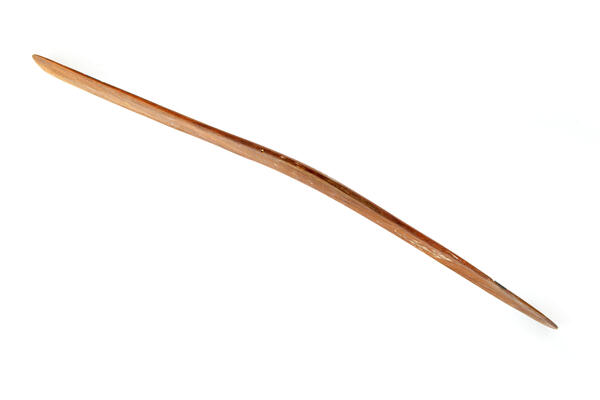
The first boomerangs looked like throwing sticks about a meter long, with a slight bend and flattening on the “elbow”. The lower part was tapered, the upper part was rounded, and the back edge was sharpened. Such projectiles delivered a strong blow on impact, and with a skilled and strong throw, they flew almost parallel to the ground rotating vertically and were capable of covering a distance of up to 200 meters. The described boomerang is of the non-returning type.
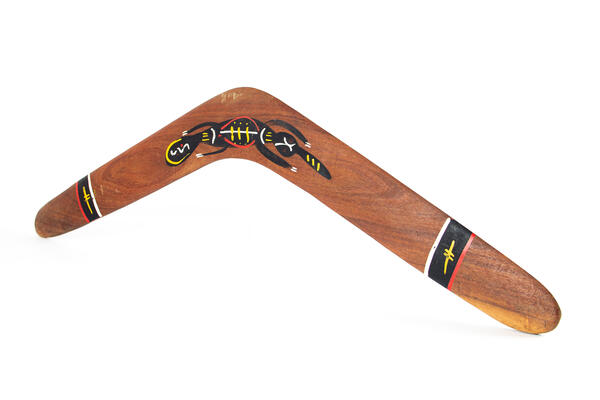
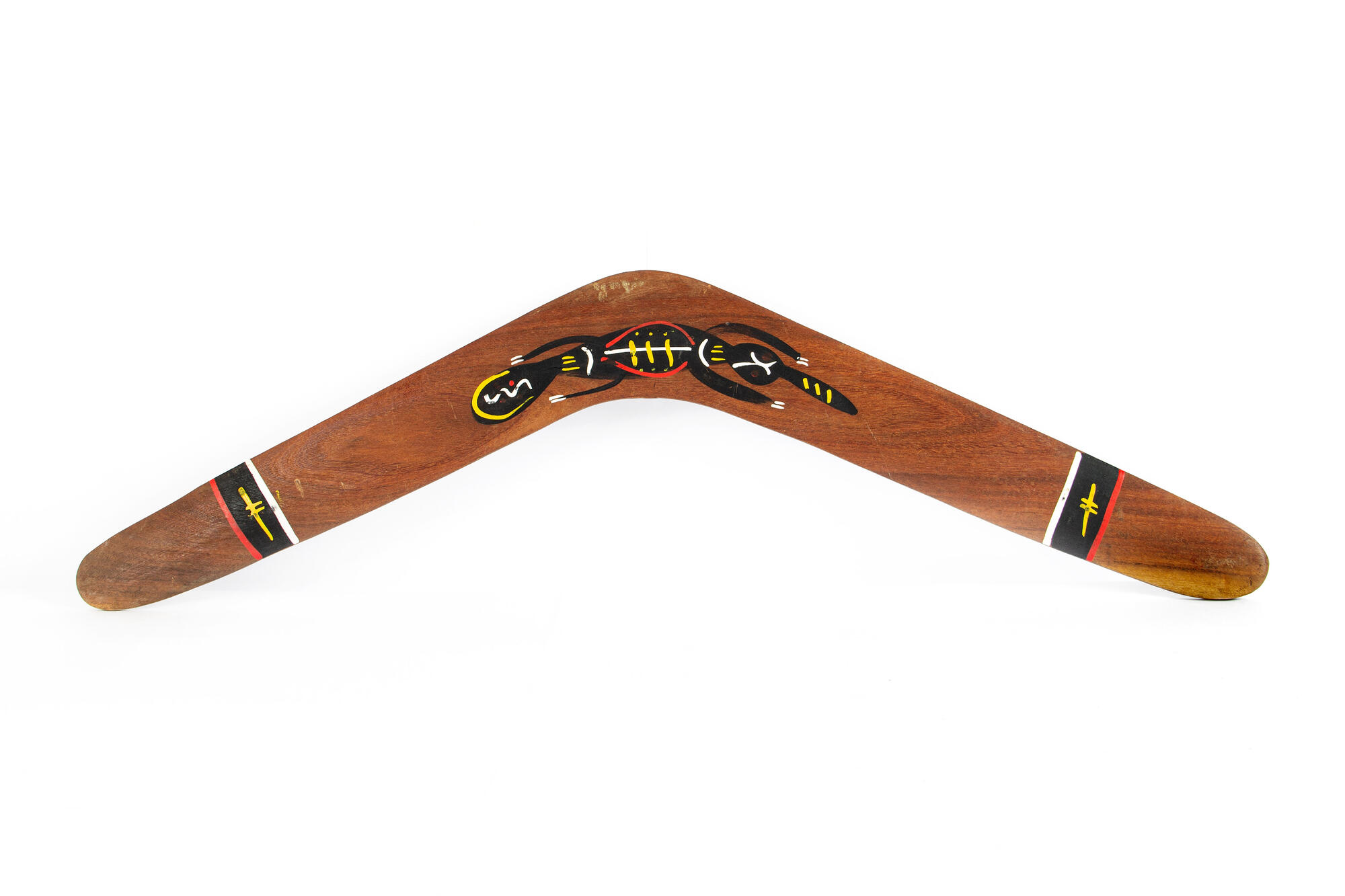
Returning ones appeared later. They were thinner and lighter, with a significant (up to 50 degrees) bend at the elbow. Unlike those used in combat, they were launched vertically: after completing about two quarters of a circular path, they began flying horizontally — the same way a maple seed flies. Boomerangs of this type were used when hunting for small game, and not as a striking weapon: the whistling of the projectile was intended to frighten or disorient the prey, forcing it to run into a snare set by the hunters.
The origin of the word “boomerang” sparks debate among researchers. In 1798, David Collins documented it as one of the names of “clubs” — from the word “wo-mur-rāng” of an extinct Australian dialect (this may be a mistake, as the consonant word “woomera” means a throwing spear — not a throwing stick). In 1822, the term “bu-mar-rang” which in the language of the Turuval tribe (inhabited the banks of the Georges River near Sydney) means “throwing stick” was recorded from the banks of the Georges River in the Sydney area.
Besides wood, boomerangs were
made of mammoth tusks, bones, horns and even iron. Inscriptions and drawings
with which they were decorated were of a ritual nature.