Relics of the Chinese Bronze Age are unique phenomena in world culture. In China, the Bronze Age lasted from the 17th to the 3rd century BC and covers the period of the late Xia dynasty and Shang, Western Zhou and Eastern Zhou dynasties. The first inscriptions in Chinese history are attributed to the Shang dynasty. They were made on stones, bones of sacrificial animals and numerous objects made of bronze.
Bronze jugs were used for heating wine during ritual communication with gods or ancestral spirits. They were also presented as offerings to the temple, used in important ceremonies, and deposited as grave goods. They were often placed on legs, could be square or round, or take the shape of birds, animals or fantastic creatures.
Over time, jugs lost their ritual meaning and began to be valued as works of art, luxury items, indicators of the owner’s status. In poor families, vessels made of expensive bronze alloy became family heirlooms and were passed from generation to generation.
The absolute prevalence of using casting techniques is what sets items from this period apart, as neither forging, nor stamping were ever used. Casting molds were made from clay mixed with sand, silt and vegetable ash. Organic adhesive substances, such as manure or honey, were added for greater plasticity. When drying, such materials reduced in size very slightly and were characterized by being heat-resistant and well-ventilated.
After drying and firing, the mold was placed in the outer casing so that the gap between the casing and the mold corresponded to the thickness of the future vessel’s walls. When the metal solidified, the mold was broken.
As time went on, more complex and reusable molds appeared. They were decorated with concave (carved on clay with a knife) or convex (glued) ornamental elements. At the same time, the ornamental composition was built vertically, and the key figures were located in a “mirror image”. Preference was given to frieze-like compositions of a geometric or zoomorphic nature. The handles and legs of the vessels were cast separately, and then “welded” to the body during casting.
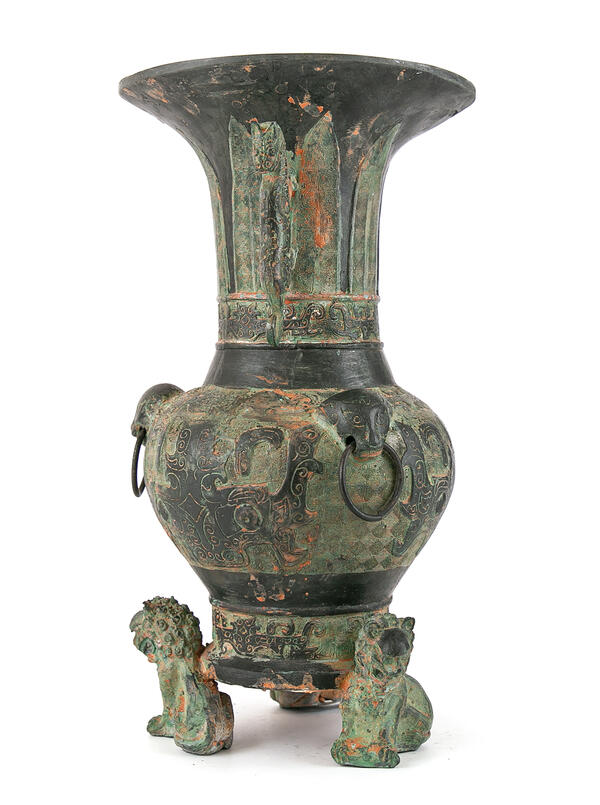
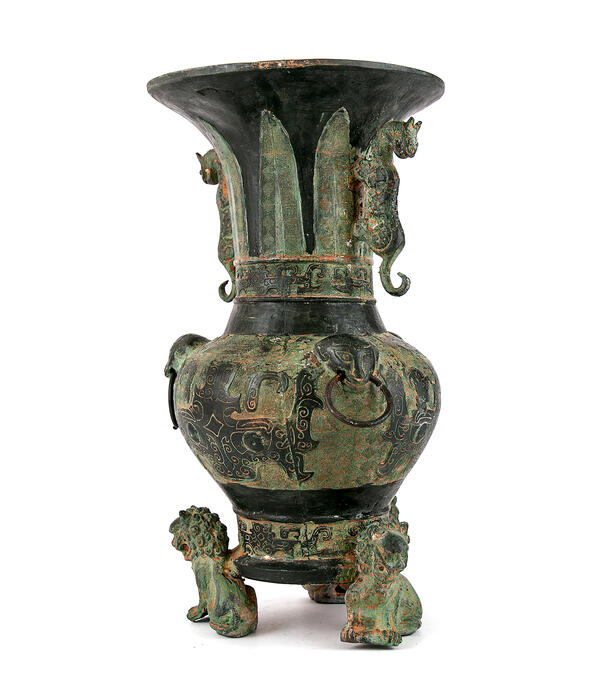
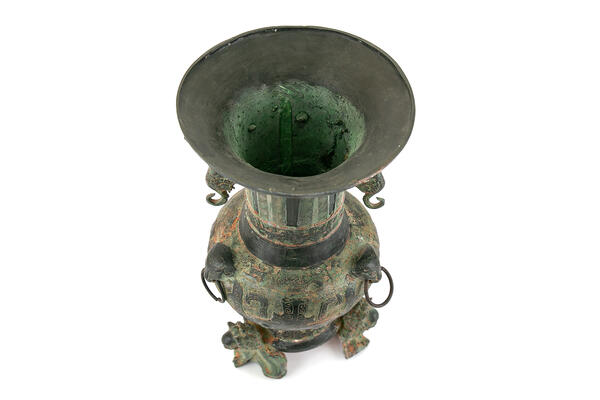
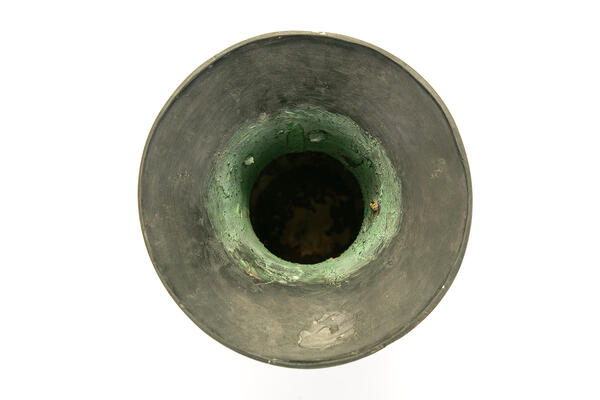
The presented jug is based on
the model of a Chinese vessel of the Shang dynasty. Three lions act as the
legs, figures of dragons are welded to the sides of the neck.