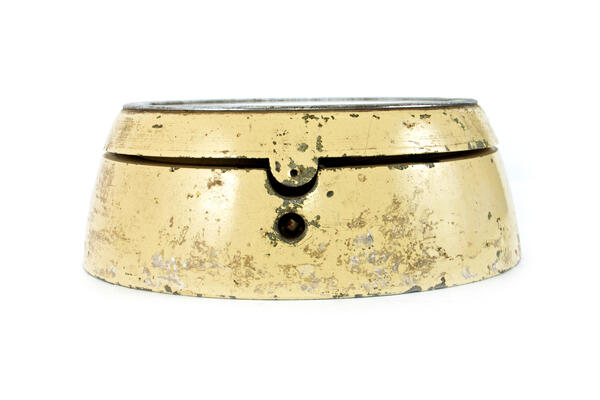
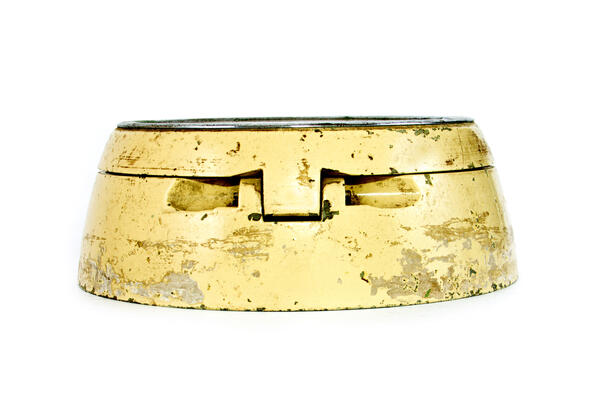
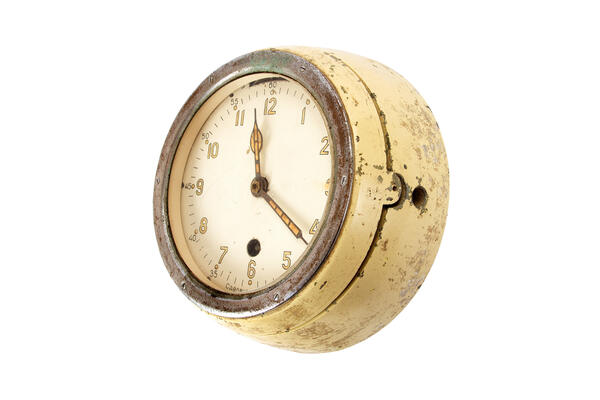
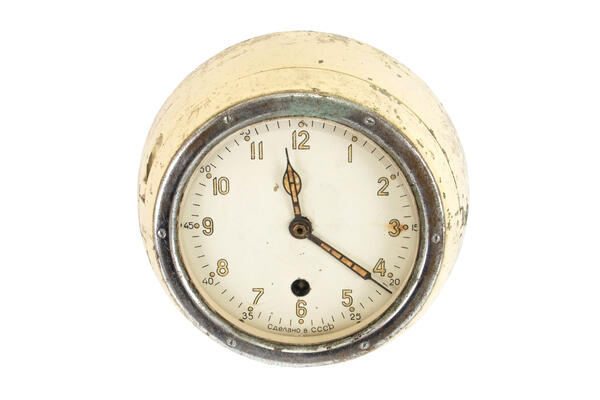
A marine chronometer is a device that not only organizes the daily schedule of the crew and the duration of the watch, but also calculates the longitude, or in other words, the exact location of the ship, in the open sea. To do this, the local current time must be compared with the time of the “Prime Meridian” as a reference point. The Greenwich Observatory in London was chosen as such a point.
Up to the 18th century, longitude was calculated by the angle of the celestial bodies above the horizon. Such measurements had to be taken at the same time — noon or midnight: even an insignificant deviation led to an error of several degrees and a deviation from the course.
Accurate onboard clocks were required, but creating them was not that easy. Humidity, salt vapors, pressure changes, pitching and other factors negatively affected the accuracy and safety of the device. Scientists and watchmakers were faced with the task of creating a mechanism insensitive to such harsh environmental conditions.
To encourage inventors, the British Parliament established the Longitude Commission in 1714.
In 1730–1736, the self-taught watchmaker John Harrison created a chronometer, called H1, and tested it on the sea route London — Lisbon — London. When checked against the standard, the clock showed a small error, and Harrison created three more models (H2, H3, H4), which were successively more advanced. He was the first to use flexible bimetallic elements. By the middle of the century, his invention began to be used on ships, and three chronometers were taken on the voyage: if one were to fail, it was necessary to focus on the coinciding readings of the remaining two. The product was reliable, but too expensive to be widely used.
In the second half of the 19th century, Ulysse Nardin made his contribution to the creation of marine chronometers, suggesting they feature an astronomical calibrator.
In modern navigation, clocks with quartz resonators are used, and positional data is acquired through the signals of radio stations and GLONASS and GPS navigation systems. Despite this, chronometers of old have been preserved on ships as backup.
The mechanism of the clock consists of a spring motor, a gear train and a trigger regulator. Such clocks are stored in a box with a gimbal, which provides balance even during strong pitching. The chronometer is wound up manually at the same time of day — usually eight o’clock in the morning. The correction of the time between the readings of the ship’s clock and the “zero value” is determined by radio signals and recorded daily in the ship’s log. A deck clock is an alternative to the marine chronometer.