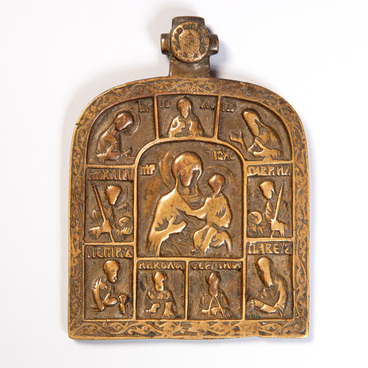
Pendant icons are a special category of small copper-cast devotional objects with Christian images. In some sources, the “pendant icon” is confused with the “pectoral icon”. The main difference of the pendant icon from the pectoral one is that it is small, thin and relatively light. In his book “Unknown Monuments of Russian Metalware”, Andrey Kirillovich Stanyukovich establishes a distinction between pendant and pectoral icons, introducing the following methodology: pendant icons are less and pectoral icons are more than 3 cm long.
In Russian, pendant icons have many other names. However, in the scientific works on art history, this type of icons is usually called pendant icons.
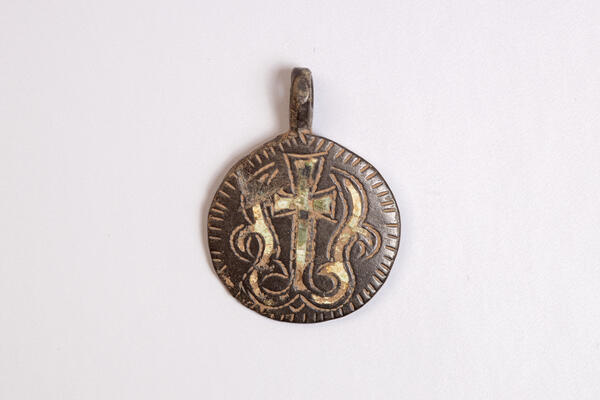
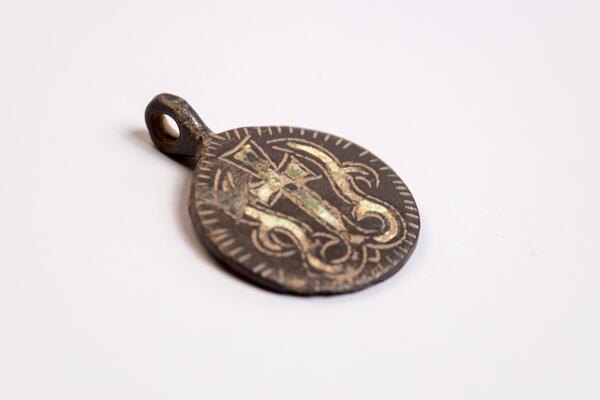
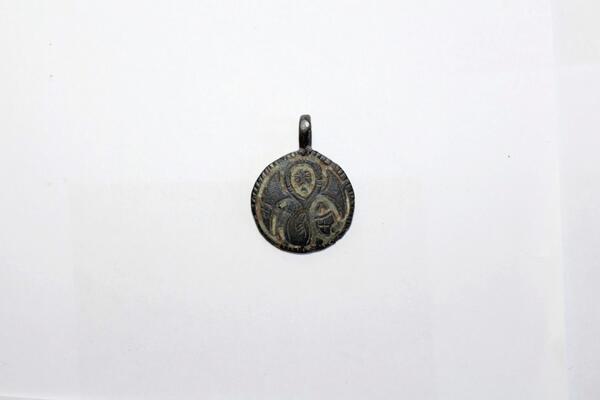
As a rule, only one side featured an image, and the other side was plain. Sometimes the second side would feature a cross. In the upper part of the icon from the collection of the Museum “The Smolensk Fortress” there is a suspension loop.
Pendant icons were usually made of copper and tin-lead alloys. This pendant from the museum was made of a copper alloy. Archaeologists often find miniature icons along with women’s beads and pagan pendants in burials that date back to the times of Old Rus.
Archaeologists noticed that some of the pendant icons featured images performed in the niello technique. This is an ancient method of decorating objects by adding black shades of color to the metal surface. To do this, an alloy of sulfur with silver, copper, or lead was melted and used to fill the designs that have been engraved on a metal surface. When the metal was heated, a chemical reaction between the alloy and the metal took place, and resulted in the new color and properties of the object.
Jewelers used several niello recipes, in which the components were combined in different proportions. The lower the quality of the component was, the worse the niello fused onto the metal surface.
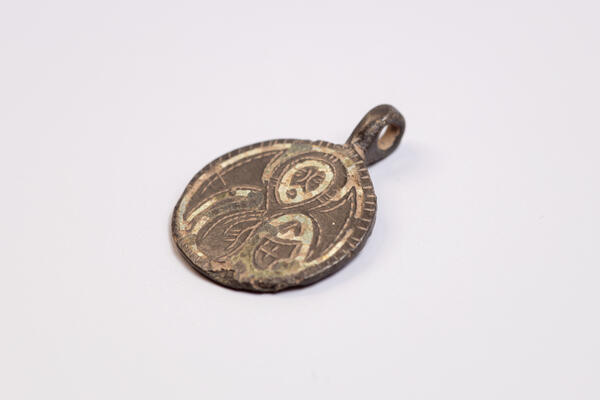
The pendant icon from the permanent exhibition “The World of the Streltsy” features a niello image of God Almighty, and there is a cross on the reverse. The round icon belongs to the pre-Mongolian period. The image portrays the Lord as the Creator and Ruler of the world.
The prototype of this iconographic type was the image of the Savior Not Made by Hands. The Savior is depicted as a wise sovereign: he holds a book in one hand, and with the other in a blessing gesture addressing his followers. At the same time, the Savior’s formidable face reminds about the Last Judgment that awaits everyone at the end of their journey, when people will be rewarded according to their deeds.
In Russian, pendant icons have many other names. However, in the scientific works on art history, this type of icons is usually called pendant icons.
As a rule, only one side featured an image, and the other side was plain. Sometimes the second side would feature a cross. In the upper part of the icon from the collection of the Museum “The Smolensk Fortress” there is a suspension loop.
Pendant icons were usually made of copper and tin-lead alloys. This pendant from the museum was made of a copper alloy. Archaeologists often find miniature icons along with women’s beads and pagan pendants in burials that date back to the times of Old Rus.
Archaeologists noticed that some of the pendant icons featured images performed in the niello technique. This is an ancient method of decorating objects by adding black shades of color to the metal surface. To do this, an alloy of sulfur with silver, copper, or lead was melted and used to fill the designs that have been engraved on a metal surface. When the metal was heated, a chemical reaction between the alloy and the metal took place, and resulted in the new color and properties of the object.
Jewelers used several niello recipes, in which the components were combined in different proportions. The lower the quality of the component was, the worse the niello fused onto the metal surface.
The pendant icon from the permanent exhibition “The World of the Streltsy” features a niello image of God Almighty, and there is a cross on the reverse. The round icon belongs to the pre-Mongolian period. The image portrays the Lord as the Creator and Ruler of the world.
The prototype of this iconographic type was the image of the Savior Not Made by Hands. The Savior is depicted as a wise sovereign: he holds a book in one hand, and with the other in a blessing gesture addressing his followers. At the same time, the Savior’s formidable face reminds about the Last Judgment that awaits everyone at the end of their journey, when people will be rewarded according to their deeds.