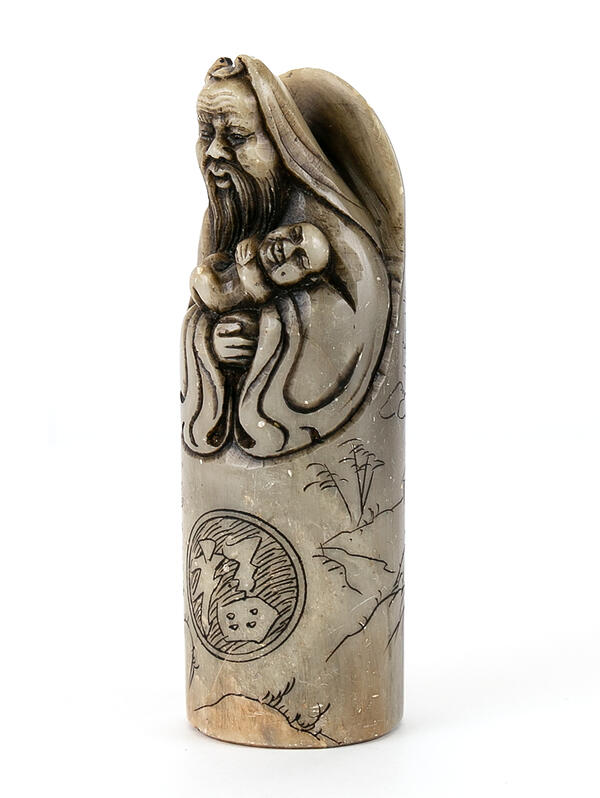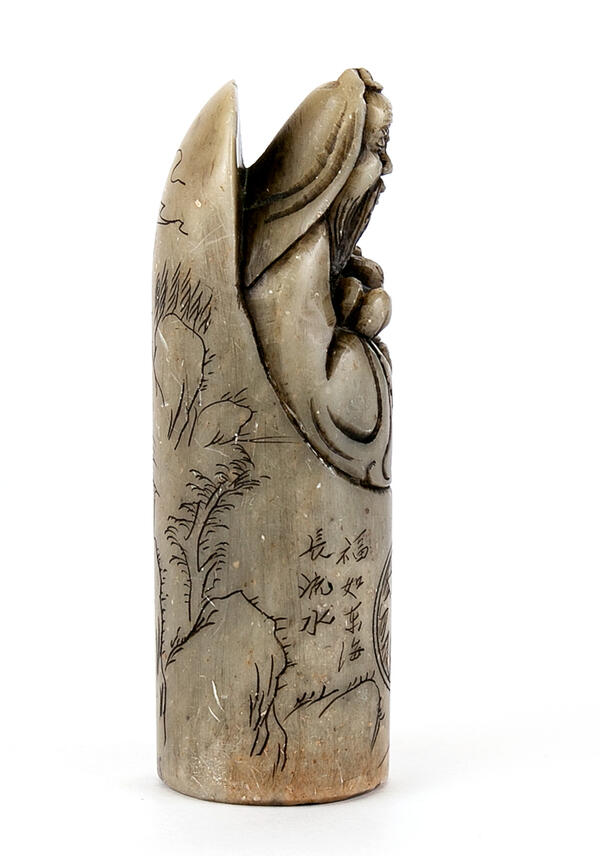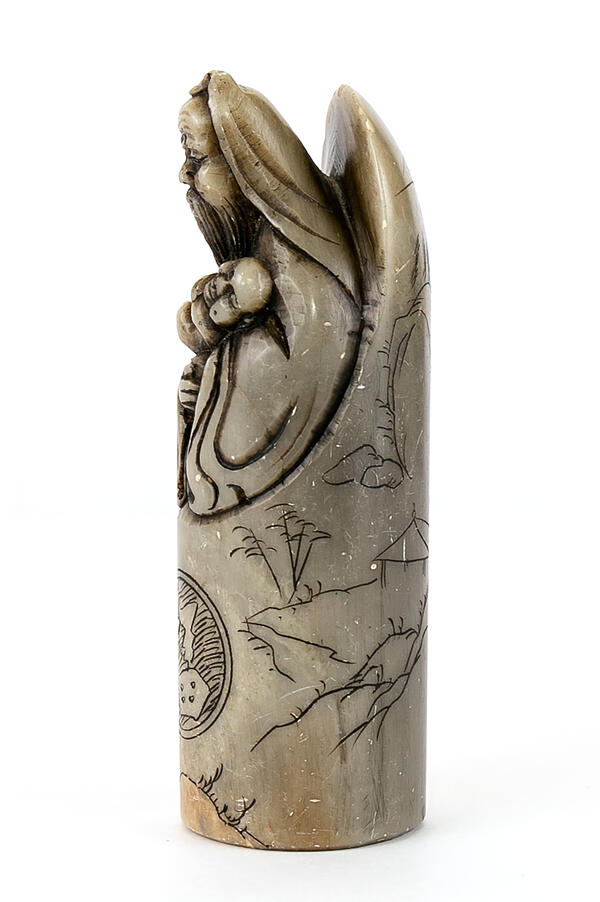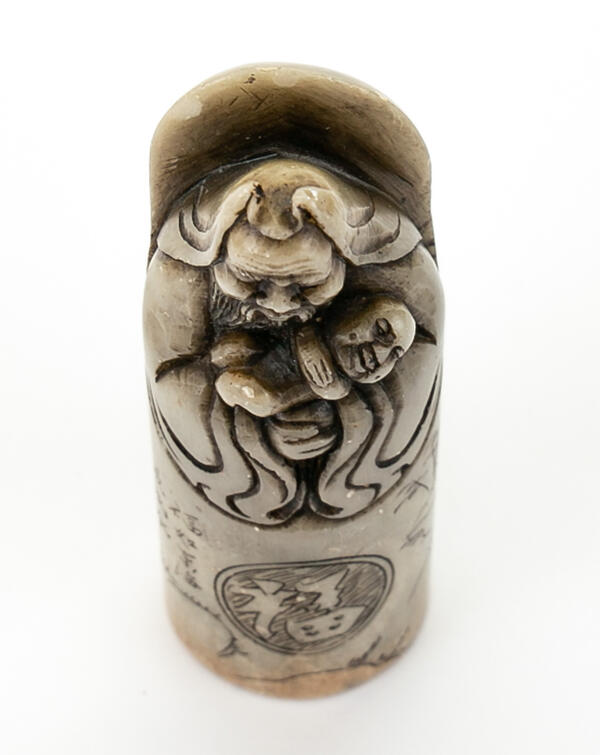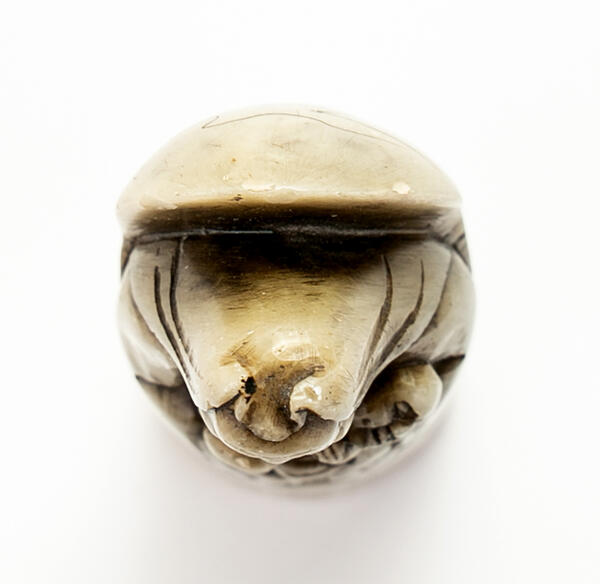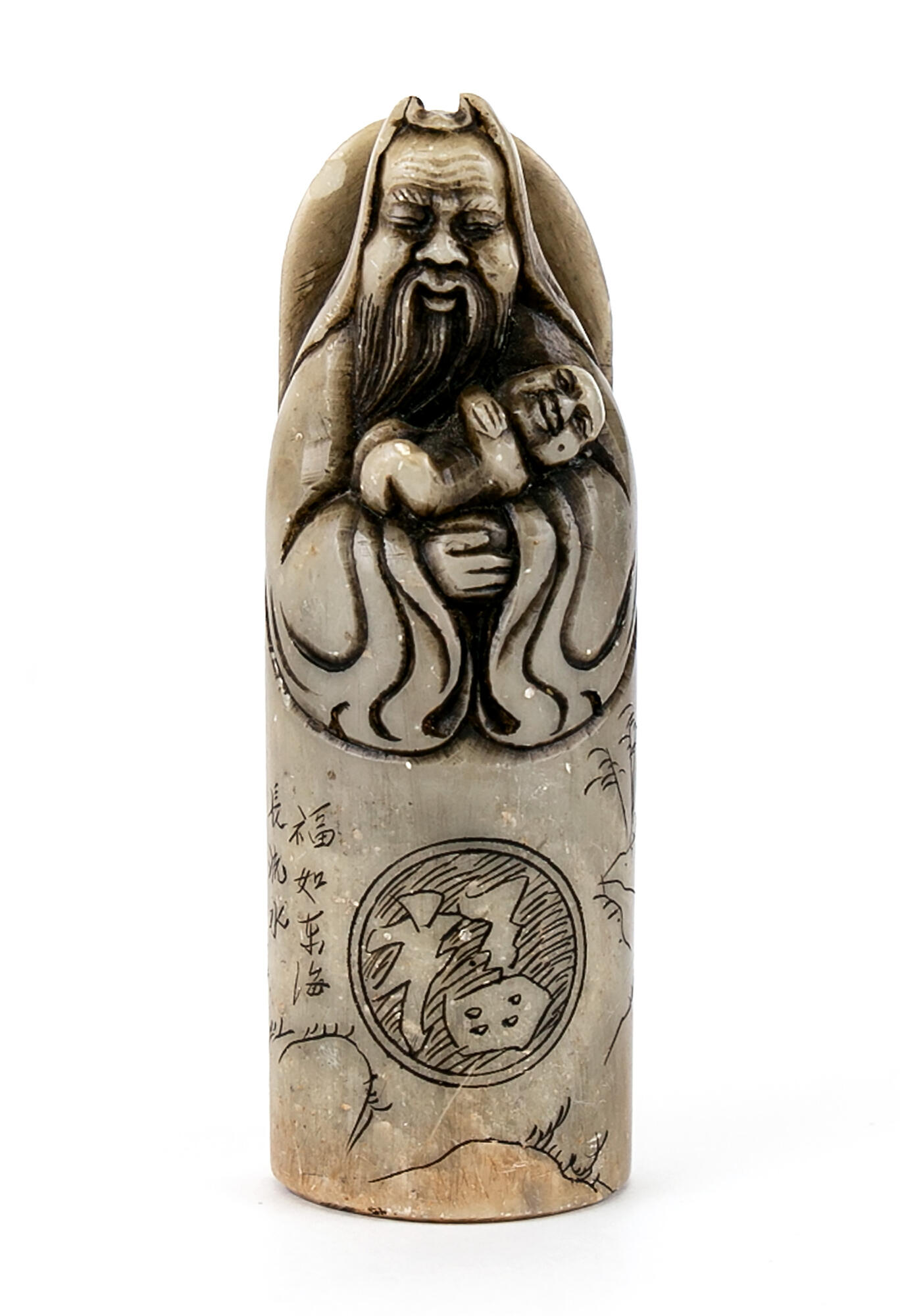


Seals are a part of traditional Chinese art, along with calligraphy, painting and poetry and carry the same contemplative message.
Seals emerged from the practice of carving predictions on turtle shells from the Yin dynasty period (2nd millennium BC). During the era of the Qin dynasty (221 BC — 206 AD), people left carved marks on household items and wooden or bamboo plaques that were used as documents, until finally they were substituted for seals. They were used to confirm authorship. Documents, orders and contracts were certified with them, and seals were valued higher than personal signatures.
When creating the oldest seals, craftsmen used a special wavy font “zhuang” (“wave carving”), after which they were named “zhuanke”. Today, this custom persists, although it is no longer considered mandatory.
The carver had to master the art of calligraphy and engraving, and be capable of building a composition in order to fit the necessary writing in a limited space. Characters — either indented or embossed — are applied from left to right and from top to bottom; the grooves are then filled with red paint. According to the color of the resulting background of the seal, it is customary to separate into “male” yang or baiwen (red signs on a white background) and “female” yin or zhiwen (white on red). The paint was traditionally made from cinnabar and coral extract, diluted with oils.
Seals had the shape of carved briquettes or figurines and usually made of ivory, metal and wood. Ones made of red stones of Tianhuang and especially jade were most valuable.
Since ancient times, the Chinese have revered jade as a stone of Heaven and Earth, Eternity, Wisdom and Immortality and valued it more than gold. Palaces and sarcophagi of emperors were decorated with jade and temple sculptures were made of these stones. Only representatives of the ruling family could wear jade jewelry. This mineral also makes an appearance in Chinese epics — legend has it that Buddha sat on a jade throne.
In Chinese culture, presenting
somebody with an object made of jade was considered a pledge of deep respect,
appreciation, and affection. The field marshal’s jade rod in a golden rim is
one such object. In 1895, the Chinese emperor gave it to Emperor Nicholas II.