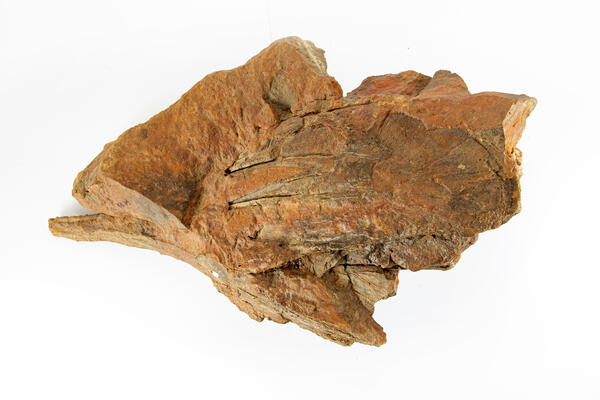
In 1994, on the sandspit of the Irtysh River near the village of Uvat, a unique fossil was discovered — a leaf of the ginkgo tree, the estimated age of which is 450 million years. The exhibit was listed in the Book of Records of the Tyumen Oblast as the oldest find.
Charles Darwin called the ginkgo plant a “living fossil”. Judging by the analysis of paleontological finds, at least 11 species of this tree grew in Europe, Asia and North America during the Cretaceous period. Today the only surviving species is ginkgo biloba, which withstood prehistoric catastrophes and climate changes.
By the end of the 17th century, the plant was extinct everywhere in Europe and America, but at the same time, Chinese monks had cultivated it in monasteries since 1100 BC.
Seeds were delivered from China to Korea and Japan. In 1690–1691, the physician and botanist Engelbert Kaempfer, who served in the Dutch embassy in Japan, examined the tree and in 1712 described it as ginkgo (from the Japanese pronunciation “ginnan”). Two decades later, ginkgo seeds were delivered to Western Europe, and in the middle of the 18th century — to North America.
In 1771, the naturalist Carl Linnaeus included the plant in his general classification under the name Ginkgo biloba.
The Chinese and Japanese call the tree “silver walnut” and “silver apricot” for its seeds that resemble apricot pits, with an oily upper layer, a hard middle and papery insides. They are eaten as a dessert or appetizer for sake, used in medicine. However, in Europe due to the unpleasant smell of its fruits, only infertile male trees are planted for decorative purposes.
The plant is also known by other names. In China, ginkgo was called “duck feet” (“icho” in the Japanese pronunciation) because the two-lobed fan-shaped leaves resembled duck feet; and “grandfather and grandson”, as it was believed that the fruits of this tree planted by grandfather could be tasted only in a generation. It is impossible to establish the tree’s sex, until it reaches the age of 25–30.
In Germany, the tree is named
after the poet Johann Goethe, who dedicated a poem from the cycle “Book of Zuleika” to this plant.