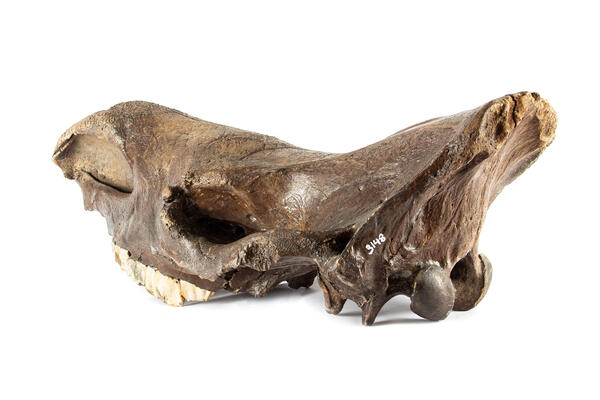
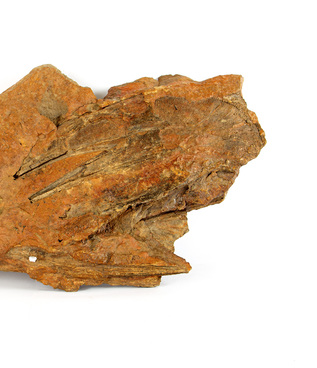
During paleontological excavations in Northern China, Mongolia, Western Siberia and some European countries, paleontologists have discovered numerous remains of prehistoric rhinoceroses. Unlike their modern day cousins, they were covered with wool, reaching 1.5–2 meters at the withers, with bodies of around 3.2 meters long and weighing in at about 3.5 tons. They were also the last representatives of rhinoceroses on the Eurasian continent.
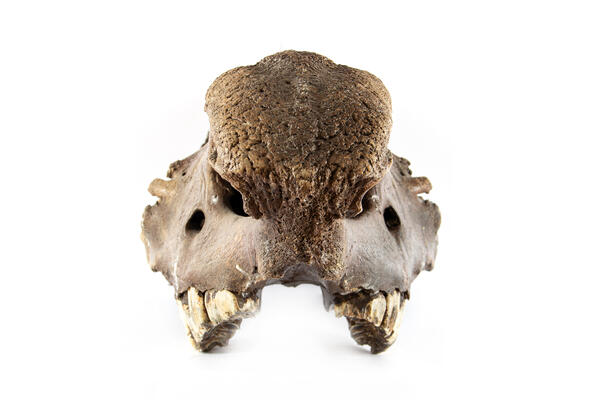
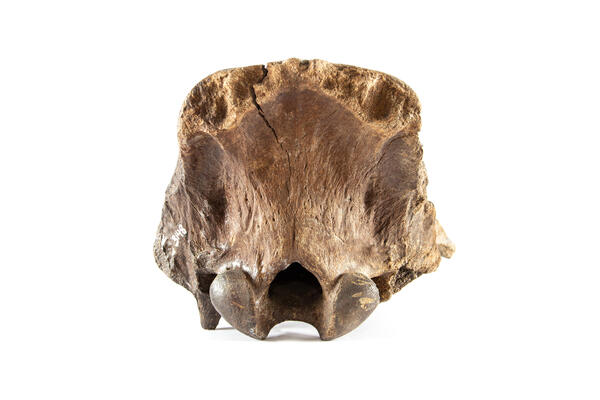
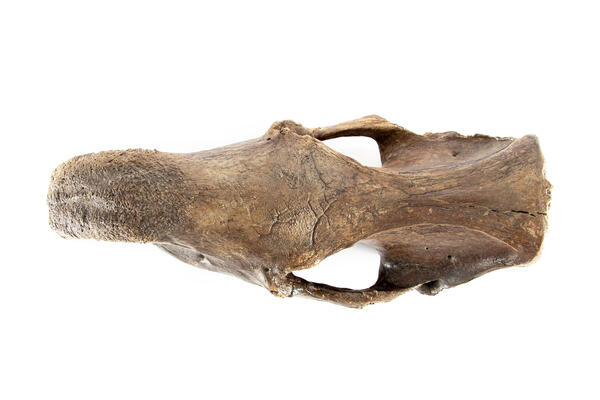
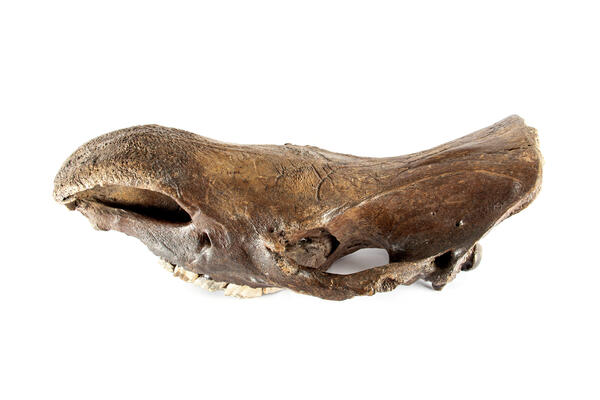
The skull of a wooly rhinoceros is a relatively rare find that allows scientists to learn a lot about the animal. The head of the prehistoric giant was more elongated and the overall body was larger than those of its modern descendants.
Examination of the jaw showed that the rhinos lacked fangs and incisors, while the rest of the teeth were large and strong with a thickened enamel and an open inner cavity. Their structure is typical for herbivores — it is likely that they fed on cereals, composite flowers and sedge, equally easily grinding both hard dry grasses and thick branches.
Dental wear analysis allowed scientists to establish that the average life expectancy of this hairy giant was 40–45 years.
Nasal and frontal bones were thickened with hard rough calluses where the horns were attached. The frontal horn had a saber shape, was oval in cross-section and curved backwards. Its length reached 130–140 centimeters, and it weighed up to 12–15 kilograms. The second horn was almost three times smaller (about 50 centimeters) and lighter. Apparently, the rhinoceroses used their horns to pave paths in the thickets and used them to fight back hunters and predators. Traces of both horns were found on the skulls of both males and females.
The back of the wooly rhinoceros’s head turned into a massive hump which was used to store fat for cases of forced starvation. Furthermore, the hump provided support for the massive front horn.
Hunters of the North used fragments of rhinoceros horns to strengthen bows.
Wooly rhinoceros bones are not found above the Pleistocene layer. Perhaps, these animals became extinct in the conditions of the humid and warm Holocene and the development of hunting just like bison, mammoths and other herbivores of that period.