Fishing, though not as popular as hunting, was still widespread in the Shor culture. It can be confirmed by the variety of Shor fishing techniques and the developed terminology regarding the subject. Fishing is also mentioned in local legends: Shor warriors set up fences for fish and drive poles into the riverbed using massive wooden mallets.
Vasily Vasilyevich (Friedrich Wilhelm) Radlov wrote that “with the arrival of winter, difficult times begin; those who did not sell enough fish during summer to buy enough flour must endure poverty and hunger.” At the same time, as the 19th-century ethnographer notes, fishing cannot be considered a profitable business: “the income [from it] is barely enough to feed and clothe the person.”
The Soviet researcher Leonid Pavlovich Potapov classified fishing as an auxiliary activity of “consumer nature” that had value as part of the diet, especially for hunters who spent long months away from home.
Catching small fish resembled gathering; women and children performed this task in shallow water. Catching pike, grayling, taimen, burbot, and orfe suitable for sale required more serious skills and special equipment. Leonid Potapov wrote that on the rivers Kondoma and Mrassa “they beat fish… with an iron spear azbrga”, also known as a “shoshkha”. This method “requires a great deal of experience and dexterity.”
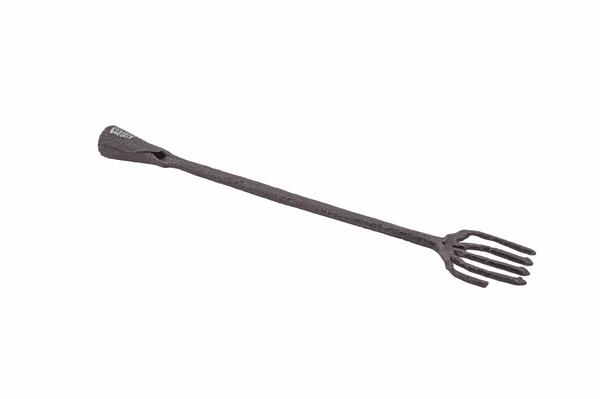
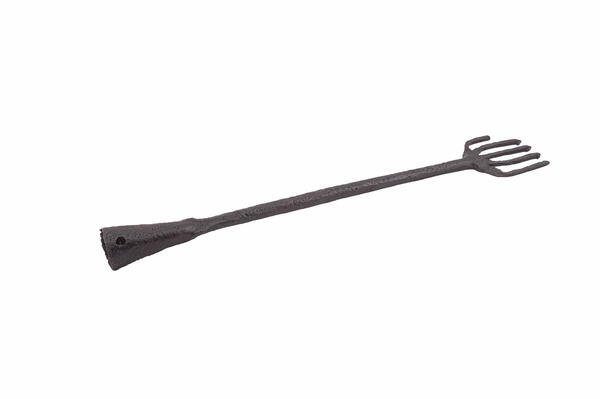
A fishgig is a specialized striking weapon with several (in the presented example, five) prongs on a big shaft that can be two to two and a half meters long. This device is used for both day and night fishing. Night fishing required special care and concentration. By the light of a fire on the bow of the boat, the fisherman noticed a large fish down in water, got within striking distance and hit it with a fishgig just below the gills. At the same time, there remained a risk that the wounded fish could drag the fishgig underwater.
In addition to the fishgig, the Shors used wooden
arrows, traps, nets and “kendyr” nets. Women and children wove nets and sold
them in Kuznetsk for two kopecks per fathom. The durable and cheap products
were in great demand.