#1

Divers, A mexican rug, Bedside table
#2
#3

#4
The engraved triptych ‘Divers’ by the famous Japanese artist of the 18th century Kitagawa Utamaro was, like many other items in the study, not just an ornament, but also an object of Eisenstein’s reflections.
French writer Edmond /ed’mon/ de Goncourt /gon’kur/ said that among UtamAro’s triptychs, ‘the one that depicts “divers, ” seekers of awAbi (edible shells, similar to oysters), is the rarest and the most exquisite.” Sergei Eisenstein analyzed the composition of “Divers” in great detail in his theoretical work “Even and Odd.” Director wrote that the triptych “leaves a unique and harmonious impression”. Eisenstein understood that the artist’s graphic skill is deeply connected with his worldview which was shaped by the Far Eastern philosophy.
In Japan, same as in China, they believe that universal harmony is rooted in unity of opposites, which are called Yin and Yang in Chinese (this is darkness and light, soft and hard, feminine and masculine, even and odd). In his analysis, Eisenstein explored an unusually complex ‘interweaving of two worlds - odd and even’ in Utamaro’s triptych.
“Six figures are split in three parts, with two figures on each. In each pair, one figure sits, and the other stands; three figures in total are undressed, two have some outerwear on, and one is nude—that nude figure is a child… One school of five fishes is divided by the leg of a naked woman into two parts: two fishes and another three. Three fishes are further separated into a group of two and a single fish… Two parts of the triptych out of three have identical baskets: one for an even part (II), and another one for an odd part (III). These two baskets on parts II and III are opposed by a school of fish on part I… The color of the environent and color of the surroundings: two elements. Three green fields of the peninsula (on all three parts), two brown baskets (on two parts)…”
Sergei Eisenstein, “Even and Odd”
The director discovered similar patterns in the way the artist depicted the robes, faces, and gestures of the divers. The rhythm of repetitions and contrasts, the “advanced mathematics” of the art, which ensures the harmony of all the elements within the whole. Eisenstein wrote that it didn’t surprise him at all that the three parts united in one object ‘produced their very own unique internal melody.’
#5
Full name: Divers Triptych
Author: Kitagawa Utamaro
Date: circa 1790
Technique: paper, colored wood engraving
Place: Japan
Dimensions: 48×88 cm (triptych with background)
Collection: Bedroom
Copyright: Cinema museum
Goskatalog Number: 17962578, 17962673, 17962668
Author: Kitagawa Utamaro
Date: circa 1790
Technique: paper, colored wood engraving
Place: Japan
Dimensions: 48×88 cm (triptych with background)
Collection: Bedroom
Copyright: Cinema museum
Goskatalog Number: 17962578, 17962673, 17962668
#6
A mexican rug
#7

#8
Like other pieces of Mexican ornamental art, Sergei Eisenstein brought this rug from Mexico in 1932. The composition is arranged around a Mexican heroic leader, who is identified with the feathered serpent Quetzalcōātl, a deity revered by Latin American Indians since ancient times.
A small rug from Mexico with a similar stylized figure and geometric ornament probably lay in the library of the director’s apartment or decorated his summer house in the village of KrAtovo.
This rug from Mexico also portrays a mythological leader and god Quetzalcōātl in the center. It is surrounded by Mexican warriors in masks, and at the corners one can see the national symbol of Mexico, a caracara bird with a snake in its beak. Eisenstein bought this rug in Mexico during the shooting of the film Que viva Mexico! This rug covered the sofa in his bedroom in the apartment on Potylikha Street.
Sergei Eisenstein’s bedroom looked like depicted in this watercolor drawing by Georgy Grivtsov right after the director’s death in February 1948. The bedroom is filled with various picturesque decor elements with sacral motifs of the peoples of the world. Colorful rugs, photos in orange mats, ancient Japanese engravings, masks from different countries and statuettes blended the walls of pale pink. Sergei Eisenstein asked to paint the room exactly in this color, which reminded him of his childhood.
The striped palace rug embellishes the Bedroom zone exposition. It is probably made of traditional woolen serape capes, also brought by the director from Mexico. Anna Koleychuk, the designer of the Sergei Eisenstein’s Study exposition, used the geometric ornament from the rug – white, orange, dark brown and thin blue stripes – to color the benches for visitors.
From the trip, Sergei Eisenstein also brought traditional dried pumpkin vase made by women in southern Mexico, on the Isthmus of TehuantepEc between the Gulf of Mexico, the Atlantic Ocean, and the Pacific Ocean. Similar vases were filmed in an episode Sandunga of the film Que viva Mexico! in 1931.
#9
Full name: A small mexican rug
Date: late 1920s–1931
Technique: dyed wool, weaving
Place: Mexico
Dimensions: 180.5×155 cm
Collection: Bedroom
Copyright: Cinema museum
Goskatalog Number: 16573171
Date: late 1920s–1931
Technique: dyed wool, weaving
Place: Mexico
Dimensions: 180.5×155 cm
Collection: Bedroom
Copyright: Cinema museum
Goskatalog Number: 16573171
#10
Bedside table
#11

#12
Sergei Eisenstein designed the two bedside tables he commissioned from the carpenters of the woodshop at MosfIlm himself for his apartment on PotYlikha Street. The director has purposefully mixed a lot of styles in his apartment. The armchair and chair in the library were crafted in Chippendale style of the second half of the 18th century; the mahogany bureau secretaire in the bedroom reflected the Empire style of the early 19th century; all these items existed side by side with BAuhaus-style furniture on metal legs and Eisenstein’s own project: simple, functional and elegant shelving and stepladder in the library, and bedside tables in the bedroom.
On the right bedside table the filmmaker kept an alarm clock, medicine bottles, and a reading lamp which he placed on top of three thick books for convenience. Original medicine bottles were not preserved. Similar vintage vials were presented to the Museum of Cinema for this exhibition by Peter von Dervies, a master from the State Research Institute of Restoration.
Paper sheets and a pencil were always right by the bedside — if a thought came in the middle of the night, it could be promptly written down. Director’s creative thoughts never ceased; they didn’t even pause during the night rest. Eisenstein jokingly wrote that he was very lazy: when he should have been drawing, he would instead read, when he should have been reading, he would write, and when should’ve been writing, he would draw.
On the left bedside table, there was a telephone and a Bauhaus lamp, and in the back, an Aztec ceremonial stone hatchet that the director brought from Mexico was leaning against the wall. Eisenstein jokingly compared this ancient stone profile to the head of his friend and colleague Viktor Shklovsky.
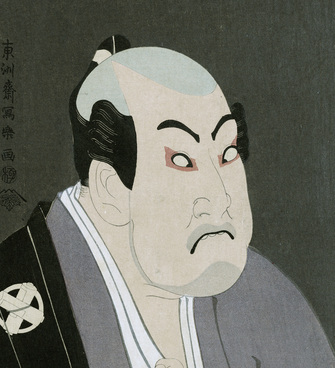
Above the nightstands, to the either side of the Mexican carpet on his wall, Sergei Eisenstein hung photographs of the action moments of his unfinished film ‘Que viva Mexico! ’: from an episode of the Easter scene in the Fiesta novel and from the Maguei novel. Above it all he placed sheets of Japanese graphics: the works of Utamaro and his contemporary Tōshūsai Sharaku. Mexico and Japan were two of the filmmaker’s favorite countries. To the left of the bed was a large mahogany Empire bureau with a folding table top. A striped robe brought from a foreign business trip hung behind it.
#13
Full name: Bedside table with household items
Date: 1935
Technique: plywood, wood, handmade elements
Place: Moscow
Dimensions: 50.5×52×52 cm
Collection: Bedroom
Copyright: Cinema museum
Goskatalog Number: 16573078
Date: 1935
Technique: plywood, wood, handmade elements
Place: Moscow
Dimensions: 50.5×52×52 cm
Collection: Bedroom
Copyright: Cinema museum
Goskatalog Number: 16573078
read morehide
00:00
00:00
1x
1
 Point your smartphone camera to open in the app
Open in app
Share