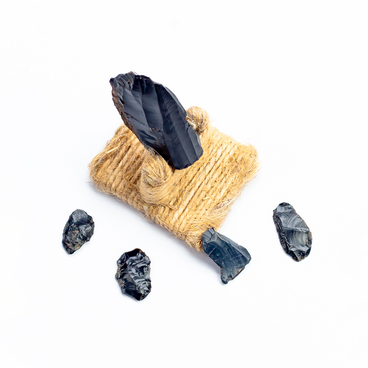
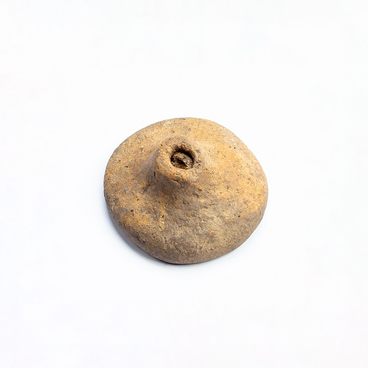
The Stone Age was the era in which early humans learned to make tools from stone. It is the longest period in the development of the human species, which began two and a half million years ago and ended in the third millennium BCE. The Stone Age is divided into the Old Stone Age (Paleolithic), the Middle Stone Age (Mesolithic), and the New Stone Age (Neolithic).
Almost any stone tool starts with a nucleus. A nucleus, or core, is a fragment of stone, such as obsidian, flint, or others. In most cases, the nucleus was specially prepared to produce blanks for tools — flakes or blades that were knocked off the core of a larger rock.
The nucleus could represent one of the stages of “primary knapping” in the production of stone tools, and could also be used as a tool itself. Core tools included hand axes and the earliest axes.
The source material for the nuclei were pebbles, boulders, slabs, and whole pieces of rock. Large flakes could also be used for so-called “secondary nuclei.” A piece ready to start flake removal was called a “pre-nucleus.” Prismatic and pyramidal, or cone-shaped, nuclei were most suitable for knapping.
The Mesolithic period was characterized by miniature and pencil-shaped nuclei. From these, micro flakes and blades were chipped as part of the microlithic industry. Neolithic nuclei most often had a prismatic shape.
With all the variety of nuclei forms, they always had one to three specially prepared platforms from which flakes were removed.
The knapping process was constantly improved. This was evident in the techniques of striking the desired spot on the striking platform, first with a stone, and in the Middle Paleolithic with a softer hammer tool made of horn or wood.
The item in the exhibition is part of the collection donated to the Spassk Local History Museum named after Nina Ivanovna Beregovaya by the archaeologist Fyodor Pavlovich Trigub.
A resident of the village of Chernigovka in the
Chernigovsky District of Primorsky Krai, Fyodor Trigub discovered over 350
archaeological sites in Primorsky Krai and participated in many archaeological
expeditions. In the 1990s, Fyodor Trigub donated a large collection of
artifacts from various time periods to the Spassk-Dalny Museum.