

The Krupp family rose to prominence in the late 16th century. One of the first known members of the dynasty was Arndt Krupp, who moved to Essen during that period. Since then, the family’s history has been associated with this German city. Arndt Krupp was a moneylender and earned a good living trading Dutch goods, wine, and livestock. By staying in the city during the outbreak of the Black Death, he was able to buy up the property of those who had left for next to nothing.
His son Anton took over the family business during the Thirty Years’ War. Anton improved the dynasty’s position by manufacturing weapons. The modern Krupp firm was founded by Friedrich Krupp, born in Essen in 1787.
During that time, the family business consisted of several enterprises, including the Gute Hoffnung iron mill. By 1821, the mill had been modernized and was producing high-quality steel, which helped increase sales.
Friedrich’s son, Alfred Krupp, earned the nickname “Alfred the Great”. He organized the production of equipment for mints, turneries, and grinding workshops, as well as tools for tanners and jewelers. In addition, the company started manufacturing cutlery.
Along with the German branch of the Krupp family, there was an Austrian one. The Austrian steelworks was located in Berndorf. The two branches operated independently of each other. The Berndorf factory was run by equal partners Hermann Krupp and Alexander Schoeller.
The enterprise specialized in producing cutlery, silver and melchior hollowware. The factory reached the peak of its success under Hermann’s son Arthur Krupp. After Schoeller’s heir left the firm, the company was renamed “The Berndorf Metalware Factory of Arthur Krupp”.
The period of prosperity lasted for several years. The factory supplied its products to markets in Austria, the Balkan countries, the Russian Empire, Italy, and South America.
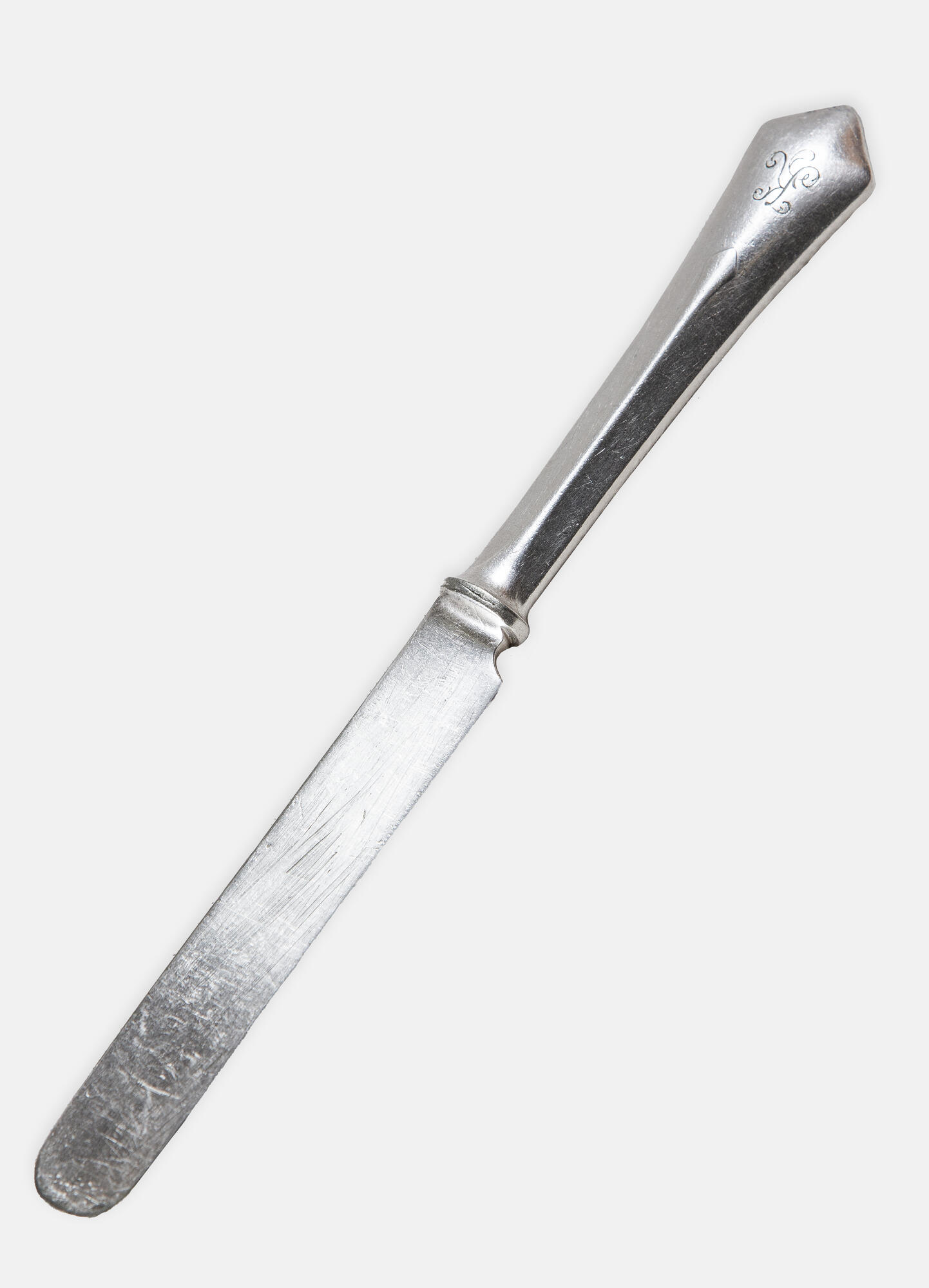
The table knife from the museum’s collection was made at the Krupp factory in Berndorf. The knife is also interesting as a piece of memorabilia because it used to belong to Alexander Chizhevsky, a poet, landscape artist, and scientist.
His son Anton took over the family business during the Thirty Years’ War. Anton improved the dynasty’s position by manufacturing weapons. The modern Krupp firm was founded by Friedrich Krupp, born in Essen in 1787.
During that time, the family business consisted of several enterprises, including the Gute Hoffnung iron mill. By 1821, the mill had been modernized and was producing high-quality steel, which helped increase sales.
Friedrich’s son, Alfred Krupp, earned the nickname “Alfred the Great”. He organized the production of equipment for mints, turneries, and grinding workshops, as well as tools for tanners and jewelers. In addition, the company started manufacturing cutlery.
Along with the German branch of the Krupp family, there was an Austrian one. The Austrian steelworks was located in Berndorf. The two branches operated independently of each other. The Berndorf factory was run by equal partners Hermann Krupp and Alexander Schoeller.
The enterprise specialized in producing cutlery, silver and melchior hollowware. The factory reached the peak of its success under Hermann’s son Arthur Krupp. After Schoeller’s heir left the firm, the company was renamed “The Berndorf Metalware Factory of Arthur Krupp”.
The period of prosperity lasted for several years. The factory supplied its products to markets in Austria, the Balkan countries, the Russian Empire, Italy, and South America.
The table knife from the museum’s collection was made at the Krupp factory in Berndorf. The knife is also interesting as a piece of memorabilia because it used to belong to Alexander Chizhevsky, a poet, landscape artist, and scientist.