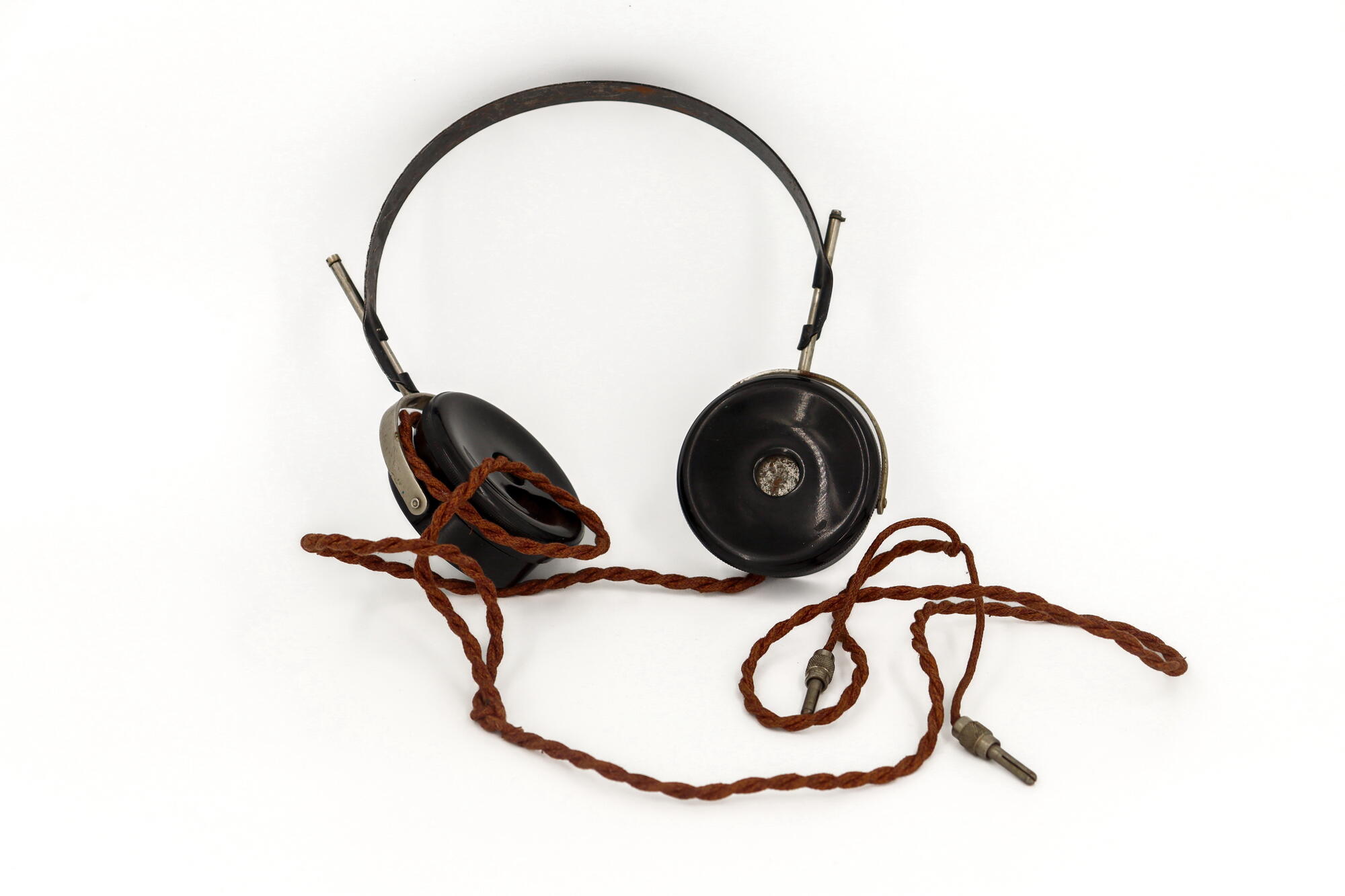


The first headphones appeared as an accessory to the sensational invention of Alexander Bell — the telephone. As this device patented in 1875 was rapidly becoming more and more popular, demand arose for auxiliary devices like those that would enable listening to sound signals.
In 1891, the Frenchman Ernest Mercadier introduced his brainchild called the “bi-telephone”. In fact, those were two receivers interconnected with an arc; curiously enough, the arc connected the receivers from below, not above the head as is customary today. Businessmen took advantage of this invention, creating a special service in England for listening to opera, entertainment shows and even Sunday church sermons by telephone.
In 1899, in one of the first radio receivers created by the Russian physicist and inventor Alexander Stepanovich Popov, sound waves converted from radio signals could already be heard through “headphones”, according to the description.
In 1910, Nathaniel Baldwin improved existing developments and created the design of headphones in use today. They are adjustable in height and fit comfortably on the head. The first test showed that Baldwin’s headphones were twice as sensitive as all contemporary analogues. The inventor quickly realized that his creation would arouse the interest of the military, and soon the headphones came into service with the US army. A few years later, it was the model proposed by Baldwin that became the primary means of communication for all the navy operators.
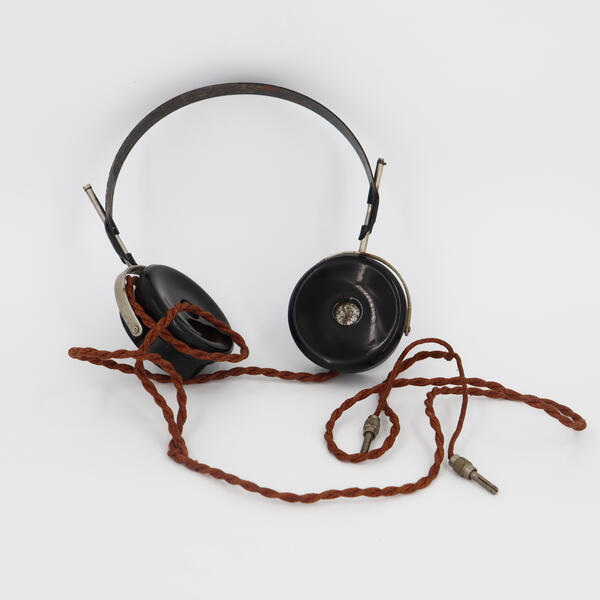
Headphones became truly popular in the 1920s, when they began to be used to listen to radio. Some radio receivers would go on sale together with headphones. Another popular product was a DIY kit, which contained components and instructions for assembling headphones.
Still, there was a problem: while rendering speech with good fidelity, those headphones did not do as well with music, lowering its sound quality to the extreme. In 1937, Eugen Beyer, who founded a company for the manufacture of headphones and microphones, managed to achieve high-quality sound of melodies and songs channeled through his devices.
Until the late 1960s, all headphones were closed, i.e., the cases covered the ears completely. Sennheiser’s first open-back headphones experiment made the company a lot of money. Since then, each manufacturer of open-type headphones must pay a percentage fee to the inventor company.
In 1891, the Frenchman Ernest Mercadier introduced his brainchild called the “bi-telephone”. In fact, those were two receivers interconnected with an arc; curiously enough, the arc connected the receivers from below, not above the head as is customary today. Businessmen took advantage of this invention, creating a special service in England for listening to opera, entertainment shows and even Sunday church sermons by telephone.
In 1899, in one of the first radio receivers created by the Russian physicist and inventor Alexander Stepanovich Popov, sound waves converted from radio signals could already be heard through “headphones”, according to the description.
In 1910, Nathaniel Baldwin improved existing developments and created the design of headphones in use today. They are adjustable in height and fit comfortably on the head. The first test showed that Baldwin’s headphones were twice as sensitive as all contemporary analogues. The inventor quickly realized that his creation would arouse the interest of the military, and soon the headphones came into service with the US army. A few years later, it was the model proposed by Baldwin that became the primary means of communication for all the navy operators.
Headphones became truly popular in the 1920s, when they began to be used to listen to radio. Some radio receivers would go on sale together with headphones. Another popular product was a DIY kit, which contained components and instructions for assembling headphones.
Still, there was a problem: while rendering speech with good fidelity, those headphones did not do as well with music, lowering its sound quality to the extreme. In 1937, Eugen Beyer, who founded a company for the manufacture of headphones and microphones, managed to achieve high-quality sound of melodies and songs channeled through his devices.
Until the late 1960s, all headphones were closed, i.e., the cases covered the ears completely. Sennheiser’s first open-back headphones experiment made the company a lot of money. Since then, each manufacturer of open-type headphones must pay a percentage fee to the inventor company.