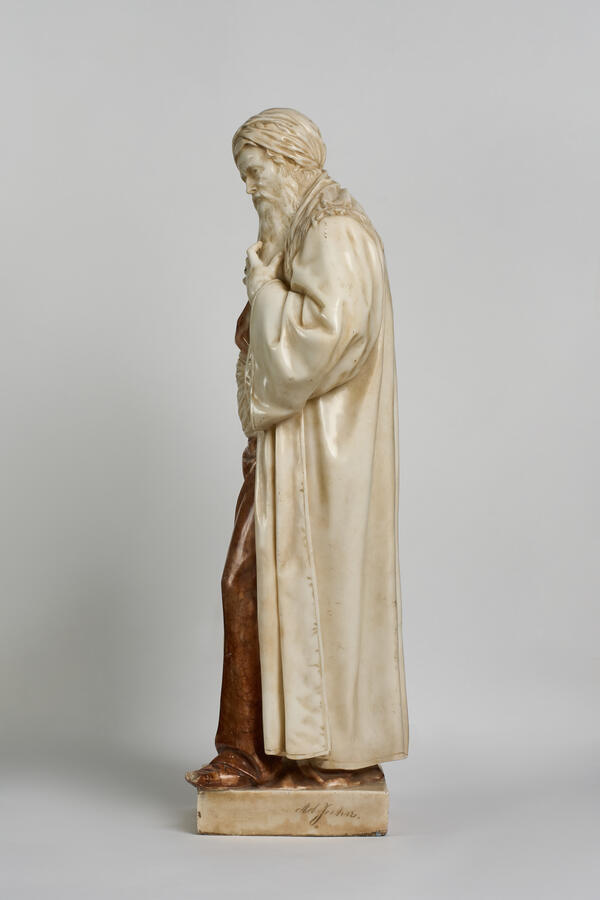
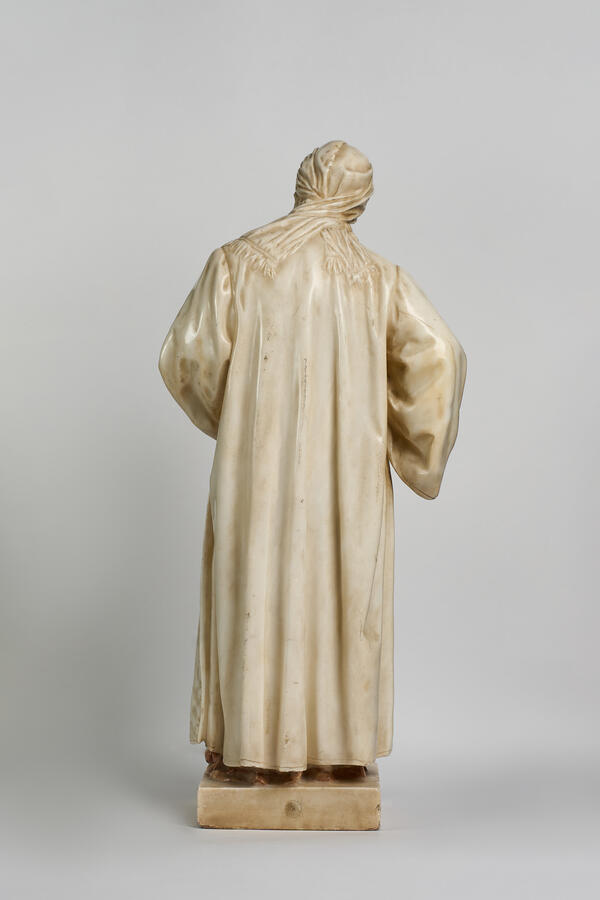
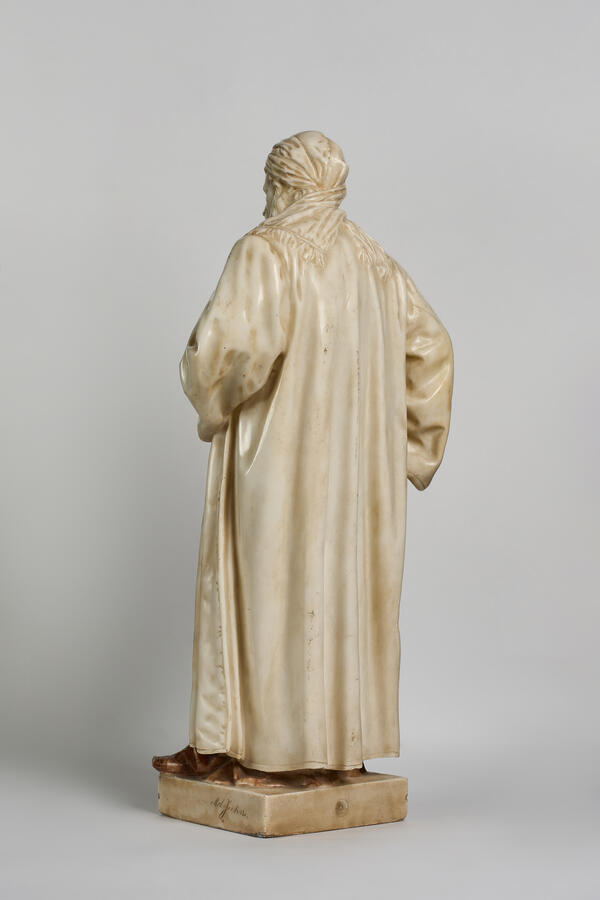
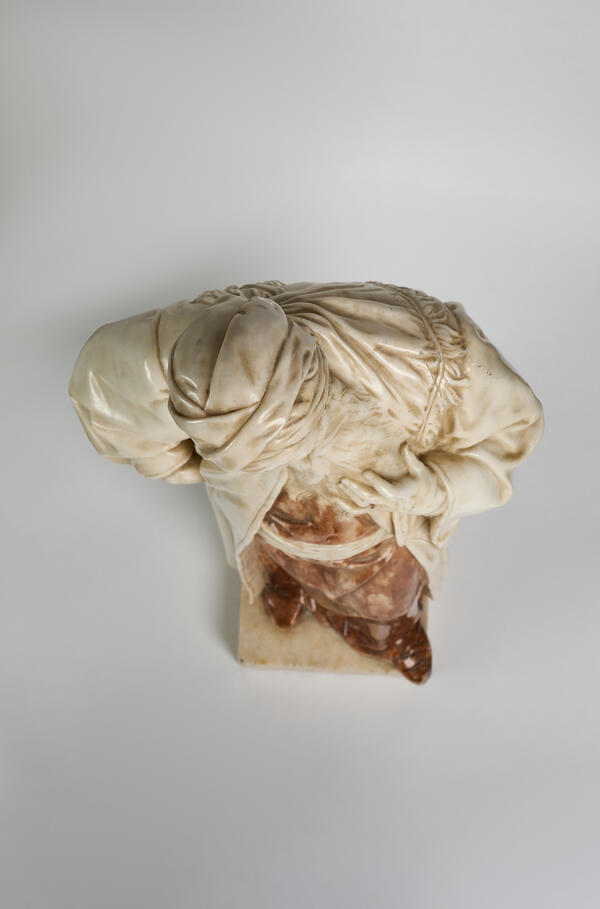
The sculptural image “Nathan the Wise” presented at the exhibition is made of marble by the talented German sculptor Adolf Ferdinand Walter Jahn. This is a slender figure of an elderly man with a long beard dressed in eastern clothes.
Adolf Ferdinand Walter Jahn was born in the Prussian city of Stettin (today the Polish city of Szczecin) on December 17, 1858. He graduated from the Prussian Academy of Arts. Portrait busts and bronze statuettes were his main focus.
From 1893 to 1918, the sculptor was an annual participant in the Great Berlin Art Exhibition, where he presented figurines, busts and reliefs in plaster, marble and wood, as well as bronze. The statuette “Nathan the Wise” was reproduced in various sizes, materials (both bronze and alabaster) and in various colors. After 1913, “Nathan the Wise” was manufactured in porcelain by the famous Danish company Royal Copenhagen.
In 1934, Adolf Jahn settled with his family in the German city of Halle, where he died at the age of 82 and was buried.
Nathan, the hero of Gotthold Ephraim Lessing’s play “Nathan the Wise”, written and published in 1779, is a wealthy Jew who lives in Jerusalem during the first Crusades. Nathan is a mature man; he has experienced a lot, but the slings and arrows have not hardened his heart, on the contrary, they have taught him wisdom and tolerance. Living among Muslims (Lessing calls them Saracens) and meeting with Christians, Nathan judges people not by religion, but by their qualities, and is guided by this belief in all the vicissitudes of life.
The character of Nathan the Wise has existed since biblical times and is very often mentioned along with the name of King Solomon.
The image of Nathan the Wise expresses the idea of
forgiveness, in which Lessing saw the highest manifestation of wisdom and
power. Lessing built his play around the idea that the foundation of any
religion is one’s moral sense, and the dogmatic content is transitory and in no
way testifies to the superiority of one religion over another.