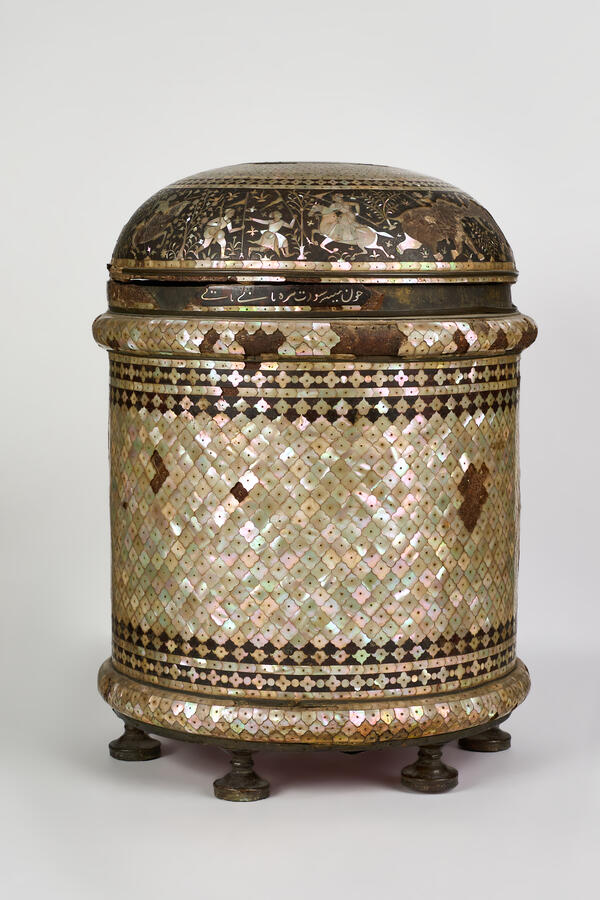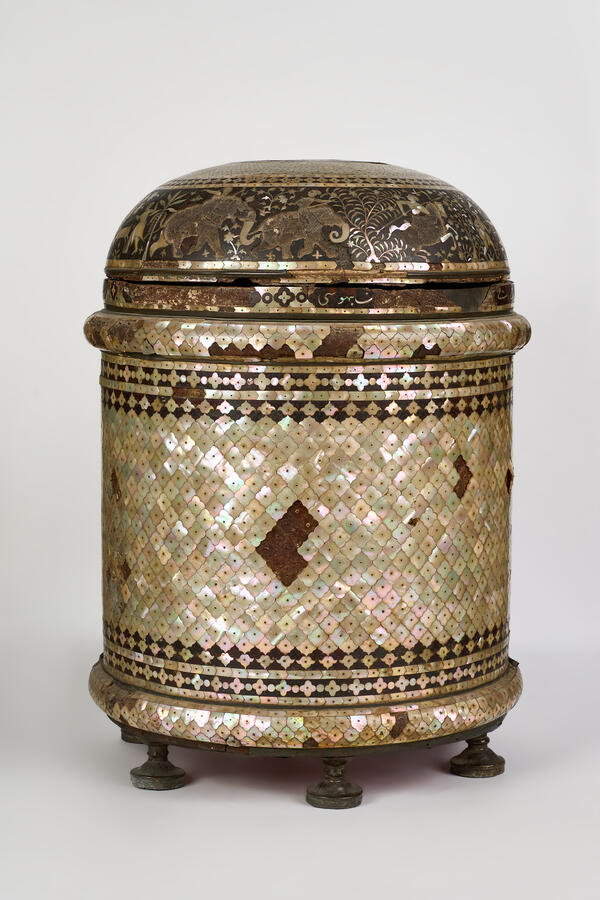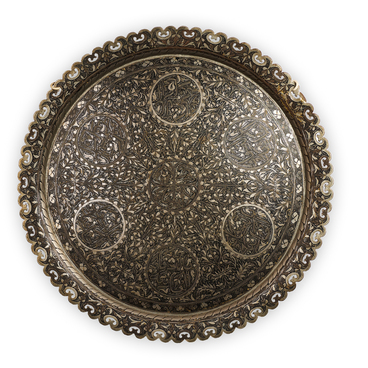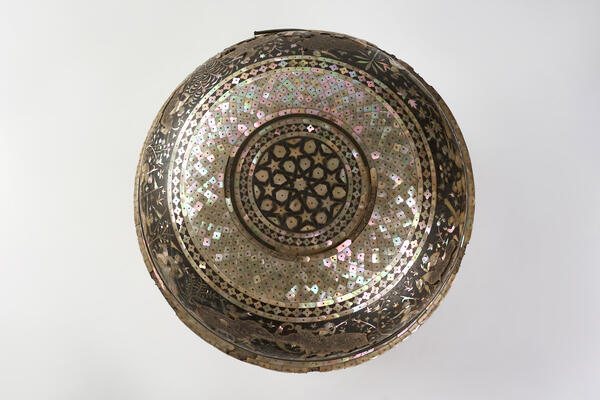
The collection of artworks from Asia and the East housed in the Astrakhan Art Gallery named after Pavel Mikhailovich Dogadin is rather small. However, it is very interesting due to the variety of household and artistic pieces made by masters of Persia, India, China and Japan in the 18th–20th centuries. Among them, there is an Indian box that is rather noteworthy.
The box is inlaid with precious mother-of-pearl. The special term for this variety of mother-of-pearl — franche argentée — translates as “clearly silver”. It owes its name to its shining silver color. The box depicts various scenes: a battle between elephants, two scenes with messengers on foot and on elephants, and blackbucks fighting each other. Under the hunting scene, an inscription in Arabic runs along the circumference of the edge of the box.
The images of animals in the art of Asian and Oriental countries are extremely diverse: artists often depicted animals that were involved in the economic and everyday life of the people. They became characters in myths, fairy tales, legends, and teachings. Often, the image of an animal served as an expression of one or another abstract concept: strength, bravery, dexterity, rage, or calmness. Such metaphorical expressions were especially in demand when it was necessary to denote such qualities in a ruler, a noble, a leader or even some kind of deity.