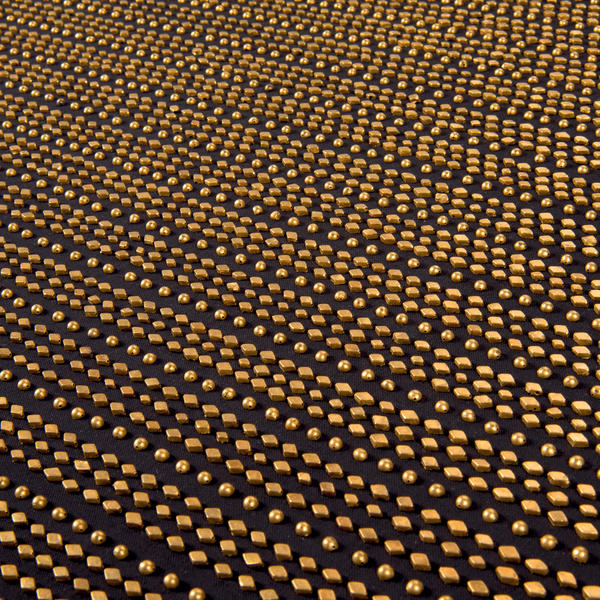
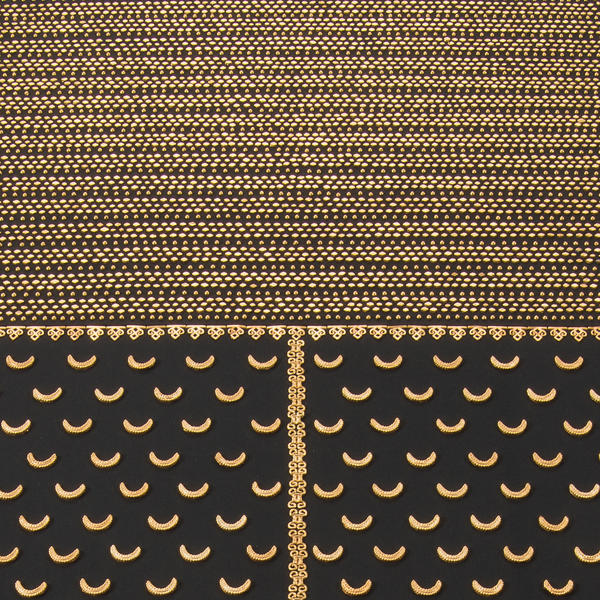
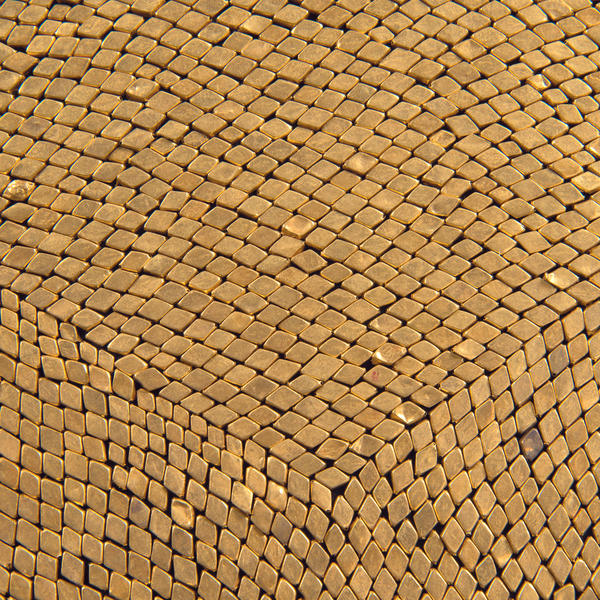
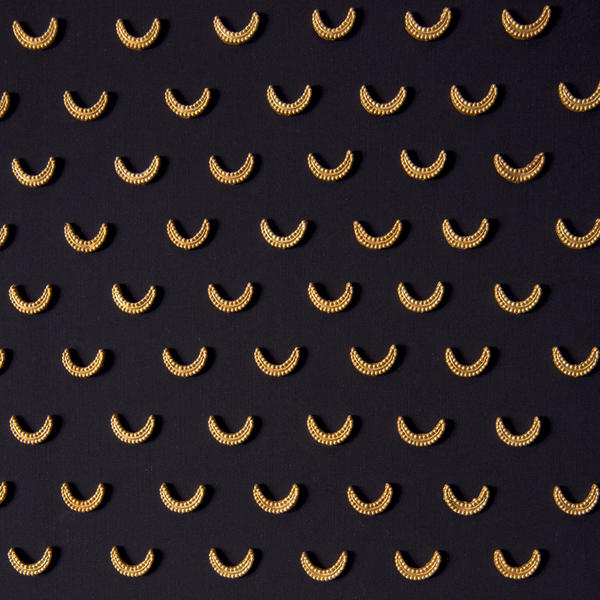
The plaques of a horse cover were found in 1986 in Rostov Oblast, on the outskirts of Azov city. The bottom of the crypt was covered with small gold items of various shapes. Archeologists found lunulae — crescent shapes decorations, triple-cascade pyramids, stylized images of ram’s head, Heracle’s knot, as well as triangle, diamond-shaped and semi-spherical plaques. Many were decorated with punched ornament — a pattern of small pellets. In the ancient time the plaques were sewn on a foundation (possibly leather), which had decomposed over the period of two thousand years. The total number of plaques found is 15 000, the exhibition presents 10860 items.


Sew-on plaques of a horse cover
Creation period
last quarter of the I century AD
Technique
gold, toreutics
Collection
Exhibition
17
Open in app#13
#12

#18
All plaques are made in the technique of toreutics and have small openings for sewing on. As a rule such items were used for decorating clothes or covers — they were sewn on the foundation in a certain manner to form different patterns.
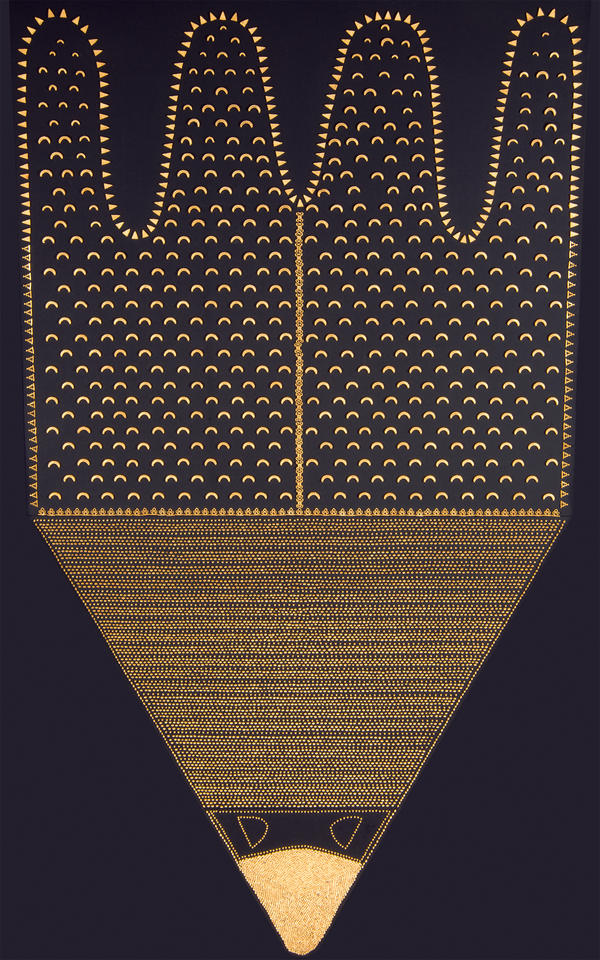
The initial position of the plaques in the crypt of Dachi mound, where they were found, was partially recorded. When the plaques were found, they were placed in four layers. Most likely it was a caparison — a horse cover — folded in several layers. After several years of research, suppositions and calculations, S.Lukyashko and M.Filimonov reconstructed the mysterious item.
The scientists restored the ornament approximately. It could decorate a horse cover. The gold-decorated caparison was possibly covering a sacrificial animal. Thus the animal became a divine heavenly horse — a mediator between the two worlds or a companion of the deceased person. Scientists have found images of horses covered by large caparisons on the drawings of Parthian time. Also known are caparisons of Iran, which in the Middle Ages were used to cover the horse of Husayn during Muharram.
The initial position of the plaques in the crypt of Dachi mound, where they were found, was partially recorded. When the plaques were found, they were placed in four layers. Most likely it was a caparison — a horse cover — folded in several layers. After several years of research, suppositions and calculations, S.Lukyashko and M.Filimonov reconstructed the mysterious item.
The scientists restored the ornament approximately. It could decorate a horse cover. The gold-decorated caparison was possibly covering a sacrificial animal. Thus the animal became a divine heavenly horse — a mediator between the two worlds or a companion of the deceased person. Scientists have found images of horses covered by large caparisons on the drawings of Parthian time. Also known are caparisons of Iran, which in the Middle Ages were used to cover the horse of Husayn during Muharram.
#16
Some researchers believe that the gold items were decorating a ritual carpet or cloths of two two-pronged banners made of thick fabric.
The reconstruction was shown in the museums of France, Austria, Germany, in the cities of Russia — Moscow, St. Petersburg and Krasnodar. One of the visitors of the Azov historical-archaeological and paleontological museum-reserve called this item ‘a wonder of the world’.
The reconstruction was shown in the museums of France, Austria, Germany, in the cities of Russia — Moscow, St. Petersburg and Krasnodar. One of the visitors of the Azov historical-archaeological and paleontological museum-reserve called this item ‘a wonder of the world’.
#19
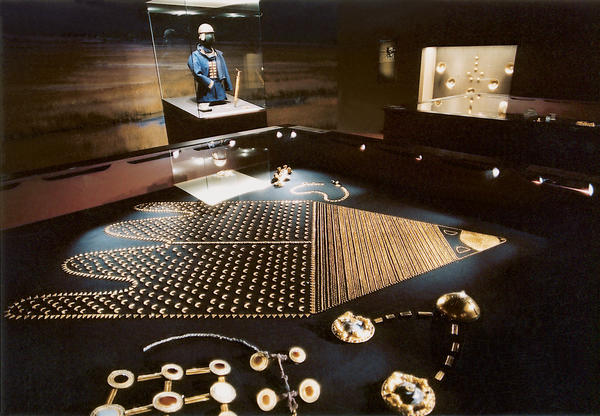
Items of the Azov historical-archaeological and paleontological museum-reserve at the ‘Gold of Amazons’ exhibition in Paris in 2001
#20
Ministry of Culture of the Russian Federation
read morehide
00:00
00:00
1x
Sew-on plaques of a horse cover
Creation period
last quarter of the I century AD
Technique
gold, toreutics
Collection
Exhibition
17
 Point your smartphone camera to open in the app
Open in app
Share