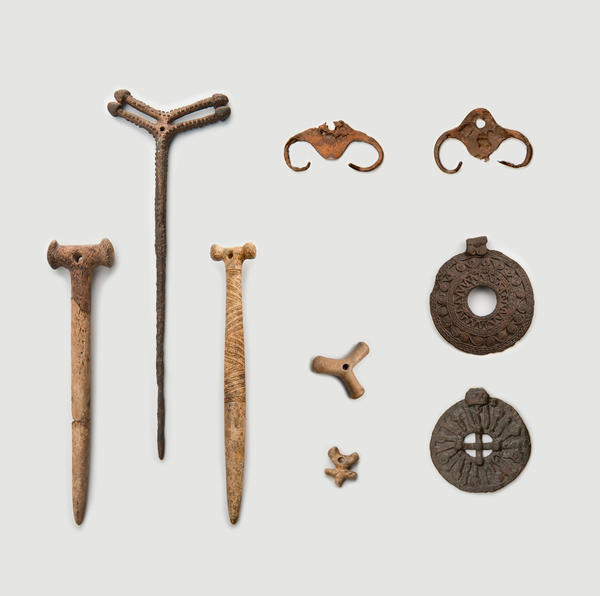
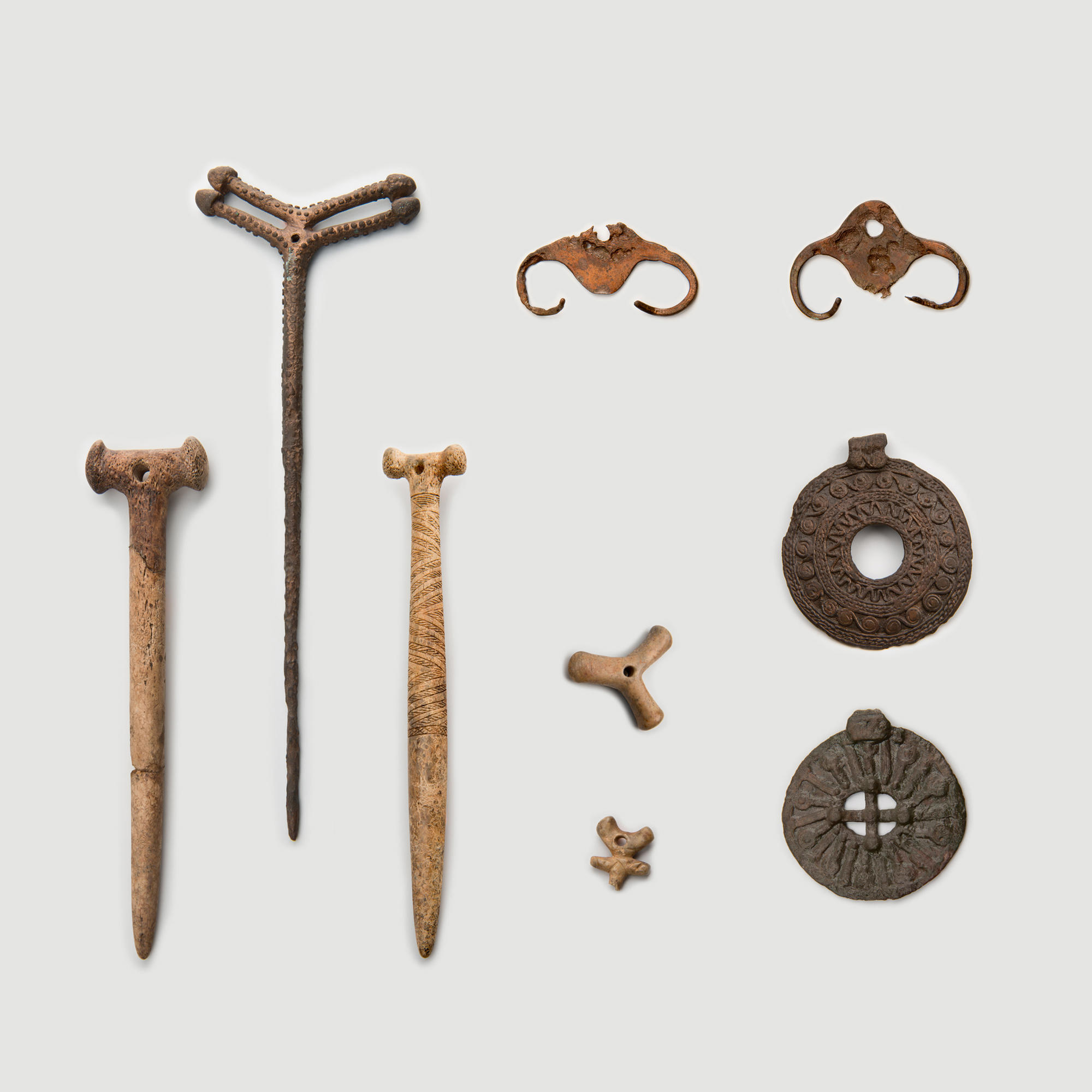
The early Bronze Age burials sites in steppe mounds often contain horn, bone or bronze amulets of a particular shape. These are ornamented rods — spikes, crowned with a figured top. In archaeology, they are known as ‘hammer-shaped pins’. The upper part of such rods would depict a snake moving upward. The lower pointed part would be stuck into the ground or into a sacred tuft of vegetation.


Amulets-charms
Creation period
3rd-2nd millennium BC
Dimensions
length of hammer-shaped pins: 17.6, 17.8 и 21.0 cm. Diameter of amulets: 6.5 и 6.5 cm
Technique
bone, bronze, incised ornament, drilling, polishing, lost-wax casting
Collection
Exhibition
12
Open in app#13
#7
Among hammer-shaped pins, the most ancient ones are items with a straight rod, decorated with an incised ornament in the form of transverse lines and crosshatched bands. Pins with geometric patterns on a cigar-shaped rod are the latest. Items without ornaments, according to researchers, occupy an intermediate chronological position.
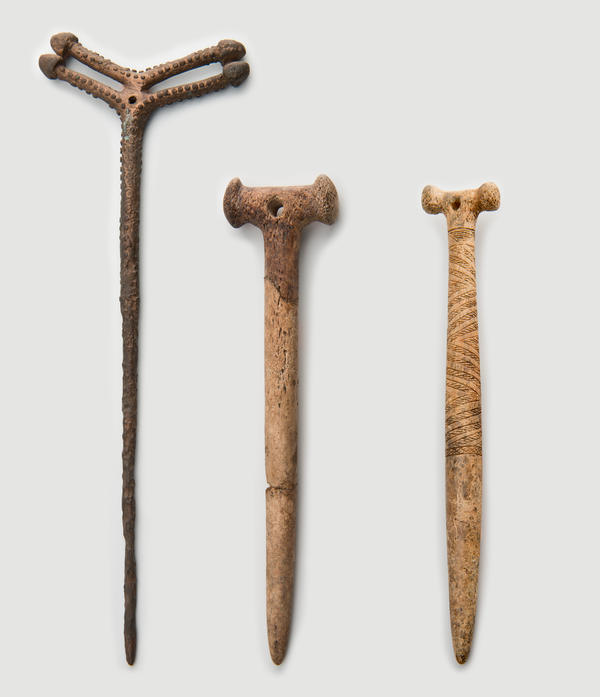
Bronze and bone hammer-shaped pins
#9
The amulets are accompanied by paired bronze discs with a dotted pattern that personified the sun. They were suspended from the top. The items were found in sets with carved cult bones of animals and birds, traditional beads made of shells and metal. All this was placed in burial complexes — on the right, in front of the face and chest of the buried person, who was lying on their side facing the shrine.
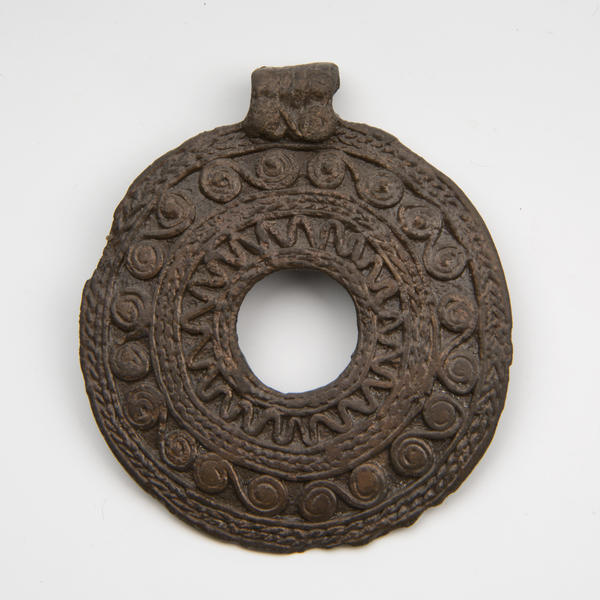
Ornamented medallion amulet
#10
Pins with a set of elements accompanied the Bronze Age man throughout his life. The sacred necklace in everyday rites quickly turned into a portable altar. In it, a vertically fixed rod with the image of a solar deity above and a snake below served as a model of the World Tree, was an object of veneration, centre of sacrifice. After the owner’s death, it was considered a conductor of the deceased to the afterlife like the cross among Christians.
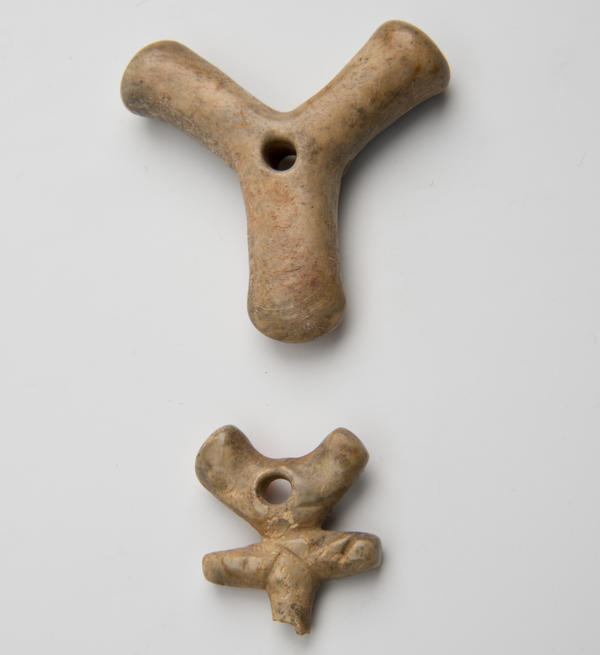
Zoomorphic bone amulets
#5
The set of views associated with the pin amulet perdured among the Iron Age nomads. Although the amulet itself changed its shape, it gradually lost its sacred meaning and became part of attire. However, in folklore, the role of the pin manifested itself in fairy tales: a deadly sleep from a pin prick, the might of the pin-mace, its power of renewal.
The amulets-charms from the exposition Treasures of Eurasian Nomads were discovered by archaeologists during excavations in the Rostov Oblast (Bagaevsky, Veselovsky and Peschanokopsky districts) from 1973 to 1999.
The amulets-charms from the exposition Treasures of Eurasian Nomads were discovered by archaeologists during excavations in the Rostov Oblast (Bagaevsky, Veselovsky and Peschanokopsky districts) from 1973 to 1999.
#14
Ministry of Culture of the Russian Federation
read morehide
00:00
00:00
1x
Amulets-charms
Creation period
3rd-2nd millennium BC
Dimensions
length of hammer-shaped pins: 17.6, 17.8 и 21.0 cm. Diameter of amulets: 6.5 и 6.5 cm
Technique
bone, bronze, incised ornament, drilling, polishing, lost-wax casting
Collection
Exhibition
12
 Point your smartphone camera to open in the app
Open in app
Share