The dwellings of the Ancient Rus, such as mud huts and ground log houses, did not have windows. The light entered the room through a doorway, which usually faced the bright and warm south side.
Small windows (also called sash windows or smoke holes) began to appear in ground log houses in the 9th–10th centuries. Such windows could be “obscured”, namely covered with a board from the inside.
Windows in a traditional peasant house of the 19th–20th centuries were located on the front of the building, on one of the sides, near the front door, as well as on the pediment or mezzanine (bulkhead in the middle part of the house). If the hut consisted of one living room and a hallway, four windows were cut out: three on the front and one on the side. If there were more rooms, five or six windows were made on the front and two or three more on the side of a house. In addition, the peasant house had small windows only one log high and about 20-30 centimeters wide. They were cut in the underground, hallways, crates, closets.
The carpenters cut down the windows in the finished, put-in-place log building. The window frame was made of thick wooden blocks hewn with an ax. This was the name of a split part in half a log. Window frames from sawn boards were originally produced only at the end of the 19th century. A window sash, a light wooden frame with bindings for glass, was inserted into the casing. It was usually made of linden because products made of this wood retained their shape well under temperature and humidity changes.
Glazed windows were very rare. Most often, they were made of mica or a bull’s bladder. Glass was very expensive since it was not manufactured in Russia for a long time.
As a rule, the windows did not open in the old huts. The room was aired out through a chimney or a door. As historians suggest, sash windows that could be opened outward appeared in peasant huts at the beginning of the 19th century. However, they did not become very popular at that time.
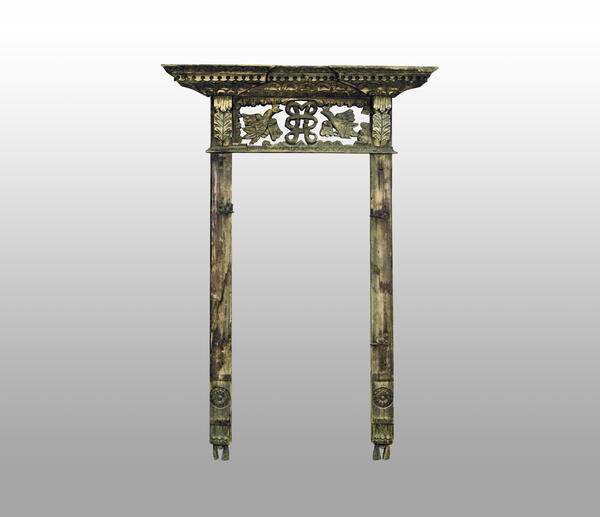
The windows located on the front and the side of the house always had shutters that were closed at night and framed by casings. Carved casings appeared in Russia in the 17th century but became popular only at the end of the 19th century. Complex patterns were ordered from craftsmen, and simple casings were created by peasants on their own.
Small windows (also called sash windows or smoke holes) began to appear in ground log houses in the 9th–10th centuries. Such windows could be “obscured”, namely covered with a board from the inside.
Windows in a traditional peasant house of the 19th–20th centuries were located on the front of the building, on one of the sides, near the front door, as well as on the pediment or mezzanine (bulkhead in the middle part of the house). If the hut consisted of one living room and a hallway, four windows were cut out: three on the front and one on the side. If there were more rooms, five or six windows were made on the front and two or three more on the side of a house. In addition, the peasant house had small windows only one log high and about 20-30 centimeters wide. They were cut in the underground, hallways, crates, closets.
The carpenters cut down the windows in the finished, put-in-place log building. The window frame was made of thick wooden blocks hewn with an ax. This was the name of a split part in half a log. Window frames from sawn boards were originally produced only at the end of the 19th century. A window sash, a light wooden frame with bindings for glass, was inserted into the casing. It was usually made of linden because products made of this wood retained their shape well under temperature and humidity changes.
Glazed windows were very rare. Most often, they were made of mica or a bull’s bladder. Glass was very expensive since it was not manufactured in Russia for a long time.
As a rule, the windows did not open in the old huts. The room was aired out through a chimney or a door. As historians suggest, sash windows that could be opened outward appeared in peasant huts at the beginning of the 19th century. However, they did not become very popular at that time.
The windows located on the front and the side of the house always had shutters that were closed at night and framed by casings. Carved casings appeared in Russia in the 17th century but became popular only at the end of the 19th century. Complex patterns were ordered from craftsmen, and simple casings were created by peasants on their own.