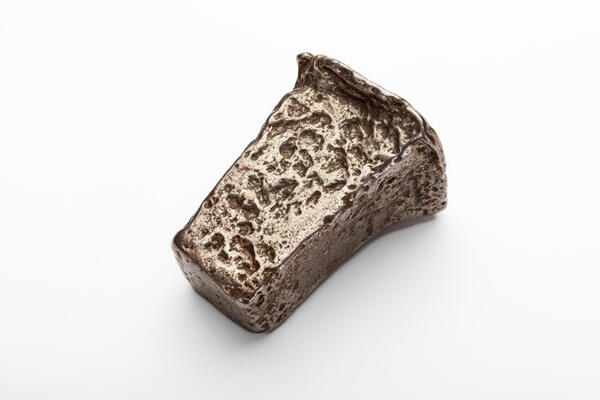
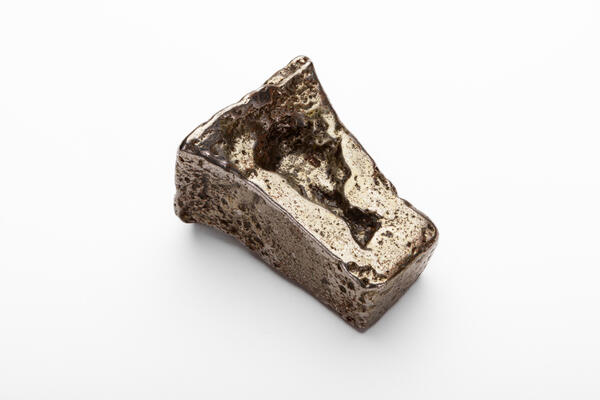
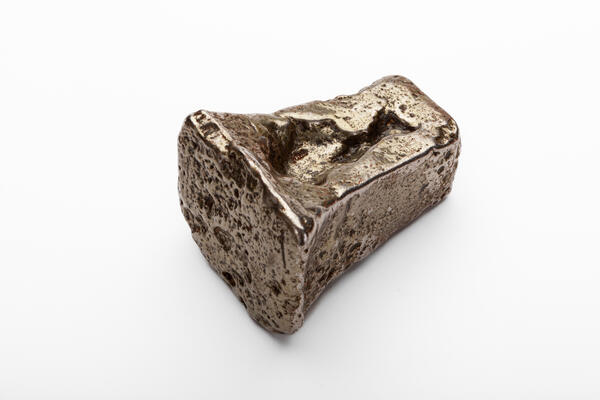
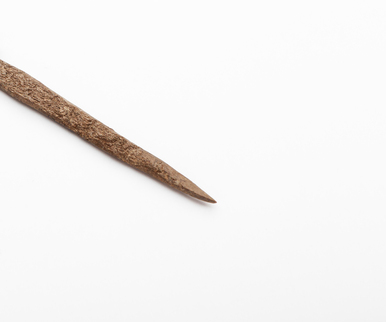
An anvil is a supporting metalworking tool for cold and hot working. The performance and the high quality of the finished product depended not only on the blacksmith’s skills but also on the correct design of this tool.
The anvils found at medieval sites in the Cheptsa River basin have a plain shape and modest size. They were suitable for forging small items, such as knives, hooks and arrowheads, or for cold processing of non-ferrous metal products.
Metallurgy of the Chepetsk region developed through using local raw materials extracted from brown iron ores — limonites. Bog iron ore is formed in layers transitioning to oxygen-free soil. Unlike other types of terrain, swamps have the transitioning layers very close to the surface, so the ore can be extracted by open-pit mining.
The quality of the bog ore was low: the iron concentration in it was only 35–55%. Despite the low level of raw materials, Chepetsk craftsmen were professionals in their field. In the Middle Ages, Idnakar blacksmiths mastered most of the known methods of metal processing: hand forging, bending, twisting, chiseling, piercing and welding.
During work, blacksmiths would securely mount the anvil onto a wooden block. They would then use tongs to take the hot billet out of the furnace and shape it with a hammer on the anvil.
Craftsmen forged all the necessary tools, equipment for hunting and household items, such as dishware, axes, knives, nails, spearheads, arrowheads, fire strikers and tools for agriculture and woodworking. In terms of design and quality, Prikamye products were on par with those made by Old Russian masters.
As metallurgy developed, blacksmiths divided according to their area of expertise — iron, copper or silver. Prikamye jewelers, who mastered the exquisite craft of making jewelry, achieved great heights.
The art of blacksmiths has always been shrouded in mystery. Smithcraft was passed on from father to son, and only occasionally would outside apprentices be hired. The profession of a blacksmith was associated with magic and outstanding strength; it evoked a superstitious fear, reflected in mythology and folklore.