

The variety of different configurations of arrowhead is due solely to practical considerations. Different circumstances called for specific arrow types for hunting and warfare. The shafts could be painted in different colors depending on the intended purpose of the arrow, so that the archer could immediately grab the right one from his quiver.
Iron arrowheads consisted of the following parts: a tip, a body, a socket or a tang (depending on the type of hatching). Depending on the type, other parts may have included a head (in armor-piercing arrowheads), a spur, a shoulder and a stop flange. Arrowheads were made from iron.
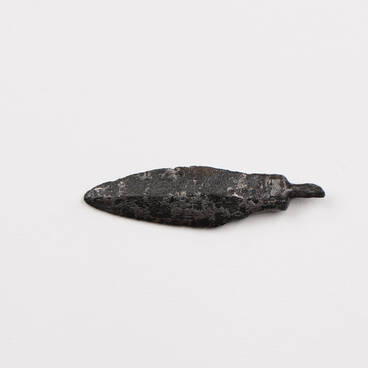
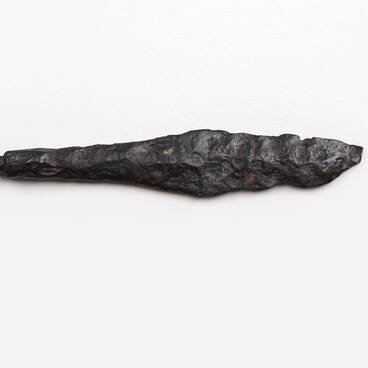
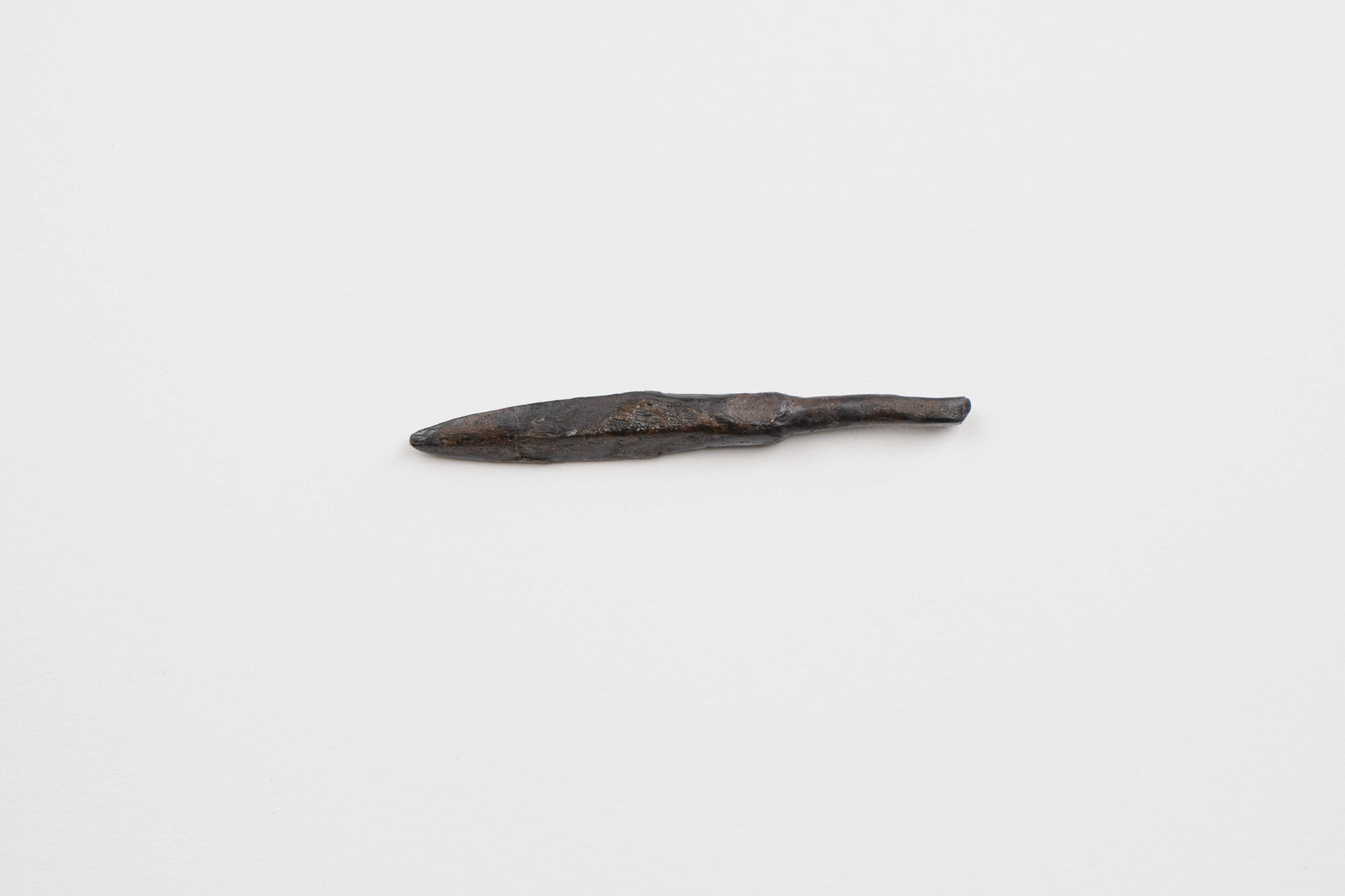
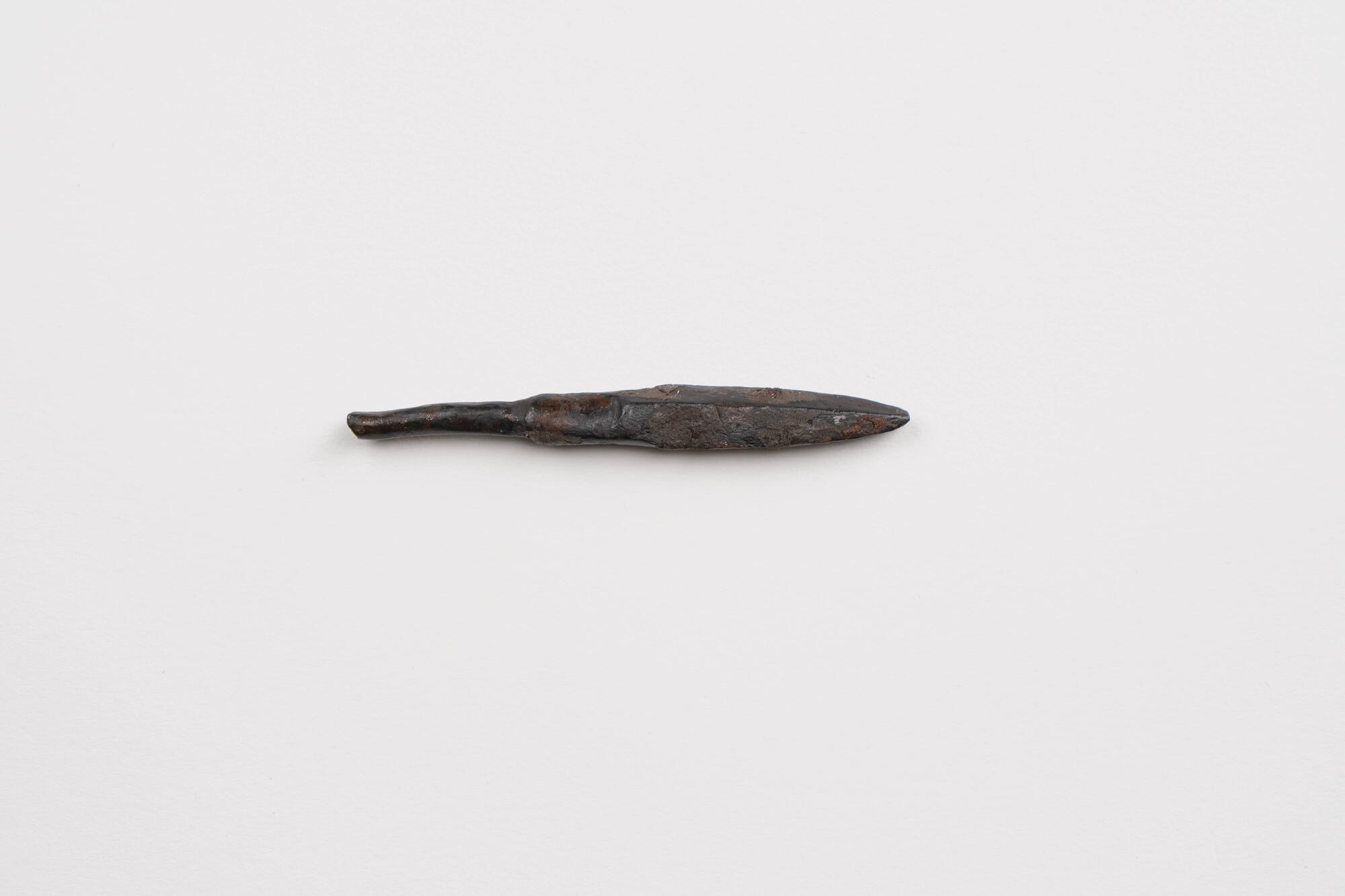
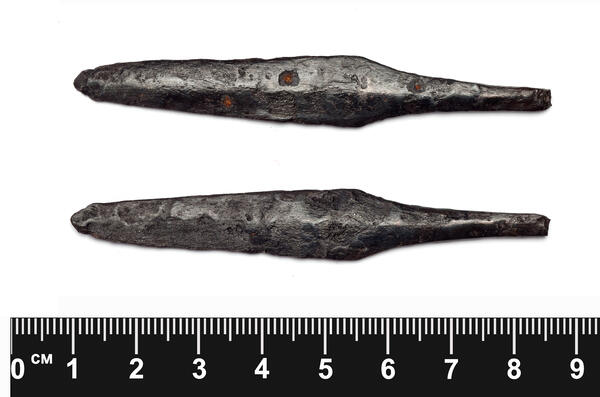
This arrowhead from the permanent exhibition “Relics from the Battle of Kulikovo” belongs to the type of points with tangs. It has not been fully preserved, and the stem is partially missing. The body has an oblong triangular shape, without a stop flange. It is 4.7 centimeters long, and its cross section has the shape of a narrow oval. The body gradually tapers into the stem with a circular cross section (its diameter at the base is 0.7 centimeters). The cross-section of the body looks like an oval rhombus.
Similar Old Russian arrowheads date from the 8th to the end of the 14th century (type 47 in the classification of A.F. Medvedev). They were typical for a later period and were prevalent in the Grand Duchy of Moscow. This type of arrow points continued to exist until the second half of the 17th century. Such arrowheads appeared in the north of Eastern Europe before the common era. In the medieval period, such artifacts were quite common from the 8th to the end of 14th century and only in the northern area. Arrowheads with the body proportions of 1:3–1:4 were used from the 8th to the middle of the 11th century. Arrowheads with the body proportions of 1:2 were used from the middle of the 11th century to the 14th century.
This find was discovered in 2013 in excavations conducted by the military-historical unit of the Upper-Don archaeological expedition of the State Historical Museum and the State Museum-Reserve “Kulikovo Field”. The archaeological dig took place in the upper reaches of the Smolka River to the north of the Khvorostyanka village, Kurkinsky District, Tula Oblast, on site No. 22, grid 11, square 12.
Iron arrowheads consisted of the following parts: a tip, a body, a socket or a tang (depending on the type of hatching). Depending on the type, other parts may have included a head (in armor-piercing arrowheads), a spur, a shoulder and a stop flange. Arrowheads were made from iron.
This arrowhead from the permanent exhibition “Relics from the Battle of Kulikovo” belongs to the type of points with tangs. It has not been fully preserved, and the stem is partially missing. The body has an oblong triangular shape, without a stop flange. It is 4.7 centimeters long, and its cross section has the shape of a narrow oval. The body gradually tapers into the stem with a circular cross section (its diameter at the base is 0.7 centimeters). The cross-section of the body looks like an oval rhombus.
Similar Old Russian arrowheads date from the 8th to the end of the 14th century (type 47 in the classification of A.F. Medvedev). They were typical for a later period and were prevalent in the Grand Duchy of Moscow. This type of arrow points continued to exist until the second half of the 17th century. Such arrowheads appeared in the north of Eastern Europe before the common era. In the medieval period, such artifacts were quite common from the 8th to the end of 14th century and only in the northern area. Arrowheads with the body proportions of 1:3–1:4 were used from the 8th to the middle of the 11th century. Arrowheads with the body proportions of 1:2 were used from the middle of the 11th century to the 14th century.
This find was discovered in 2013 in excavations conducted by the military-historical unit of the Upper-Don archaeological expedition of the State Historical Museum and the State Museum-Reserve “Kulikovo Field”. The archaeological dig took place in the upper reaches of the Smolka River to the north of the Khvorostyanka village, Kurkinsky District, Tula Oblast, on site No. 22, grid 11, square 12.