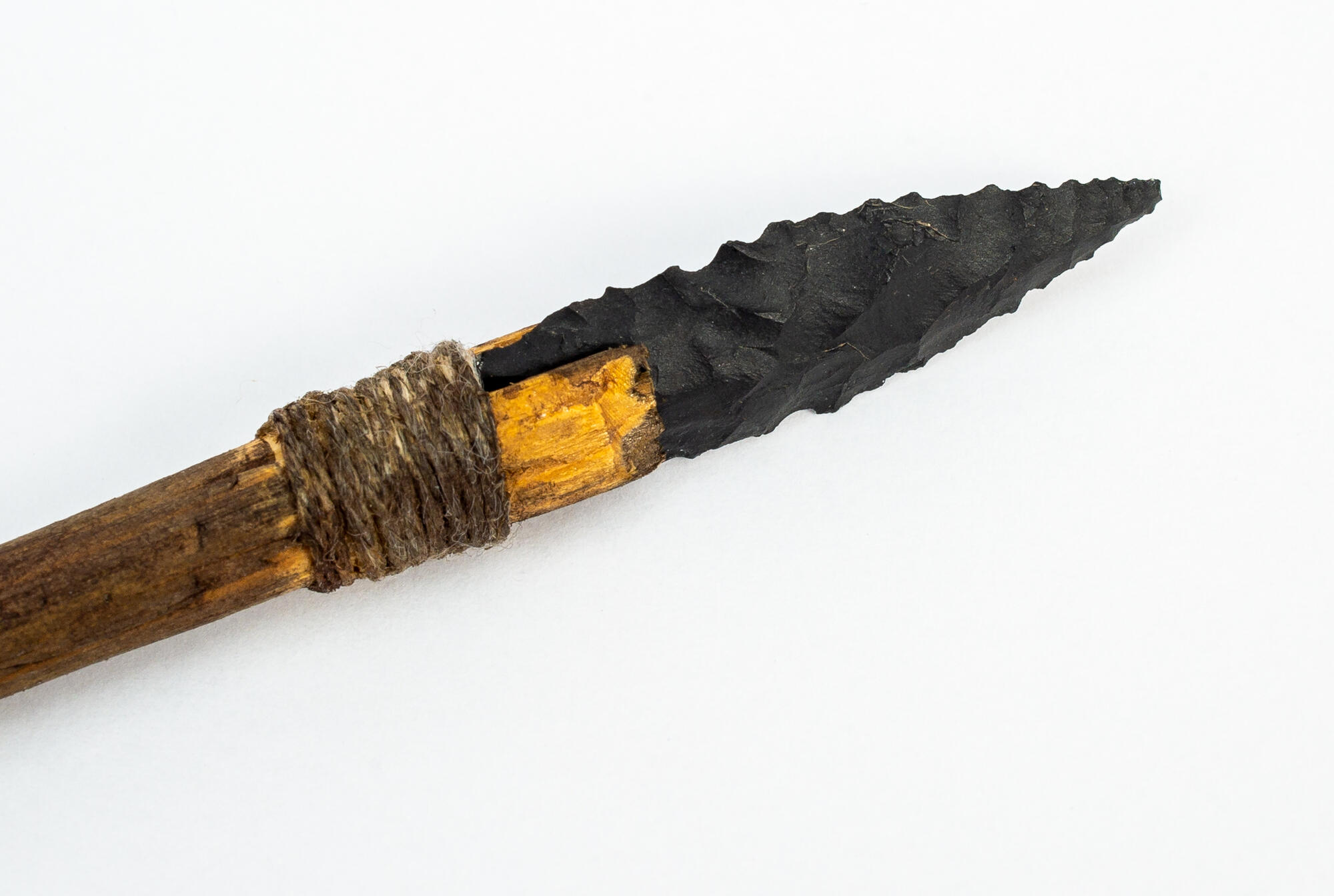


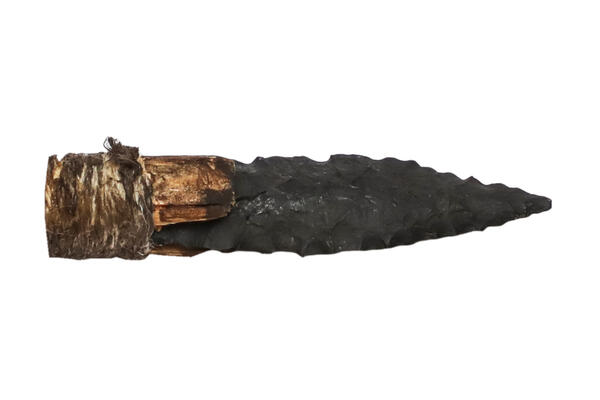
Stone arrowheads from the collection of the Verkhnyaya Pyshma Historical Museum were found near Cape Balchug, on the shore of Lake Shitovskoe. The finds were attributed to the Neolithic era: they were created about 6–8 thousand years ago.
The head was part of an arrow that was shot from a bow. It consisted of a long shaft and an arrow point at the end. The arrowheads were made from solid materials that were at hand: stone, bone, hard wood, plant and animal thorns, horns, teeth, shells, and metals.
Historians and archaeologists still do not know exactly when our ancestors began to use the bow, and in which region this weapon was invented. The earliest arrowheads were found in the Sibudu Cave in South Africa — they date back 64,000 thousand years.
In the Paleolithic era (about 10–30 thousand years ago), arrowheads were made of bone. They were pointed spikes with rounded corners and a flat part for attaching — it was made in the form of a shovel. To fix the point on the arrow, a slit was made in the shaft, into which the bone fragment was inserted.
About six to nine thousand years ago, in the Mesolithic era, inlaid arrowheads appeared. They consisted of small stone fragments — microliths, blades. Some arrows had only one microlith, while others had paired blades, which the artisan fixed on both sides of the point. Also, the bone arrowheads that resembled needles are attributed to the Mesolithic era. They were turned on the first primitive lathes.
In the Neolithic era (about six thousand years ago), early humans mainly used stone and bone arrowheads, which had appeared in earlier periods. Although the materials did not change, the shape of the blades became more varied. For example, knapped serrated stone tools as well as narrow arrowheads flaring at the base appeared, which got the name ‘stilettos’ in Russian. On the territory of modern southern Russia and Ukraine, arrowheads that resembled a bullet or the sharp end of a pencil were quite common.
The head was part of an arrow that was shot from a bow. It consisted of a long shaft and an arrow point at the end. The arrowheads were made from solid materials that were at hand: stone, bone, hard wood, plant and animal thorns, horns, teeth, shells, and metals.
Historians and archaeologists still do not know exactly when our ancestors began to use the bow, and in which region this weapon was invented. The earliest arrowheads were found in the Sibudu Cave in South Africa — they date back 64,000 thousand years.
In the Paleolithic era (about 10–30 thousand years ago), arrowheads were made of bone. They were pointed spikes with rounded corners and a flat part for attaching — it was made in the form of a shovel. To fix the point on the arrow, a slit was made in the shaft, into which the bone fragment was inserted.
About six to nine thousand years ago, in the Mesolithic era, inlaid arrowheads appeared. They consisted of small stone fragments — microliths, blades. Some arrows had only one microlith, while others had paired blades, which the artisan fixed on both sides of the point. Also, the bone arrowheads that resembled needles are attributed to the Mesolithic era. They were turned on the first primitive lathes.
In the Neolithic era (about six thousand years ago), early humans mainly used stone and bone arrowheads, which had appeared in earlier periods. Although the materials did not change, the shape of the blades became more varied. For example, knapped serrated stone tools as well as narrow arrowheads flaring at the base appeared, which got the name ‘stilettos’ in Russian. On the territory of modern southern Russia and Ukraine, arrowheads that resembled a bullet or the sharp end of a pencil were quite common.