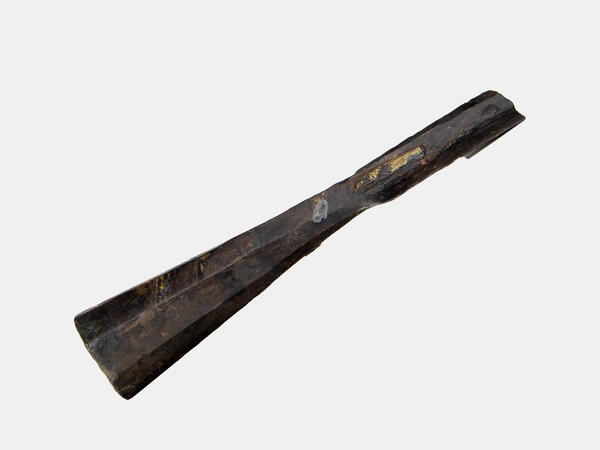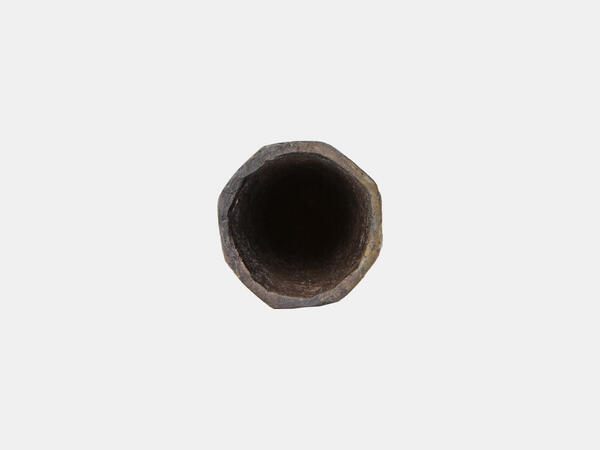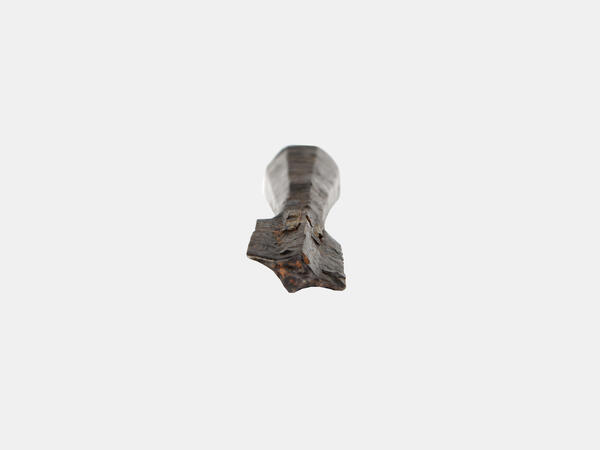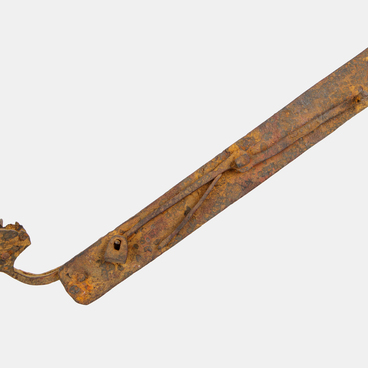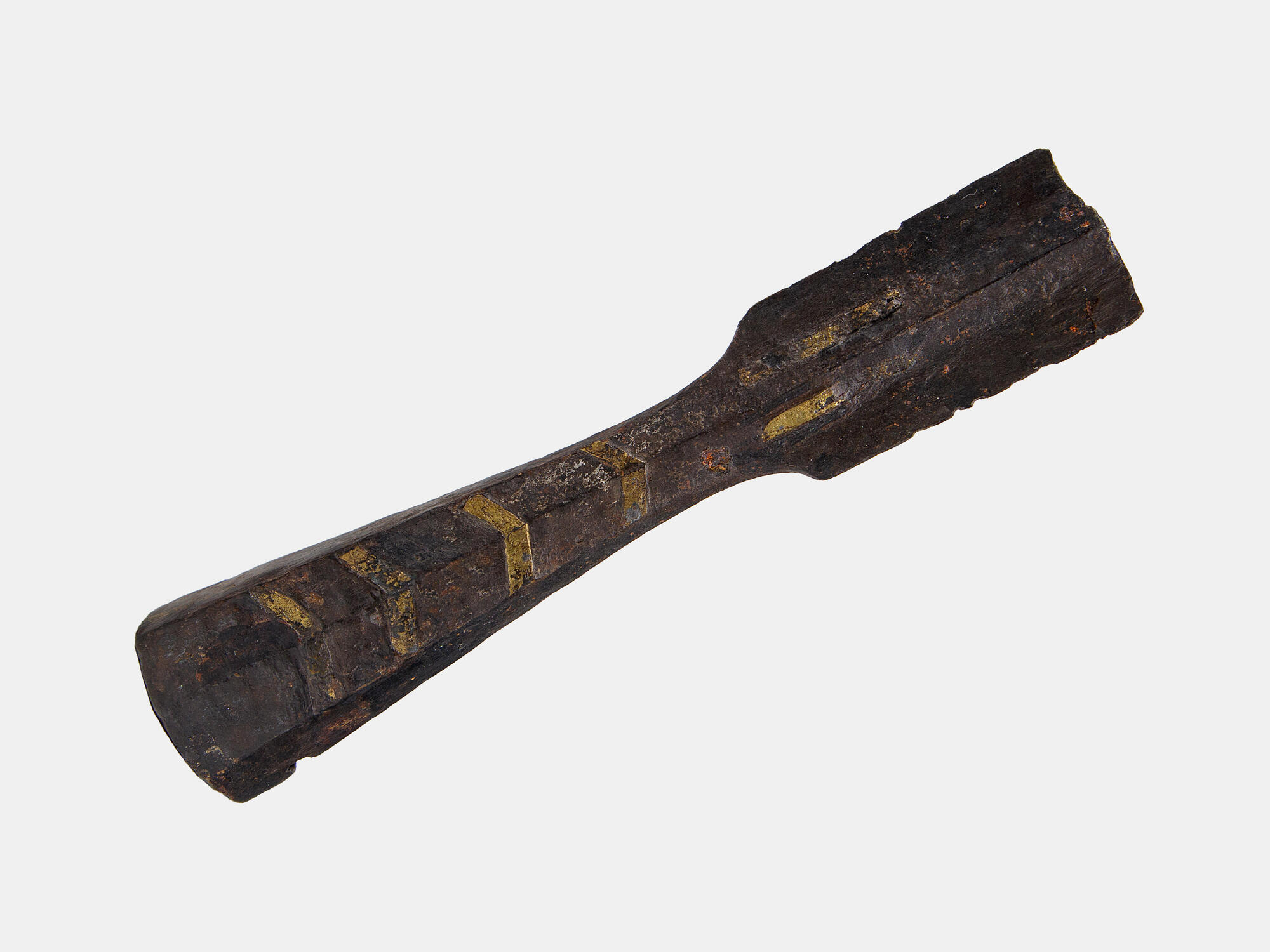


This is a pointed tip of a spear that was used for combat in the second half of the 16th or the early 17th century. The narrow, elongated point of this piercing weapon is sharpened on both sides and followed by a figured octagonal socket. The socket was used to insert the shaft.
There were spears used for throwing and for close combat. There were special types of spears to be used against infantry and cavalry, spears for hunting, as well as guard and ceremonial spears. Depending on their function, spear points varied in shape and size.
The tips were made for spears, as well as for arrows and darts — this was a distinctive feature of throwing weapons. The first spearheads were carved from stone, bone, quartz minerals, horns, and tusks. Ropes made from vegetal fibers or animal sinews had been used to attach the tips to the shaft up until metal tips came into use.
The spear head is decorated with thin plates. This technique is called damascening — the art of inlaying softer metals into the contrasting metal background. It is associated with the ancient Greek and Egyptian ways of inlaying gold and silver into bronze items. Later, copper, brass, cupronickel, and aluminum were also used as inlays.
Damascening was used to decorate household items and military equipment: helmets, shields, daggers, swords, and later firearms. The technique reached its peak in the 17th century; several objects have been found on the modern territory of the Polish-Lithuanian Commonwealth. The spearhead from the Tula Kremlin Museum features a yellow metal herringbone pattern. The weapon’s owner belonged to a noble class.
There are two main types of the damascening technique: gold or silver foil hammering or using cross-hatched incisions. The first type does not require any preliminary preparation: non-ferrous metal is hammered directly onto the surface of the metal. A chisel is used to texture the areas and create a series of fine cross-hatched marks, grooves, or dashed lines in accordance with the future design.
The chiseling creates a lip with sharp burrs around the edge of the recess. Then the craftsperson positions the inlay on the prepared surface and pushes it in with a hammer. This technique is simpler and less labor-intensive than the one using incisions, but it also requires high skill and artistic taste.